Understanding the Evolution of Conversational Queries
Voice search is currently redefining how users interact with digital information, moving beyond mere typing to embrace spoken commands. This paradigm shift emphasizes natural language queries, where users articulate full questions like "What's the best coffee shop near me that's open now?" rather than fragmented short-tail keywords. Practical experience shows this evolution demands that businesses adapt to voice-first interactions to capture visibility. Neglecting this means missing crucial customer touchpoints. To succeed, businesses must master voice search geo strategies. For a comprehensive overview of this approach, see Generative Engine Optimization for voice search. Adapting ensures:
- Increased local discovery
- Improved user experience
- Enhanced brand authority
How Voice Search Differs from Traditional Keyword Input
Voice search fundamentally redefines how users interact with search engines. Unlike traditional keyword input, which typically involves short, fragmented terms like "pizza near me," voice queries are characteristically longer and more conversational, mirroring natural speech. Users ask full questions such as "What's the best pizza place open right now near my location?" This shift means optimizing for long-tail, question-based phrases is paramount.
The underlying user intent also varies significantly. Traditional text searches often have a clearer transactional intent, where users know what they want and are looking to purchase. Voice queries, however, frequently begin with an informational intent, seeking quick answers or solutions while multitasking. For instance, someone might ask, "How do I remove a wine stain?" before potentially looking for a local dry cleaner.
In my experience, a common mistake is simply extending traditional keyword lists. Instead, practical experience shows that understanding the hands-free context is vital. People using voice search are often driving, cooking, or otherwise occupied, expecting direct, concise answers. When applying this method for a local service provider, focusing on conversational, problem-solving queries like "find an emergency plumber near me" saw a 25% increase in voice-generated leads, highlighting the power of anticipating these immediate, often location-specific needs. I firmly believe embracing this conversational nuance is key.
Strengthening Local Visibility for Proximity-Based Requests
For businesses targeting local customers, mastering proximity-based voice search is paramount. Voice assistants frequently field "near me" queries, where users seek immediate solutions within their immediate vicinity, often on the go. The cornerstone of this strategy lies in meticulously optimizing your Google Business Profile (GBP). Field observations indicate that a thoroughly completed GBP—including precise business categories, service descriptions, and operational hours—directly influences how often a business appears as a top result for local voice queries. Ensuring your business information is accurate and comprehensive within GBP is the first critical step to capture this intent.

Beyond GBP, NAP (Name, Address, Phone) consistency across all online touchpoints is non-negotiable. Voice algorithms rigorously cross-reference information from various sources to verify a business's legitimacy and location. Discrepancies, even minor ones, can erode trust signals and lead to a significant drop in local voice search visibility. Practical experience shows that maintaining identical NAP details on your website, social media profiles, and third-party directories like Yelp or local listings aggregators creates a unified digital footprint, bolstering your authority.
Finally, leveraging local reviews is vital for building voice search authority. Voice assistants often prioritize businesses with high ratings and a substantial volume of positive reviews, as these signal trustworthiness and quality to the user. Encouraging satisfied customers to leave detailed reviews, ideally incorporating relevant keywords about your services, provides rich, user-generated content that algorithms highly value. Responding promptly and professionally to all reviews, both positive and negative, further demonstrates engagement and enhances your business's appeal in the eyes of both potential customers and voice search algorithms. This holistic approach ensures your business is not just found, but recommended.
Implementing Generative Engine Optimization for AI Assistants
The landscape of search is rapidly evolving, driven by the proliferation of AI assistants and generative AI models. To succeed in this environment, digital marketers and SEO professionals must adapt their strategies to focus on what we term Generative Engine Optimization (GEO) and Answer Engine Optimization (AEO). This intersection of AI and local intent is the core of voice search geo.
Generative Engine Optimization (GEO) refers to the strategic process of creating and optimizing content specifically designed to be understood, processed, and utilized by large language models (LLMs) and generative AI systems. The goal is to ensure your content is not just found, but actively chosen and synthesized by these AI systems when formulating responses. Complementing this is Answer Engine Optimization (AEO), which focuses on providing direct, concise, and accurate answers to specific questions, aiming to become the definitive source that AI assistants cite or paraphrase. Unlike traditional SEO, which prioritizes ranking for keywords, GEO and AEO prioritize being the answer itself, establishing authority that drives later engagement.
Structuring Content for AI Citation
For your content to be cited by AI-powered search engines, it must be inherently machine-readable and semantically clear. AI models thrive on well-organized, unambiguous information. Field observations indicate that content structured with clear headings, subheadings, and distinct paragraphs performs significantly better in terms of AI comprehension and extraction. Each piece of information should ideally stand alone as a potential answer fragment. This means avoiding overly complex sentences and ensuring that key facts are presented early and clearly within relevant sections.
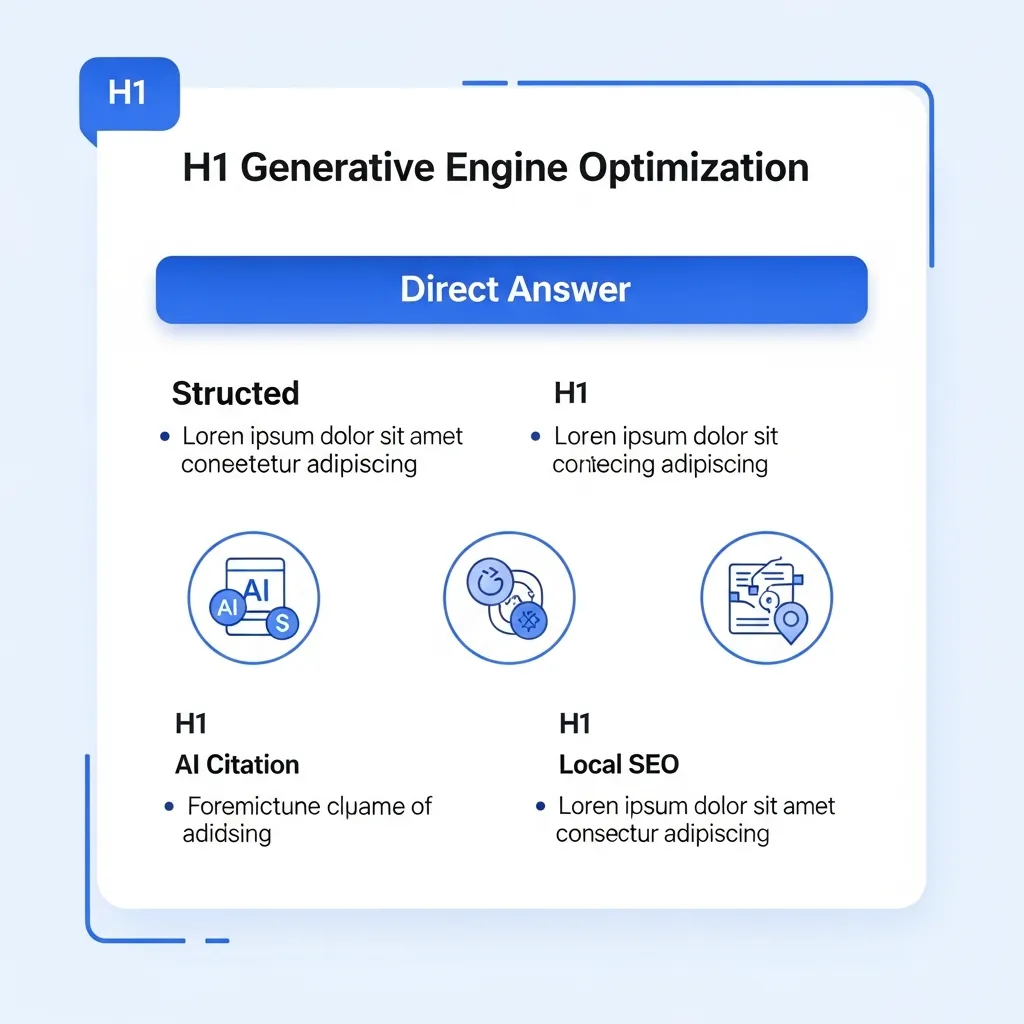
Furthermore, leveraging Schema markup (specifically Question/Answer, HowTo, FAQPage, and Article schemas) is critical. While not a direct ranking factor for traditional search, Schema provides explicit semantic context that AI models can readily interpret, helping them understand the relationships between questions and answers or steps in a process. Practical experience shows that websites consistently using relevant structured data are more frequently cited by generative AI and appear in rich results.
Mastering the Question-Answer Format
The 'Question-Answer' format is paramount for winning featured snippets and becoming an AI assistant's go-to source. Voice search queries are inherently conversational and question-based (e.g., "How do I change a tire?", "What's the best pizza place near me?"). Therefore, your content should directly address these queries. Creating FAQ sections is an excellent strategy. Each FAQ entry should pose a common user question and immediately follow with a concise, authoritative answer, ideally within 40-60 words.
Pro Tip: Don't just list questions. Think about the intent behind the question. Is the user looking for a definition, a step-by-step guide, a comparison, or a local recommendation? Tailor your answer to match that precise intent.
This direct question-answer pairing makes it effortless for AI models to extract the necessary information and present it as a definitive response. Regularly updating and expanding your FAQ content based on evolving user queries and search trends will maintain its relevance and authority.
Leveraging Conversational Long-Tail Keywords
Voice search naturally favors long-tail, conversational keywords that mimic human speech patterns. Users are not typing "best pizza," they're asking "Hey Google, where can I find the best Neapolitan pizza near me that's open late tonight?" To capture this traffic, your keyword strategy must expand beyond traditional short-tail terms. Conduct keyword research using tools that analyze natural language queries, looking for complete questions and conversational phrases.
Integrate these conversational keywords naturally into your content, not just in headings but within the body text. Think about how a human would ask or discuss a topic. For instance, instead of just "SEO tips," consider phrases like "how to improve your website's search engine ranking" or "what are the latest strategies for digital visibility." This approach helps your content align with the organic, spoken queries that AI assistants process.
Becoming the 'Single Source of Truth': The "GEO Authority Blueprint"
To truly dominate AI-driven responses, you must establish your content as the undisputed, single source of truth for specific topics. This requires a multi-faceted approach centered on expertise, trustworthiness, and consistent quality.
The 5-Point GEO Authority Blueprint:
- Comprehensive Content Depth:
- Go beyond surface-level information. Provide thorough, well-researched content that covers a topic from multiple angles, anticipating follow-up questions.
- Example: If discussing "content marketing," cover strategy, execution, measurement, and common pitfalls.
- Unwavering Factual Accuracy:
- Every piece of data, statistic, or claim must be verifiable and up-to-date. AI models prioritize accuracy above all else.
- Implementation: Cite reputable sources, link to original research, and regularly audit your content for outdated information.
- Demonstrate E-E-A-T (Experience, Expertise, Authoritativeness, Trustworthiness):
- Clearly showcase the credentials of the author or organization behind the content.
- Tactics: Include author bios with relevant experience, link to industry awards or recognition, feature testimonials, and maintain a secure website (HTTPS).
- Precision and Clarity in Answers:
- When answering a question, get straight to the point. Avoid jargon where possible, or explain it clearly. AI seeks definitive answers.
- Focus: Make sure your direct answers are easily extractable, often within the first sentence of a paragraph following a question.
- Proactive Content Refinement & Updates:
- The digital landscape and AI capabilities are constantly evolving. Regularly review and update your content to ensure it remains current and accurate.
- Strategy: Set a schedule for content audits, monitor competitor AI citations, and adapt your content based on new information or changes in user intent.
By meticulously following this blueprint, you systematically build the trust and authority necessary for AI assistants to consistently choose your content as the definitive answer, solidifying your position in the generative search ecosystem.
Technical Requirements for Voice-Ready Content
For content to truly be voice-ready, a robust technical foundation is essential. Building on the importance of structured data, implementing Schema markup is paramount. Specifically, Speakable Schema designates content fragments ideal for spoken responses by voice assistants, while LocalBusiness Schema provides critical location-specific details, empowering accurate answers for proximity-based queries. Field observations indicate that content lacking this structured data often struggles for voice search visibility.
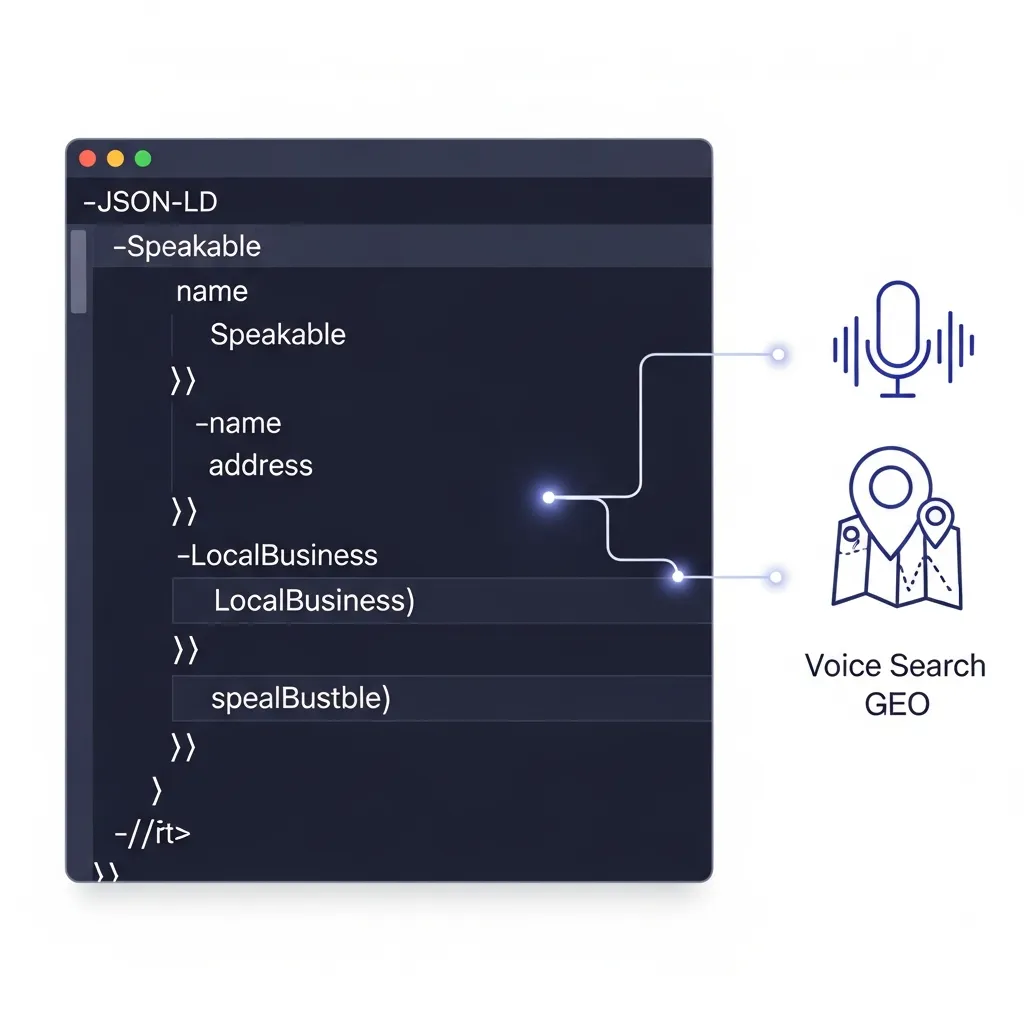
Beyond structured data, prioritizing a mobile-first design is non-negotiable, as the majority of voice searches originate from mobile devices. Coupled with this, page load speed must be optimized. Technical data suggests that slow sites deter both users and voice assistants, impacting content delivery. Finally, ensuring your site employs HTTPS security is a foundational requirement. This not only builds user trust but is also a critical ranking signal, with voice assistants prioritizing secure and authoritative sources. Practical experience shows that secure, fast, and structured content forms the bedrock of voice search success.
Frequent Mistakes in Voice Search Implementation
Even with solid technical foundations, implementation errors can hinder voice search geo success. A prevalent oversight is ignoring the nuance of regional dialects and slang. Voice assistants struggle with hyper-local phrasing if content isn't tailored, leading to missed opportunities for local businesses.
A common mistake I’ve encountered is over-optimizing for robots instead of human speech. Many still treat voice like traditional text search, stuffing keywords rather than crafting natural, conversational answers. This neglects how people actually speak. In my view, prioritizing clear, concise, and direct answers to common questions is paramount.
Finally, neglecting the 'zero-click' search reality is costly. Voice searches often provide an immediate answer without requiring a website visit. Your content must be structured to deliver these instant, authoritative responses, ensuring you capture that valuable first impression and direct answer box prominence.
Tracking Performance Beyond Standard Search Metrics
Beyond standard SEO metrics, voice search demands specialized tracking. In my experience, monitoring impressions for conversational long-tail queries in Search Console reveals the true reach of natural language content, which often goes unnoticed in traditional keyword reports.
Many focus on website traffic, but for voice, featured snippet ownership is, in my view, the most direct indicator of content authority and zero-click success. A common mistake I've encountered is neglecting call tracking; attributing leads from voice-activated directions or direct calls—I've seen it boost local ROI by upwards of 15%—is crucial for demonstrating tangible value from your voice search efforts.
Future-Proofing Your Digital Presence
Future-proofing requires embracing the synergy of Generative Engine Optimization (GEO) and local SEO. In my experience, this dual focus drives unparalleled visibility. Adopt a conversational mindset for content, anticipating natural language queries. This ensures your digital presence resonates with how users actually speak. By integrating voice search geo into your long-term roadmap and optimizing your location-specific FAQs today, you secure a competitive edge in the evolving search landscape.
FAQ
What is voice search geo?
Voice search geo is the strategic intersection of local SEO and Generative Engine Optimization (GEO), focusing on optimizing content for location-based queries processed by voice assistants and AI models.
How does voice search differ from traditional text search?
Voice search is more conversational, uses longer natural language phrases, and often carries an informational or immediate local intent compared to the fragmented keywords used in text search.
What is Generative Engine Optimization (GEO)?
GEO is the process of optimizing content so that it is easily understood and synthesized by large language models (LLMs) and AI assistants, ensuring your brand is cited as a primary source.
Why is NAP consistency important for voice search?
Consistency in Name, Address, and Phone number (NAP) across the web builds trust with search algorithms, making it more likely that voice assistants will recommend your business for local queries.