The Evolution of Modern Content Organization
Traditional content strategies, fixated on individual keywords, often resulted in fragmented articles and limited search engine visibility. Industry trends confirm this approach is no longer sufficient. Currently, the digital landscape demands a shift from isolated keyword targeting to establishing robust topical authority. Search engines now prioritize websites demonstrating deep, comprehensive expertise across a subject.
This is precisely where topic clusters offer a powerful solution. By organizing content around a central pillar page and interlinking supporting articles, clusters create a cohesive, authoritative web of information. This structured model enhances user experience and signals a profound understanding to search engines, significantly boosting organic presence. For a comprehensive overview, see SEO for beginners.
What Exactly is a Topic Cluster?
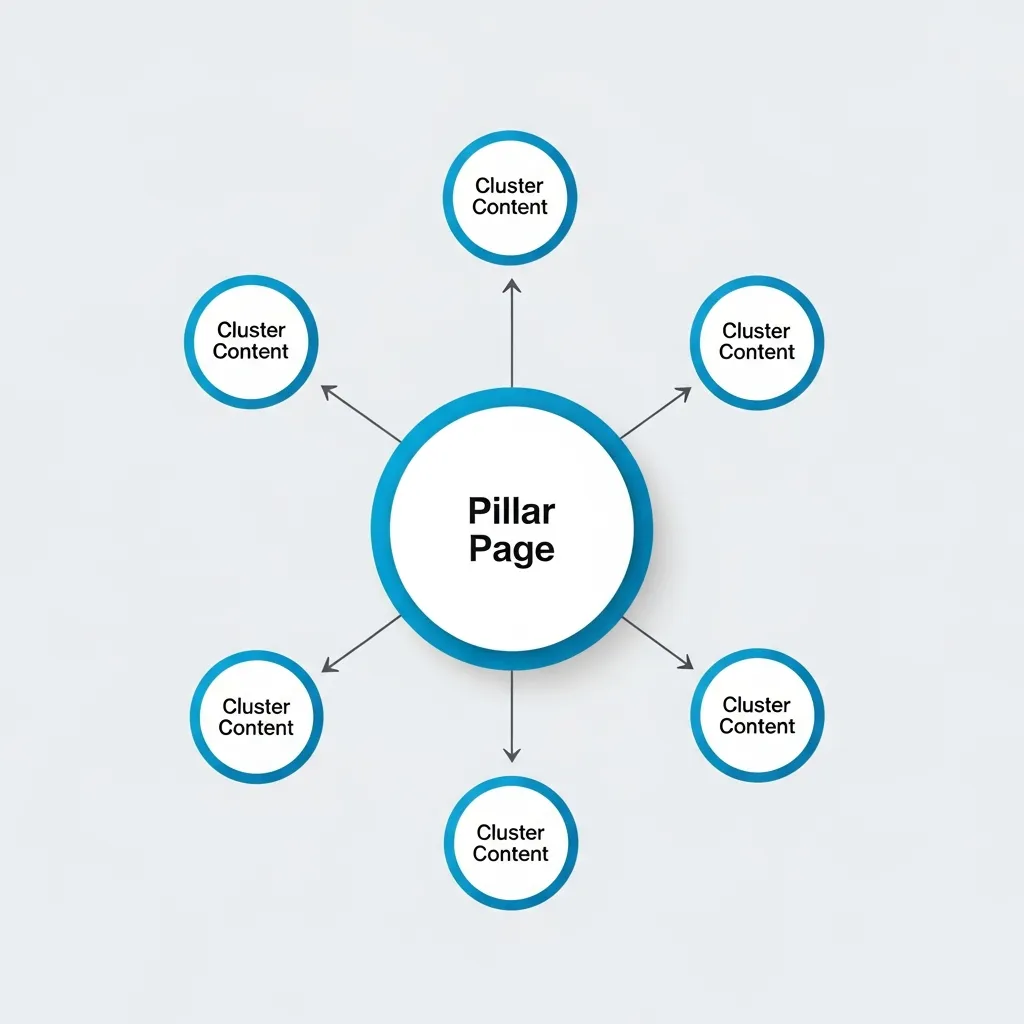
A topic cluster is a content organization model centered around a broad subject, known as a pillar page. This pillar links to several individual cluster content articles, each delving into specific, related sub-topics. For those exploring Topic Clusters for Beginners, imagine it as building a mini-encyclopedia for a particular theme on your website.
This structure is fundamental to Semantic SEO, which focuses on search engines understanding the meaning and context behind your content, rather than just isolated keywords. Currently, search engine algorithms prioritize websites that demonstrate comprehensive expertise across a broad topic. Observations indicate that they interpret well-interlinked clusters as a strong signal of topical authority, enabling them to confidently serve users with in-depth, relevant information from a single, authoritative source.
The Three Essential Components of the Cluster Model
To effectively implement a topic cluster strategy, beginners must first grasp its three fundamental components.
- The Pillar Page serves as the central, comprehensive 'hub' for a broad subject. Imagine it as your ultimate guide to "Content Marketing Basics," offering a high-level overview and linking out to more specific sub-topics.
-
Cluster Content comprises individual articles that delve into specific aspects of the pillar topic. These are your detailed supporting pieces, like "How to Conduct Keyword Research" or "Understanding Audience Personas," providing depth on narrower subjects mentioned in the pillar.
-
Finally, Internal Linking acts as the crucial 'glue' that binds the entire cluster together. By linking from the pillar to its cluster content, and often between related cluster articles, you signal to search engines the contextual relationship and comprehensive nature of your expertise. Practical experience shows this interconnectedness significantly boosts topical authority and user experience.
The Step-by-Step Process for Building Your First Topic Cluster
Embarking on a project involving Topic Clusters for Beginners might seem daunting, but with a structured approach, it becomes a powerful way to organize your content and boost your SEO.
Imagine a small business specializing in handcrafted soaps wanting to rank for "natural skincare." Instead of creating dozens of unrelated blog posts, a topic cluster helps them build deep authority. This systematic process helps overcome initial content overwhelm, structures content for maximum SEO impact, and ensures user engagement through clear navigation.
The Cluster Cornerstone Method: Building Your First Topic Cluster
Building an effective topic cluster involves a series of interconnected steps, each crucial for establishing topical authority and delivering value to your audience. Evidence indicates that skipping any of these steps can significantly reduce the cluster's overall impact.
-
Identify Your Core Topic (The Pillar Idea)
This is the foundational step. Your core topic should be a broad, high-level subject that directly aligns with your business goals and audience needs. It shouldn't be too niche, nor too generic. For instance, if you sell artisanal coffee, "The Art of Home Brewing" could be an excellent core topic. This topic should have enough depth to support numerous sub-topics. Experts suggest that a well-chosen core topic ensures relevance and provides a clear direction for all subsequent content efforts. -
Keyword Research: Unearthing Sub-Topics and Long-Tail Questions
Once your core topic is defined, dive into keyword research. This isn't just about finding popular keywords; it's about uncovering the specific questions and problems your audience has related to your core topic. Focus on long-tail keywords— these are longer, more specific phrases (e.g., "how to make cold brew coffee at home without special equipment" instead of just "cold brew"). These often reveal clear informational intent. Look for common questions, "how-to" queries, comparisons, and definitional terms. These will form the basis of your cluster content pages. -
Map Content to Search Intent (Informational vs. Transactional)
Understanding search intent is critical. Is the user looking for information (informational intent), or are they ready to make a purchase (transactional intent)?- Informational Content: Most of your cluster pages will fall here, answering specific questions related to your core topic (e.g., "Best Coffee Beans for French Press").
- Transactional Content: While less common for individual cluster pages, your pillar page might lead users towards transactional content (e.g., "Buy Freshly Roasted Coffee Beans").
Ensure each piece of content in your cluster clearly addresses a specific intent. This clarity guides both your content creation and your internal linking strategy.
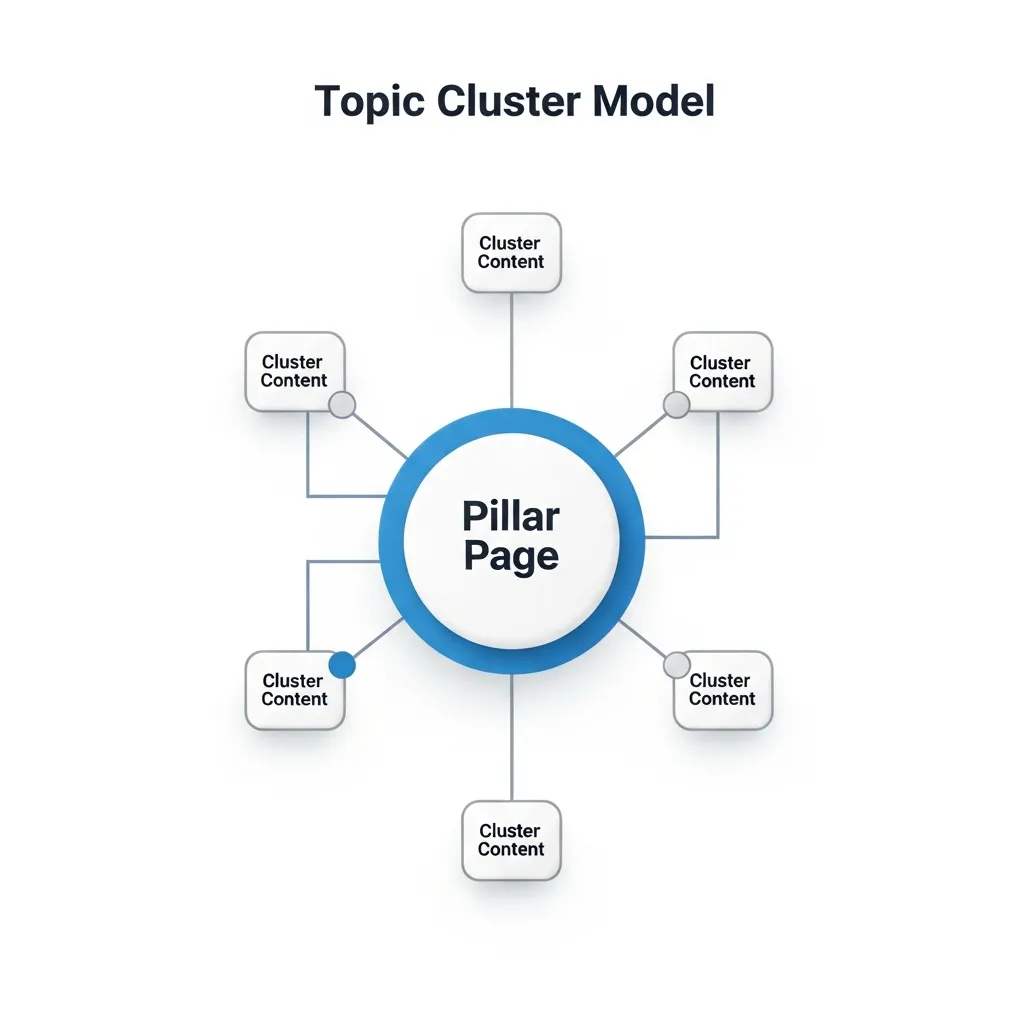
Diagram showing a central pillar page linked to multiple cluster content pages for internal SEO linking structure.
-
Craft Your Pillar Page: Structure, Depth, and UX Considerations
The pillar page is the backbone of your cluster. It's a comprehensive, authoritative guide on your core topic, typically much longer than a standard blog post (often 2,000+ words).- Structure: It should be well-organized with clear headings, subheadings, and a table of contents to enhance navigation.
- Depth: It covers all facets of the core topic at a high level, providing a solid overview without going into exhaustive detail on every sub-topic (that's what your cluster pages are for).
- UX Considerations: Readability, visual appeal (images, videos), and mobile responsiveness are paramount. The goal is to provide immense value and establish your site as an authority.
-
Implement Your Internal Linking Strategy
This step is where the "cluster" truly forms. Internal linking is the glue that binds your pillar page to its supporting cluster content.- From Cluster to Pillar: Every cluster content page must include at least one contextual link back to the main pillar page. Use relevant, descriptive anchor text (e.g., "learn more about home brewing techniques" instead of "click here").
- From Pillar to Cluster: The pillar page should link out to all its supporting cluster content pages where relevant. These links should be natural, adding value to the reader's journey.
This strategic linking establishes a clear topical relationship for search engines, distributing "link equity" and signaling the comprehensive authority of your site on the core topic.
Pro Tip: Don't just link. Ensure the anchor text you use for internal links accurately reflects the content of the linked page. This improves both user experience and search engine understanding of your content's relevance.
Topic Clusters in Action: Real-World Implementation Examples
Practical experience shows that implementing topic clusters brings structure and authority. For a fitness brand targeting "Home Workouts," their pillar page could be "The Ultimate Guide to Home Workouts," supported by content like "Bodyweight Exercises for Beginners" and "HIIT Workouts You Can Do Anywhere."
A SaaS company focusing on "Project Management" might use a pillar titled "Complete Guide to Effective Project Management," linking to articles like "Agile vs. Waterfall Methodologies" and "Choosing the Right Project Management Software." This establishes thought leadership.
Even local businesses benefit from this model. A local bakery could center on "Gluten-Free Baking." Its pillar might be "Your Essential Guide to Gluten-Free Baking," with clusters covering "Best Gluten-Free Flour Substitutes" and "Delicious Gluten-Free Bread Recipes." This strategy solidifies niche authority.
Common Pitfalls Beginners Should Avoid
When first learning about Topic Clusters for Beginners, it is common to encounter a few pitfalls. A key mistake is choosing themes that are either too narrow, limiting expansion, or too broad, hindering authority. A balanced scope ensures both depth and growth.
Another crucial error is creating orphan pages—content without proper internal links back to the pillar. This severely weakens SEO authority. Many believe content volume is enough, but robust internal linking is, in reality, paramount for cluster success.
Finally, beware of overlapping content. When cluster articles target very similar keywords, you risk internal keyword cannibalization. A quick fix involves auditing for keyword overlap and differentiating the purpose of each piece of content.
Essential Tools for Content Mapping and Research
Effective topic cluster mapping requires specific tools. For brainstorming, AnswerThePublic reveals user questions, and Google Search Console provides insights into existing search queries and content gaps.
Visual mapping tools are also essential for organizing pillar page and cluster content logically, clarifying structural connections. At present, various keyword research tools help identify relevant sub-topics and their search volume. Combining these accessible options empowers a robust content strategy for beginners.
Tracking Success and Measuring Cluster Performance
Measuring cluster performance is vital. Monitor total organic traffic to the entire cluster, gaining a holistic view beyond single pages. Track keyword rankings, differentiating between your pillar page and supporting cluster content. A common mistake is underestimating how cluster pages collectively boost the pillar's authority.

Analyze internal link click-through rates (CTR) to understand user journeys. Observing reader navigation between interlinked articles is paramount. Low link engagement signals a need for optimization in anchor text or placement, which can enhance both user experience and SEO.
Final Thoughts on Scaling Your Content Strategy
Mastering topical authority through Topic Clusters for Beginners ensures sustained organic growth, cementing your brand as an expert. Don't be daunted; starting with one pilot cluster offers invaluable learning.
A common mistake is treating content as static; consistently refreshing evergreen pieces is paramount for long-term relevance and lasting value. Cultivate this mindset and begin building your first topic cluster today using the step-by-step guide provided.
Frequently Asked Questions
What is a topic cluster?
A topic cluster is a content organization model where a central pillar page links to several related sub-topic articles to build topical authority.
What is a pillar page?
A pillar page is a comprehensive, high-level guide on a broad core topic that serves as the hub for a topic cluster.
How do topic clusters improve SEO?
They help search engines understand the context and depth of your expertise, signaling topical authority and improving organic visibility.
What is internal linking in a cluster?
Internal linking is the process of connecting cluster content back to the pillar page and vice versa to create a cohesive web of information.