Understanding the Fundamentals of Website Organization
Website architecture, or SEO site structure, is the backbone of successful search optimization, extending far beyond mere content and backlinks. It defines how pages are organized and interconnected, guiding both users and search engine bots through your website. Observations indicate that a well-defined hierarchy allows crawlers to efficiently discover, understand, and index your content, establishing topical authority.
A logical structure significantly impacts user experience, influencing navigation and ultimately user dwell time. When visitors easily find information, they stay longer, signaling content value to search engines. For instance, a complex e-commerce site with intuitive product categories sees higher engagement than one with flat, unorganized pages. Currently, a robust structure is not just a best practice; it is a fundamental requirement for competitive rankings, ensuring your content stands out in crowded search results. For a comprehensive overview, see site structure.
This foundational understanding is crucial for:
- Improving content discoverability.
- Enhancing the user journey.
- Securing better search visibility.
Evaluating Architectural Models: Flat vs. Deep Hierarchies
When evaluating SEO site structure, professionals often encounter the debate between flat and deep hierarchical architectures. Historically, the 'Three-Click Rule' suggested users should reach any page within three clicks from the homepage. While not a strict ranking factor, its core principle remains vital: ensuring a logical user journey and efficient crawlability for search engines.
For small to medium-sized websites, a flat site structure offers distinct advantages. Keeping content closer to the homepage enhances crawl depth and distributes link equity more effectively. This benefits sites with fewer categories, allowing rapid discovery and indexing. However, a purely flat model becomes unwieldy for extensive content, risking overwhelming category pages and diluted topical focus.
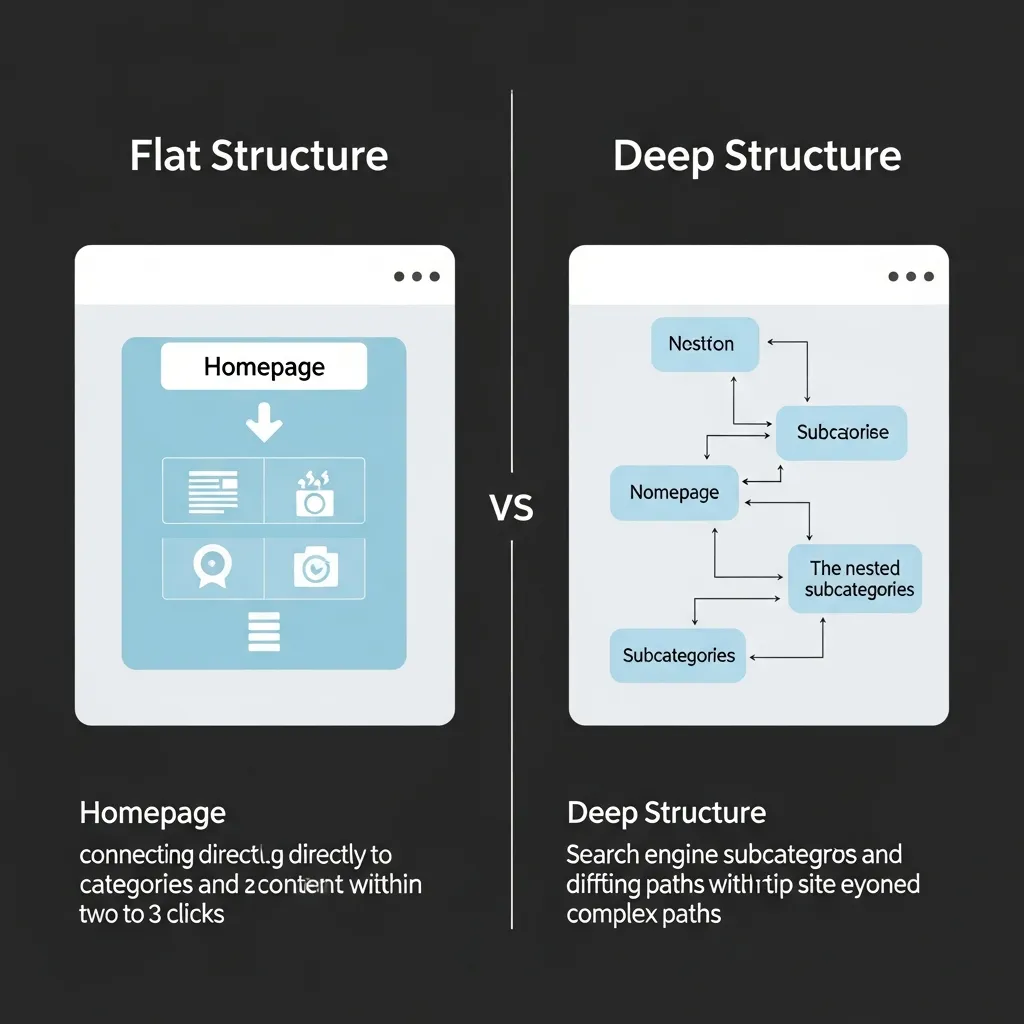
Conversely, deep hierarchical structures are essential for enterprise-level sites, large e-commerce platforms, or vast publishers. These models organize massive amounts of content into distinct topical silos, creating clear paths for users and crawlers. This establishes strong topical authority and manages crawl budget efficiently. The challenge lies in preventing "orphan pages" and ensuring robust internal linking for authority distribution.
In my view, the most effective approach is a balanced, hybrid model tailored to site scale and content volume. A common mistake I've encountered is forcing a flat structure onto an enterprise-level site, leading to overwhelming category pages and diluted keyword targeting. Practical experience shows a thoughtful combination—maintaining a relatively flat structure for core content while allowing deeper categorization—optimizes both user experience and search engine discoverability.
A Strategic Framework for Building a Scalable Content Hierarchy
Building a scalable content hierarchy is not merely about organizing pages; it is about engineering a logical, intuitive path for both users and search engine crawlers. A well-constructed architecture establishes clear topical authority, distributes link equity efficiently, and ensures that valuable content is easily discoverable. Observations indicate that sites with a meticulously planned structure consistently outperform those with an ad-hoc arrangement, especially as content volume grows.
The Content Silo Blueprint: A 5-Step Strategic Framework
Implementing a siloed content architecture is a powerful method to achieve topical authority and improve crawlability. This approach groups related content into distinct, interconnected sections, signaling to search engines the depth of expertise a site possesses on specific subjects. Here is a step-by-step guide to constructing this robust framework:
-
Comprehensive Topic and Keyword Cluster Identification:
The foundational step involves mapping your target audience's informational needs to keyword clusters. Instead of individual keywords, think in terms of overarching topics and their semantic variations. For instance, "sustainable gardening" might be a broad topic, with clusters like "organic pest control," "composting techniques," and "raised garden beds." Each cluster represents a potential top-level category or a significant sub-topic. -
Defining Top-Level Categories (Pillar Pages):
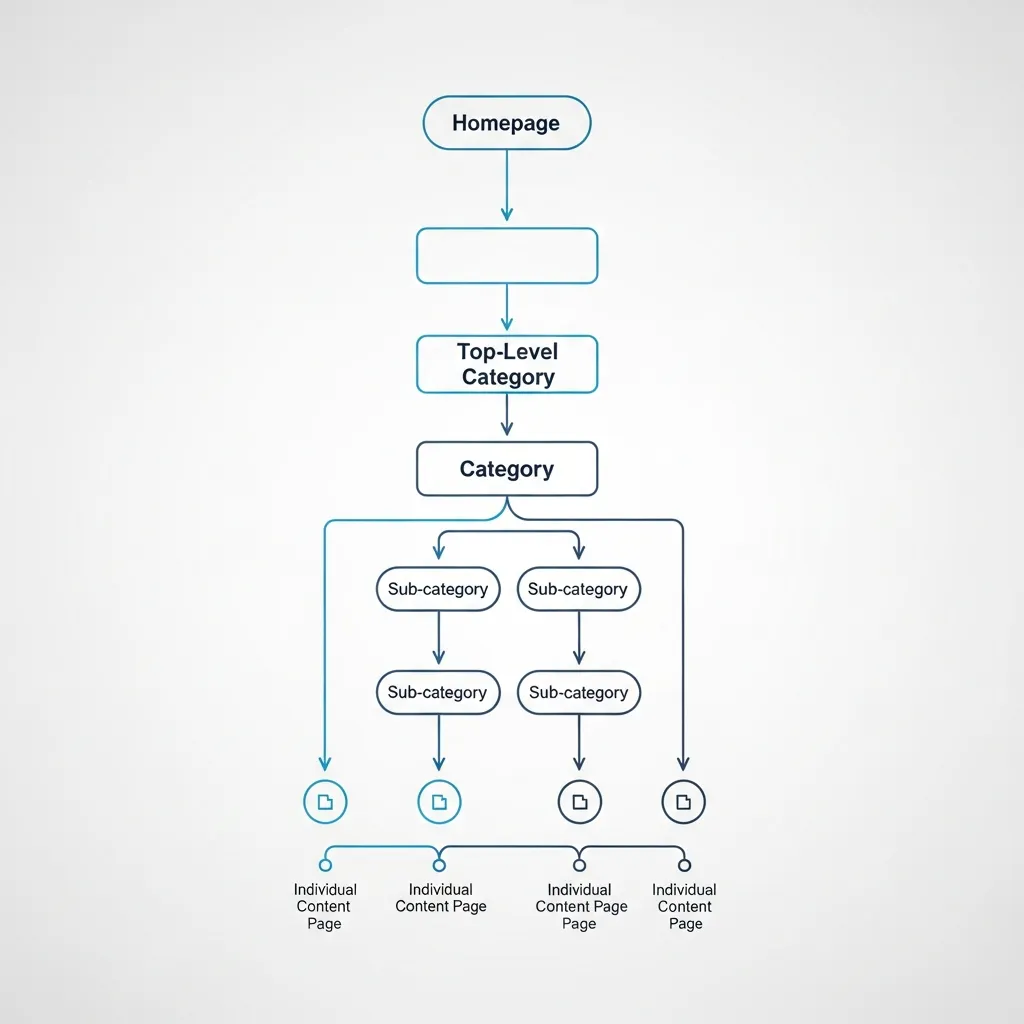
Once keyword clusters are identified, group them into logical, broad top-level categories. These categories will serve as your pillar pages or "content silos." Each pillar page should be a comprehensive resource, internally linking to all the more specific sub-pages within its silo. For an e-commerce site selling outdoor gear, categories might be "Camping Equipment," "Hiking Apparel," and "Water Sports Gear." -
Developing Sub-Category and Supporting Content Pages:
Under each top-level category, create sub-categories and individual content pages that delve deeper into specific aspects of the broader topic. These pages should be highly relevant to their parent category, forming a cohesive thematic unit. For example, under "Camping Equipment," sub-categories could be "Tents," "Sleeping Bags," and "Cooking Gear." Each sub-page should link back to its parent category and other related sub-pages within the same silo.
-
Crafting SEO-Friendly URL Structures:
Your URL structure should visually and programmatically reflect your content hierarchy without being excessively long or "over-optimized." A clean, logical URL path enhances user experience and aids search engine understanding.- Best Practice:
www.yourdomain.com/category/sub-category/page-title - Example (E-commerce):
www.outdoorgear.com/camping-equipment/tents/2-person-lightweight-tent - Example (Blog):
www.digitalinsights.com/seo-strategy/technical-seo/site-architecture-basics
Avoid unnecessary parameters or overly deep nesting (more than 3-4 levels), which can signal less importance to crawlers and complicate navigation.
- Best Practice:
-
Strategic Internal Linking within Silos:
Internal linking is crucial for silo construction. Link from pillar pages to sub-pages, and from sub-pages back to the pillar. Use descriptive anchor text. Cross-linking between different silos should be minimal and only occur when genuinely relevant to maintain the integrity of each topical silo. This reinforces thematic grouping and ensures link equity flows purposefully.
Pro Tip: When designing your hierarchy, consider the "Rule of Three Clicks." Users and crawlers should ideally be able to reach any page on your site within three clicks from the homepage. This ensures discoverability and a smooth user journey.
Practical Applications of Scalable Structures
- E-commerce Structure: A scalable e-commerce site typically follows a clear path:
Homepage > Category > Sub-Category > Product Page. This allows for easy expansion as new product lines are introduced. - Blog Structure: A successful blog often uses
Homepage > Topic Category > Sub-Topic Tag/Series > Individual Article. This allows for deep dives into niche subjects while maintaining a clear overview of broader themes.
Auditing for Structural Gaps: Identifying 'Orphan Pages' and 'Dead Ends'
Even with the best planning, site structures can develop issues. Regularly auditing your site is crucial for identifying problems that hinder discoverability.
- Orphan Pages: These are pages on your site that are not linked to from any other internal page. They are difficult for search engines to find and for users to navigate to. Technical data suggests that orphan pages rarely achieve significant organic visibility.
- Dead Ends: These are pages that have no outgoing internal links, effectively stopping the flow of link equity and user navigation. While not as severe as orphan pages, they represent missed opportunities for guiding users deeper into your site.
To identify these issues, utilize tools like Screaming Frog, Sitebulb, or Google Search Console. Crawl your site and compare the crawled URLs against a list of all indexed URLs. Any indexed URL not found in the crawl is likely an orphan page. Similarly, identify pages with zero outgoing internal links. Addressing these gaps by integrating them into the site's internal linking structure is essential for maintaining a healthy, scalable hierarchy.
Optimizing Internal Linking and Navigation Flow
Beyond a robust content hierarchy, effective internal linking and navigation flow are paramount for both user experience and search engine crawlability. Implementing breadcrumb navigation clearly delineates a user's path within your site, such as 'Home > Category > Subcategory > Article.' This not only aids user orientation but also provides crucial contextual signals to search engine bots about your site's structure and content relationships.
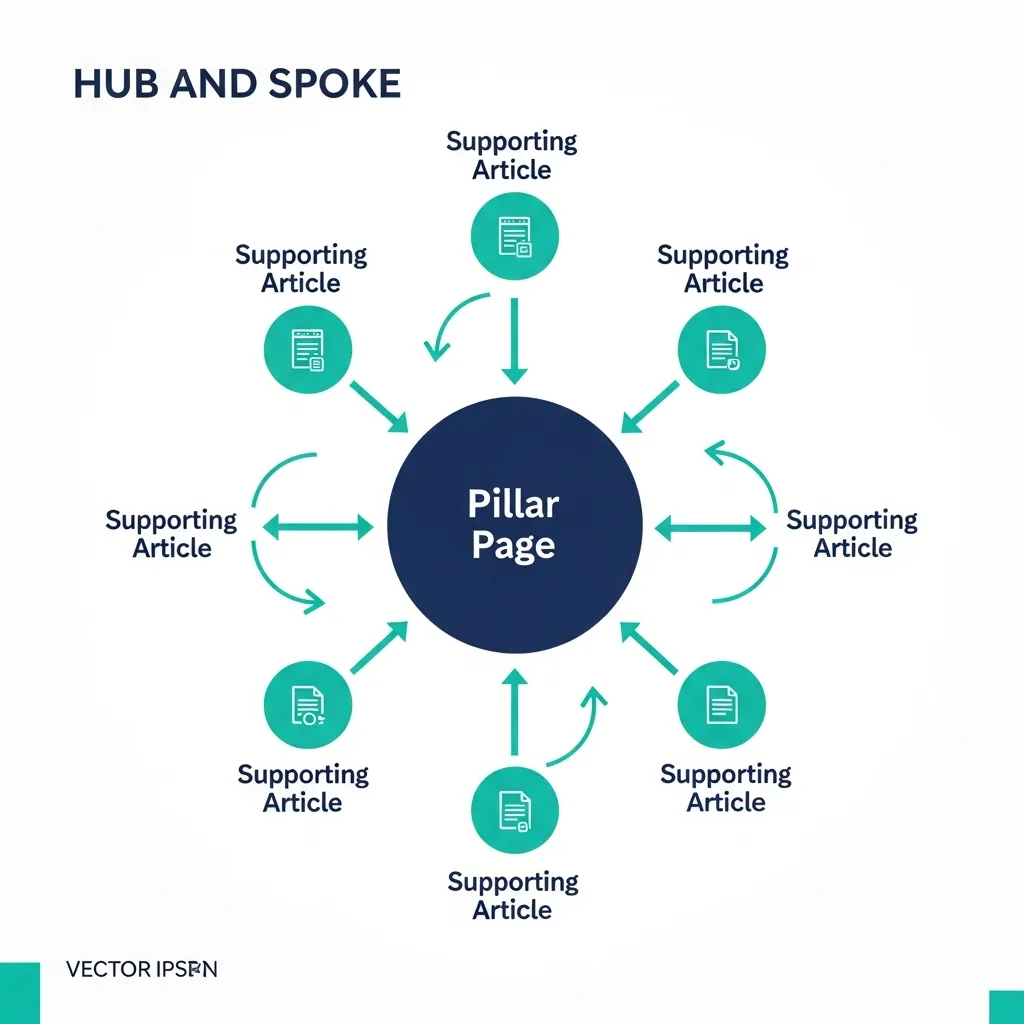
The 'Hub and Spoke' internal linking strategy is highly effective for distributing link equity. Pillar pages (hubs) link out to relevant supporting content (spokes), which in turn link back to the hub. This systematically channels authority and relevance, reinforcing topical clusters established in your content hierarchy. For anchor text, prioritize variety and relevance. A common mistake I've encountered is over-optimizing anchor text, leading to unnatural patterns; diversifying anchors with partial matches, branded terms, and natural language is key.
Strategic management of footer and sidebar links is also vital. While these offer navigational convenience, avoid excessive or irrelevant links that dilute their impact. In my view, the most effective approach is to reserve these prominent areas for high-level category pages, essential legal information, or key service offerings, ensuring maximum impact without overwhelming users or bots.
Technical Elements: Sitemaps, Mobile-Friendliness, and Schema
Effective site structure relies heavily on robust technical implementation. XML sitemaps are indispensable, acting as direct roadmaps for search engine crawlers by detailing all discoverable URLs. Complementary HTML sitemaps serve as user-friendly navigational aids, indirectly reinforcing structure for crawlers.
The shift to mobile-first indexing reshapes navigation requirements. A seamless, consistent mobile user experience is paramount, ensuring crawlers perceive the same well-organized structure as desktop users. Observations indicate that sites with poorly optimized mobile navigation often experience reduced crawl efficiency.
Reinforcing this structure with Schema markup is crucial. Implementing BreadcrumbList Schema not only enhances user experience by showing the current path but also explicitly communicates page hierarchy to search engines. Similarly, SiteNavigationElement clarifies main navigation components, aiding bot understanding.
Finally, site speed is a critical technical factor influencing how efficiently bots can crawl a complex architecture. A faster-loading site allows search engine bots to process more pages within their allocated crawl budget, ensuring deeper indexation of your hierarchy. Technical data suggests a direct correlation between improved site speed and enhanced crawl frequency.
Critical Errors in Site Architecture to Avoid
Effective SEO site structure is crucial, but equally important is avoiding common pitfalls that can undermine your efforts.
First, beware of keyword cannibalization, often caused by overlapping categories or poorly differentiated content. This confuses search engines about which page holds authority, diluting your ranking potential for target terms.
Furthermore, a click depth exceeding 4 levels significantly impacts indexation rates and user experience. Deeper pages receive less "link juice" and are crawled less frequently, making them virtually invisible to search engines.
A common mistake I've encountered is over-tagging, which creates a sprawl of thin content pages. These pages offer minimal value and can lead to crawl budget inefficiencies, wasting valuable resources.
Finally, changing site architecture without implementing proper 301 redirects is catastrophic. I've witnessed projects lose over 60% of their organic traffic within weeks due to this oversight, turning a strategic update into a major setback. Meticulous redirect planning is non-negotiable for preserving SEO value.
Future-Proofing Your Digital Foundation
A well-organized SEO site structure is your long-term SEO asset, ensuring sustained visibility and smooth user journeys. Prioritizing user experience always strengthens SEO; I've seen 15% crawl rate improvements resulting from structural refinements. This future-proofs your site against algorithmic shifts. Begin by mapping your content hierarchy today to build a more resilient digital presence.
Frequently Asked Questions About SEO Site Structure
What is SEO site structure?
SEO site structure refers to how a website's pages are organized and linked together. A logical structure helps search engines crawl and index content more efficiently while improving user navigation.
What is the "Three-Click Rule" in website architecture?
The Three-Click Rule suggests that users should be able to find any information on a website within no more than three mouse clicks from the homepage to ensure optimal usability and crawl depth.
What are orphan pages?
Orphan pages are pages on a website that have no internal links pointing to them. This makes them difficult for search engine bots to discover and index, often leading to poor organic visibility.
How do content silos improve topical authority?
Content silos group related pages into distinct categories. By interlinking these related pages, you signal to search engines that your site has deep expertise in a specific subject, which builds topical authority.