Defining Structured Data for Digital Commerce
Modern digital commerce demands more than basic text matching. Product schema markup offers a standardized vocabulary (Schema.org) that explicitly defines product attributes like price, availability, and reviews. This data moves search engines beyond simple crawling, fostering a deep semantic understanding of your offerings.
Research indicates this shift is crucial for:
- Achieving greater visibility in competitive markets.
- Ensuring the delivery of precise product data.
For instance, a plain text listing transforms into an informative rich snippet, directly influencing user engagement. This contextual comprehension is vital for enhancing AI visibility and ensuring product data resonates effectively with modern algorithms.
Performance Benefits of Rich Product Results
Implementing structured data translates directly to a significant performance uplift. Evidence indicates that rich product results, featuring elements like star ratings, pricing, and availability, dramatically improve Click-Through Rates (CTR). This visual enhancement helps your product stand out amidst standard search results, capturing user attention more effectively.
Beyond initial clicks, robust schema drives qualified traffic. By transparently displaying critical information such as price and stock status directly in the Search Engine Results Pages (SERPs), users can pre-qualify their interest. This means visitors arriving at your site are more likely to convert, having already confirmed key purchase criteria.
Moreover, comprehensive schema is vital for Google Merchant Center visibility. It feeds accurate, consistent data that is crucial for both paid Shopping ads and free product listings. This consistency extends to improving the overall relevance and discoverability of your products within organic search listings, bolstering your entire e-commerce presence.
Anatomy of a Product Schema: Required and Recommended Properties
To effectively implement structured data, understanding its core properties is essential. Required properties include the name, and at least one of review, aggregateRating, or offers. Omitting these limits visibility, hindering search engines from fully assessing product quality and availability.
For enhanced rich snippets, recommended properties are vital. Incorporating brand, sku, and Global Trade Item Numbers (GTINs)—such as GTIN8, GTIN12, GTIN13, or GTIN14—provides necessary disambiguation. Practical experience shows these identifiers help search engines match products accurately across different platforms.
The image property is also indispensable. While not strictly "required" for basic validation, a high-quality product image is crucial for visual search and image carousels. Technical data suggests that products with clearly defined image properties achieve significantly higher click-through rates.
Step-by-Step Implementation Using JSON-LD
JSON-LD is currently the preferred format for product schema markup, largely superseding Microdata. Its primary advantage is a clean separation from visible HTML, allowing structured data to exist as a distinct JavaScript object. This simplifies maintenance and minimizes interference with visual rendering or CSS—a common issue with Microdata.
Implementation requires placing a <script type="application/ld+json"> block within the HTML. While it can reside in the <body>, technical observations indicate that embedding it in the <head> section is generally preferred. This ensures search engine crawlers discover and process structured data early, aiding faster indexing and rich snippet display.
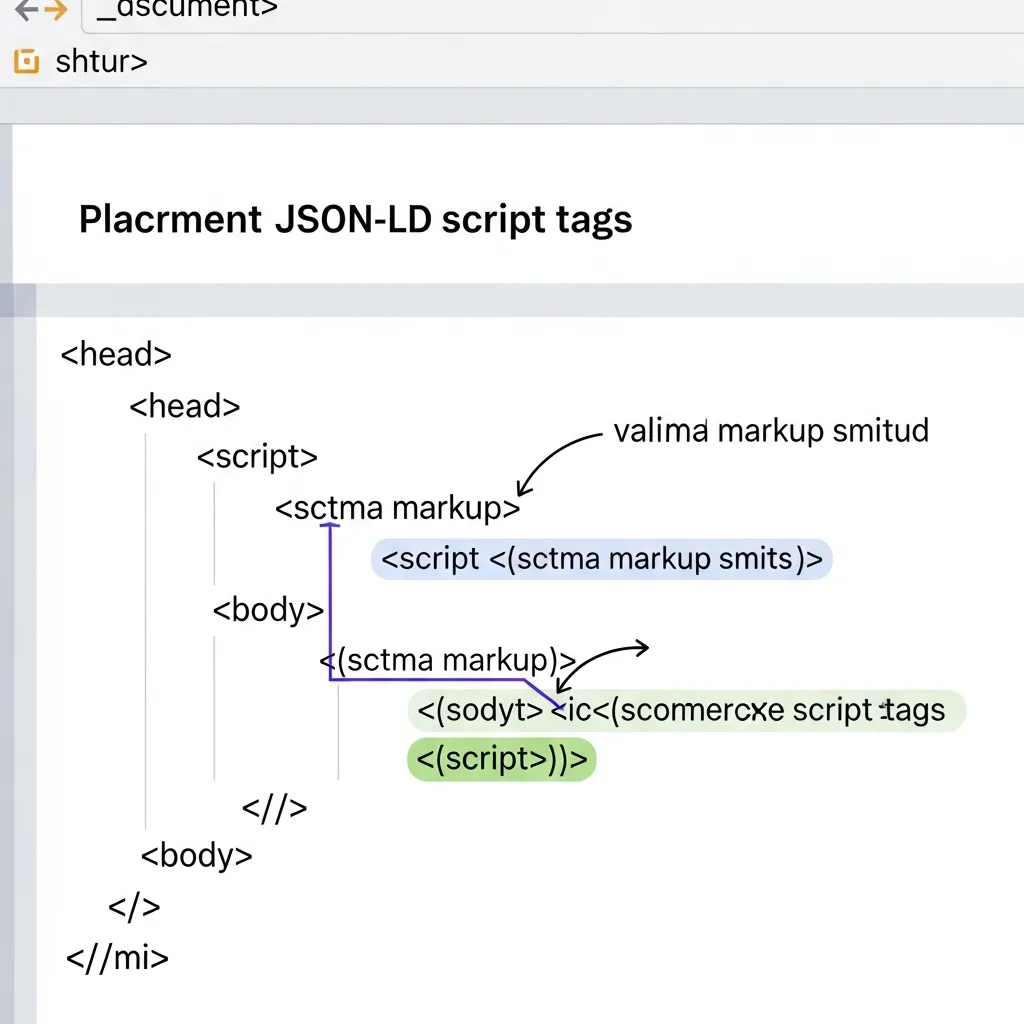
The core task involves mapping dynamic e-commerce data to appropriate Schema.org properties. Product names, prices, availability, and descriptions stored in a database must be programmatically injected into the JSON-LD script. This dynamic generation is crucial for large inventories, ensuring consistency across thousands of product pages. Practical experience shows that templating engines or CMS plugins are invaluable for automating this complex data synchronization.
Advanced Configuration: Handling Variations, Shipping, and Error Resolution
Optimizing schema beyond the basic Product type is essential for a competitive advantage. A deeper integration of specific properties significantly influences a product's eligibility for advanced rich snippets, especially those related to merchant listings and user trust signals.
Handling Product Variations with AggregateOffer
For e-commerce sites featuring products with multiple options—such as different sizes, colors, or configurations—the AggregateOffer type is indispensable. Instead of creating separate Offer schemas for every variation, AggregateOffer allows you to represent a range of prices and availability under a single product listing.
Implement AggregateOffer by nesting it within the offers property of your Product schema. Key properties to include are lowPrice and highPrice to reflect the price range of the variations. Additionally, offerCount specifies the total number of distinct variations available. For instance, a t-shirt available in multiple sizes with different price points would leverage AggregateOffer to present a clear overview in search results.
Enhancing Merchant Listings: Shipping and Returns
To qualify for rich results that highlight shipping and return information, integrating shippingDetails and returnPolicy into your schema is critical. Search engines prioritize products that offer transparency on these operational aspects, directly impacting purchasing decisions.
The shippingDetails property should include the shippingRate (with value and currency), shippingDestination (specifying regions), and deliveryTime (detailing minDeliveryTime and maxDeliveryTime). Similarly, the returnPolicy property allows you to articulate your conditions, including returnPolicyCategory, merchantReturnDays, and returnFees. Ensuring these properties are accurate and consistent with your website's policies is paramount for eligibility in enhanced merchant listings.
Building Trust with Reviews and Ratings
Consumer trust is heavily influenced by social proof. Connecting Review and AggregateRating to your schema allows search engines to display star ratings and review counts directly in search results.
Within the Product schema, aggregateRating should contain ratingValue (the average rating), ratingCount (total number of ratings), and reviewCount (total number of reviews). Individual Review schemas can then be nested, each detailing an author, reviewRating, and reviewBody. Technical data suggests that products with visible ratings enjoy higher engagement levels.
Error Resolution and Validation: The Schema Resolution Protocol
Even with careful implementation, errors can occur. Validating your markup is a non-negotiable step to ensure proper indexing and rich result eligibility.
The Schema Resolution Protocol
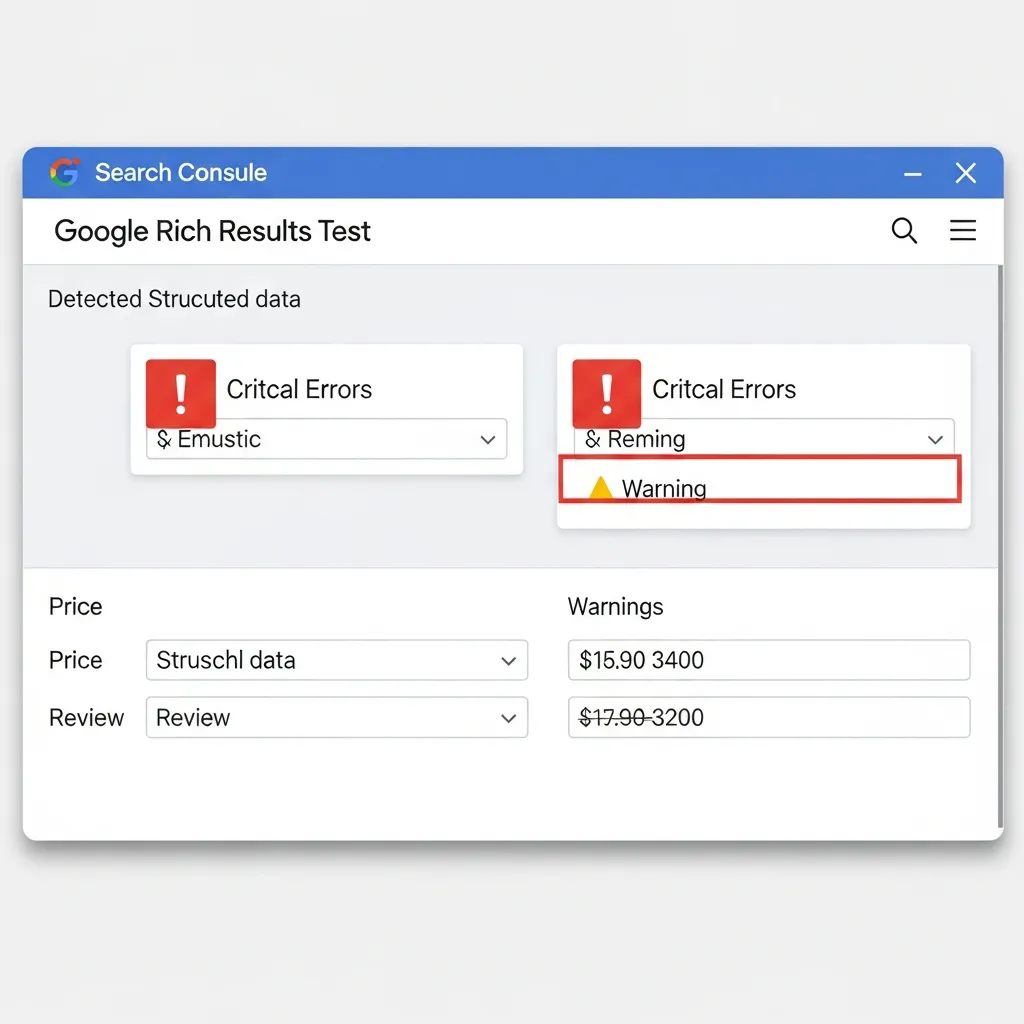
- Utilize Google's Rich Results Test: This tool identifies critical errors preventing rich results and provides warnings for recommended improvements. Focus on resolving all "Critical errors" first.
- Employ the Schema Markup Validator: For broader validation, use the Schema Markup Validator to check syntax and adherence to Schema.org standards.
- Address Missing Fields: Review the validator's output for missing elements, such as
priceorpriceCurrency, which are mandatory for anOffer. - Correct Invalid Price Formats: Ensure
pricevalues are numeric andpriceCurrencyuses ISO 4217 currency codes (e.g., "USD"). - Resolve URL Mismatches: Verify that the
urlproperty points to the canonical URL of the product page to avoid confusing search engines. - Verify Live Data in Search Console: After fixing errors, request re-indexing and monitor the "Products" enhancement report to confirm rich results are being detected.
Pro Tip: When troubleshooting, isolate the schema JSON-LD code and test it in a validator separately from the page content. This helps pinpoint if errors are within the schema itself or due to conflicts with other page elements.
Critical Mistakes and Ethical Implementation Standards
Ethical implementation is paramount for sustainable success in product schema markup. A critical mistake often encountered is the use of 'hidden' schema, where data is present in the markup but not visible to users on the page. Search engines explicitly prohibit this practice; all structured data must accurately reflect the content displayed to the user. Mismatched data can lead to a structured data manual action.
Equally damaging is the fabrication of reviews or the manipulation of product ratings. While tempting, this directly violates quality guidelines. Maintaining genuine user feedback is essential for long-term brand trust. Consequences for deceptive practices are severe, ranging from the loss of rich results eligibility to a complete manual action that can impact organic visibility for months.
The Impact of Product Schema Markup on AI Search Engines
Product schema markup directly empowers Large Language Models (LLMs) to precisely parse product facts. Well-implemented schema significantly reduces the ambiguity LLMs face when extracting crucial details like price, availability, and reviews. This structured data is paramount for generating accurate AI-powered search snapshots and direct answers.

It ensures your product’s attributes are explicitly understood rather than merely inferred from page content. This direct feeding of facts leads to higher accuracy in AI-generated summaries, often appearing in featured snippets and answer boxes. Effectively, product schema is essential for future-proofing visibility as search shifts toward delivering intent-based, concise answers.
Summary and Long-Term Strategy for E-commerce Success
Accurate product schema markup is no longer optional; it is fundamental for maximizing e-commerce visibility and ensuring search engines, including AI models, precisely understand your offerings.
A common mistake is neglecting schema updates as product lines evolve, resulting in lost rich snippet opportunities. As catalogs scale, regular audits are indispensable to prevent data decay and maintain schema integrity.
Consistently prioritizing data clarity through schema is a strategic imperative for long-term e-commerce success, offering a significant competitive edge. This commitment ensures your products remain prominently featured and accurately represented across all search platforms.
Start now by reviewing your current implementation for potential updates and expansions.
Frequently Asked Questions
What is product schema markup?
Product schema markup is a standardized code (Schema.org) added to a website to provide search engines with detailed information about products, such as price, availability, and ratings, which helps generate rich snippets.
Why is JSON-LD preferred for product schema?
JSON-LD is the preferred format because it separates the structured data from the visible HTML content. This makes it easier to maintain, less likely to break page styling, and is the format specifically recommended by Google.
What are the required properties for product schema?
To qualify for rich results, you must include the product "name" and at least one of the following properties: "review", "aggregateRating", or "offers".
How does product schema markup affect AI search results?
Schema markup provides explicit facts that Large Language Models (LLMs) use to generate accurate AI search snapshots. It reduces ambiguity, ensuring your product details are correctly represented in AI-powered answers.