The Evolution of Search: Why Topics Matter More Than Keywords
The landscape of online search has undergone a profound transformation, moving beyond simplistic keyword matching to a sophisticated understanding of user intent and topical authority. For content strategists and marketing managers, recognizing this evolution is no longer optional; it's fundamental to achieving visibility and relevance.
Previously, SEO often revolved around optimizing for exact-match keywords, leading to content that sometimes prioritized repetition over value. However, search engines currently leverage advanced algorithms to decipher the search intent behind a query, not just the words used. This means understanding whether a user is looking for information, a transaction, navigation, or a specific answer. Field observations indicate that content that genuinely answers the user's underlying question, even if it doesn't contain the exact keyword phrase multiple times, performs better.
Modern search engines assess topical depth by analyzing a website's comprehensive coverage of a subject. They seek to understand the breadth of sub-topics, related questions, and interconnected concepts a site addresses. This shift is powered by semantic search, which enables engines to grasp the context, meaning, and relationships between words and phrases. For instance, a query about "sustainable energy" will trigger results that cover solar, wind, geothermal, and policy implications, reflecting a deeper conceptual understanding rather than just keyword density.
This paradigm shift presents both a challenge and an immense opportunity:
- Building true authority in a niche.
- Creating content that resonates deeply with target audiences.
- Achieving sustained organic visibility.
Consider a content team tasked with ranking for "best digital marketing strategies." Instead of creating isolated articles for "social media marketing tips" and "email marketing best practices," they now need a cohesive structure that demonstrates mastery over the entire digital marketing domain, linking these pieces together under a broader, authoritative umbrella.
Defining the Core Components: Pillar Pages, Clusters, and Hyperlinks
Understanding how to structure your content for maximum impact begins with clearly defining the foundational elements of a robust topical authority strategy. Field observations indicate that success hinges on the symbiotic relationship between three core components: the Pillar Page, Topic Clusters, and the strategic use of Hyperlinks. These elements work in concert to signal comprehensive expertise to search engines, while simultaneously providing an exceptional user experience.
The Pillar Page: Your Comprehensive Hub
At the heart of any effective content strategy is the Pillar Page. This is a comprehensive, high-level resource that addresses a broad subject area in its entirety. Unlike traditional blog posts that might focus on a specific long-tail keyword, a pillar page aims to be the definitive guide, answering common questions and providing a holistic overview. It covers the 'what,' 'why,' and 'how' of a topic, serving as an anchor for more detailed content.
Pillar pages come in various forms, tailored to specific strategic goals:
- 101 Guides: Foundational resources introducing a broad subject (e.g., "The Beginner's Guide to Content Marketing").
- Resource Pages: Curated compilations of tools, external articles, or internal content related to a topic (e.g., "Ultimate SEO Toolkit for Marketers").
- Service Pillars: Pages that comprehensively explain a core service and its various facets, demonstrating expertise and value (e.g., Planik.io's "Mastering AI-Powered Content Creation").
To see how these concepts are applied in real-world scenarios, you can review several pillar page examples
Topic Clusters: Providing Depth and Detail
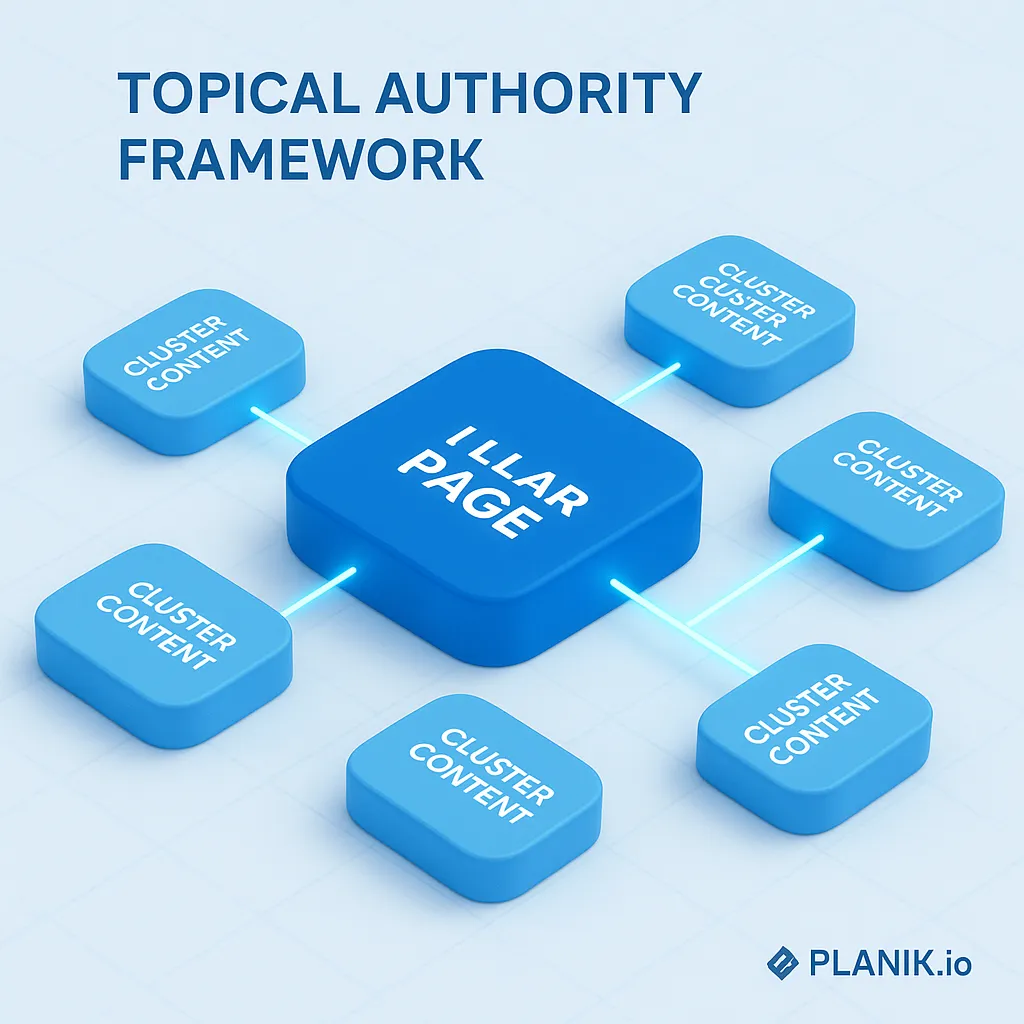
Supporting each pillar page are Topic Clusters, often referred to as cluster content or subtopics. These are individual articles, blog posts, or guides that delve deeply into specific aspects or sub-points introduced on the pillar page. Each cluster piece focuses on a narrower, more detailed facet of the overarching topic, providing specialized information that enhances the pillar's authority. For example, a pillar on "Content Marketing" might be supported by clusters like "Advanced Keyword Research Techniques" or "Measuring Content ROI with Analytics." The relationship is crucial: clusters provide the depth that the pillar page only introduces.
If you are new to this content strategy, it is helpful to explore topic clusters for beginners
The Hyperlink: The Connective Tissue
The crucial element binding pillar pages and topic clusters together is the Hyperlink. Strategic internal linking within your content architecture serves as the connective tissue, signaling to search engines the hierarchical relationship and comprehensive coverage of your subject matter. The pillar page should link out to all its supporting cluster articles, and, critically, every cluster article must link back to the main pillar page. This bidirectional linking structure helps search engines understand the depth of your content, distributing link equity and reinforcing the pillar page's status as the authoritative source on the broad topic. Practical experience shows that a well-executed internal linking strategy not only boosts SEO but also significantly improves user navigation and engagement, guiding readers through a logical path of information.
The Strategic Advantages of a Cluster-Based Content Model
The adoption of a cluster-based content model represents a significant strategic shift from traditional keyword-centric approaches. This architecture offers a multitude of benefits impacting SEO performance, user engagement, and long-term brand positioning.
A well-structured content cluster inherently creates a more organized and logical website architecture. By grouping related content around a central pillar, search engines can more efficiently crawl and index your site. This clear hierarchical structure helps bots understand the relationships between different pieces of content, signaling the depth and breadth of your coverage on a specific topic. Field observations indicate that robust internal linking within clusters leads to faster content discovery and re-indexing, boosting recognition of new or updated pages.
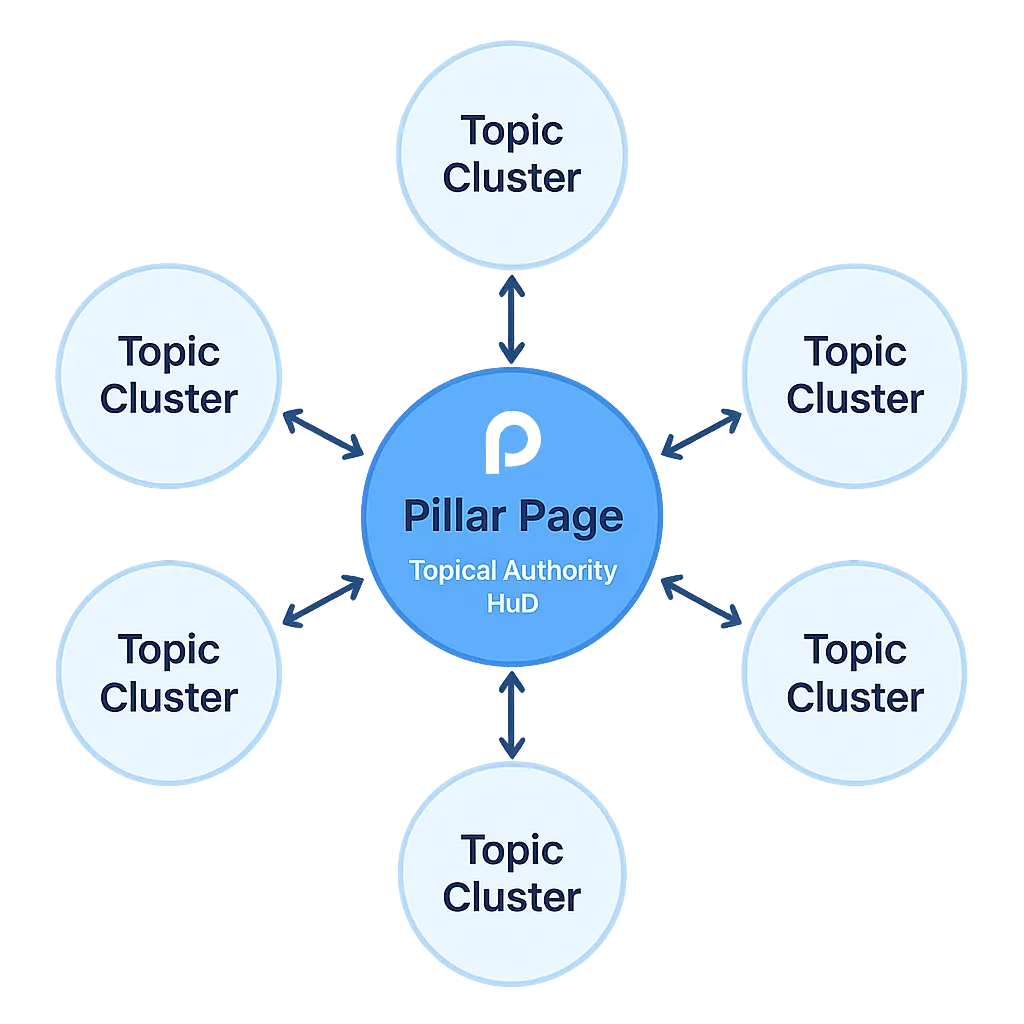
One of the most potent advantages lies in the distribution of link equity. When a pillar page links to its supporting cluster articles, and those articles link back to the pillar, it creates a powerful network of internal links. This systematic approach ensures that authority flows efficiently throughout the cluster, strengthening the ranking potential of every piece of content within that topic. Practical experience shows that even less prominent articles within a well-linked cluster can see an uplift in organic visibility, benefiting from the collective authority. This shared equity signals deep, relevant topic coverage to search engines.
This systematic approach is one reason why long-tail keywords drive targeted traffic so effectively.
Beyond search engine benefits, a cluster model significantly improves the user experience. When visitors land on a pillar page, they are presented with a comprehensive overview and clear pathways to delve deeper into specific sub-topics via internal links. This intuitive navigation allows users to easily find answers to related questions without leaving your site, fostering a more engaging and informative journey. The result is often increased on-site dwell time and reduced bounce rates, as users explore valuable content. This positive user behavior reinforces your site's relevance and utility as a strong ranking signal.
Ultimately, a cluster-based strategy is about building topical authority. By meticulously covering an entire subject area from multiple angles, your brand demonstrates profound expertise and becomes a go-to resource in your niche. This comprehensive approach establishes trust with both your audience and search engines. For instance, a platform like Planik.io, by consistently publishing deep, interconnected content, can solidify its position as an authoritative voice. This long-term investment cultivates a strong reputation, attracting more organic traffic and fostering greater credibility among your target audience.
This focus on credibility is a central theme when exploring how E-E-A-T and topic clusters build authority.
Building Your Authority: A Step-by-Step Guide to Implementation
Transitioning from theoretical understanding to practical application is where the true competitive advantage is forged. Implementing a robust pillar page and topic cluster strategy demands a methodical approach, integrating deep audience insights with rigorous content planning and execution. This section outlines a comprehensive, step-by-step process designed to guide marketing managers and content strategists through the intricate journey of building undeniable topical authority. Field observations indicate that the most successful implementations are those that prioritize strategic alignment and user intent throughout every stage.
1. Identifying Broad Core Topics Based on Buyer Personas and Business Goals
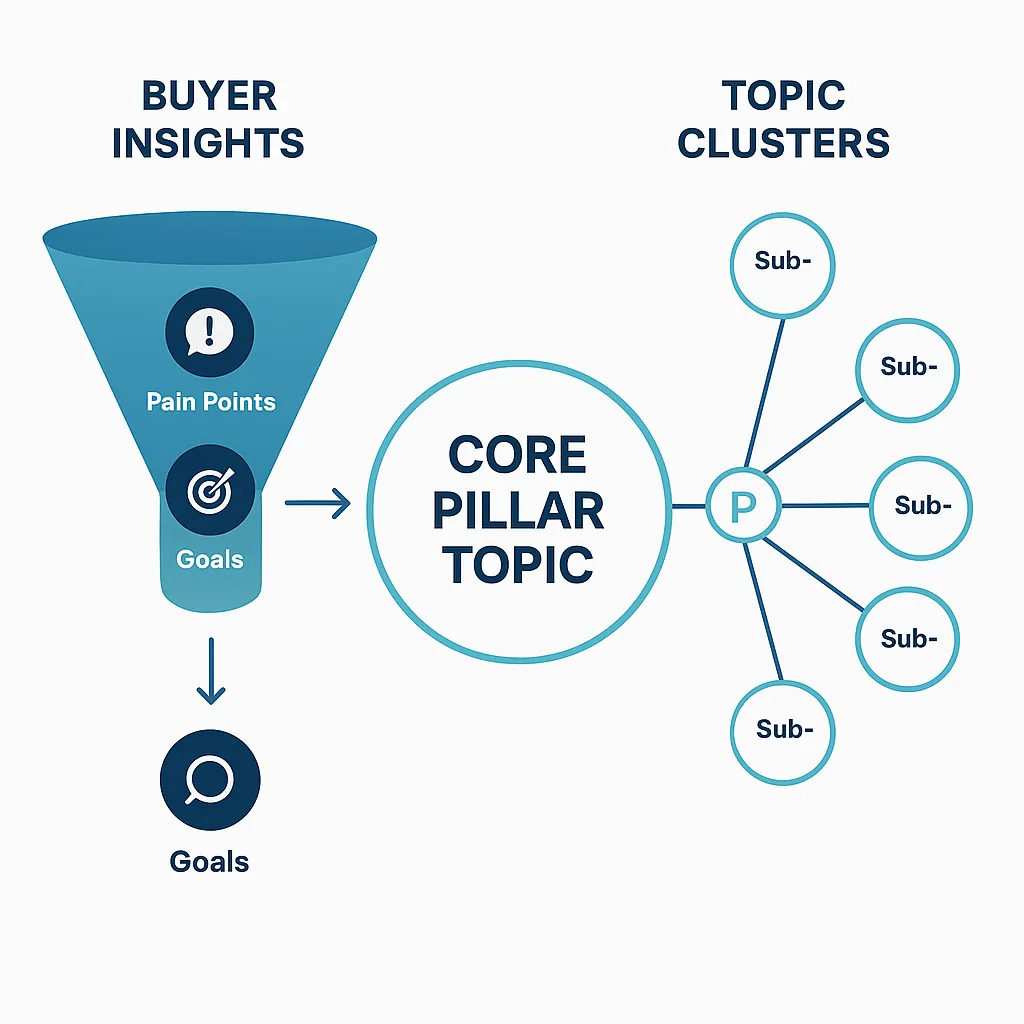
The foundation of any successful topical authority strategy lies in accurately identifying your broad core topics. These are the overarching themes central to your business, directly addressing the primary pain points, aspirations, and information needs of your target buyer personas. This initial step is less about keywords and more about understanding your market landscape and your unique value proposition.
Begin by deeply analyzing your buyer personas. What challenges do they face that your product or service solves? What questions do they consistently ask during their journey? For instance, if you offer project management software, a core topic might be "Effective Project Planning" or "Team Collaboration Strategies." These are not product features, but rather the broader problems your audience seeks to solve.
Next, align these potential topics with your business goals. Which areas of expertise, when amplified, will drive the most significant impact on lead generation, sales, or brand recognition? A core topic must be substantial enough to support an entire ecosystem of related content, demonstrating comprehensive expertise. Practical experience shows that focusing on 5-7 core topics initially allows for manageable yet impactful implementation. Avoid topics that are too niche to sustain a cluster or too broad to achieve specific authority.
2. Conducting Keyword Research to Find Relevant Cluster Subtopics
Once core topics are established, the next crucial step is to populate these themes with relevant, high-intent cluster subtopics. This involves meticulous keyword research, but with a specific focus on semantic relationships and user intent rather than just search volume. The goal is to uncover the specific questions and problems users are searching for within your broad topic.
Utilize keyword research tools to brainstorm long-tail keywords, related questions, and "people also ask" queries stemming from your core topic. For a core topic like "Effective Project Planning," subtopics might include "Agile project planning best practices," "how to create a project timeline," "risk management in project planning," or "tools for project scope definition." These are specific, actionable queries that demonstrate a clear user need.
To refine your strategy further, you should explore advanced techniques for keyword research for topic clusters
Categorize these keywords into logical groups, each representing a potential cluster content piece. Focus on variety in intent – some subtopics might address awareness-stage questions, others consideration, and some even decision-stage queries. This semantic mapping ensures that your cluster comprehensively covers the topic from multiple angles, catering to different stages of the user journey. The aim is to achieve topical depth, not just keyword density.
3. Auditing Existing Content to Identify 'Gap' Areas and Reuse Opportunities
Before embarking on creating entirely new content, conduct a thorough content audit of your existing assets. This step is critical for efficiency and maximizing ROI. Your current content library likely contains valuable pieces that can be repurposed, updated, or even serve as foundational elements for your new cluster strategy.
This audit serves as the basis for a more comprehensive approach to content planning for SEO
Categorize your existing content by topic and performance (e.g., traffic, rankings, conversions). Identify articles that already address aspects of your chosen core topics or potential subtopics. These can be:
- Pillar Page Candidates: Long-form, comprehensive guides that could be expanded or refined into a pillar page.
- Cluster Content Candidates: Shorter articles that cover specific subtopics, which can be updated, optimized, and linked to the pillar.
- Gap Areas: Topics within your chosen clusters for which you have no existing content, signaling a need for new creation.
- Underperforming Content: Pieces that might be strong in topic but weak in SEO or user engagement, ripe for optimization.
This audit helps identify content redundancies, opportunities to consolidate multiple weak articles into one strong one, and areas where new content creation is absolutely necessary. It streamlines your efforts, preventing duplicate work and ensuring that every piece of content contributes strategically to your topical authority.
4. Creating the Pillar Page: Balancing Breadth and Depth Without Over-Optimizing
The pillar page is the cornerstone of your topic cluster, serving as a comprehensive, high-level overview of your broad core topic. It's designed to provide substantial value on its own, answering most common questions related to the topic, while also linking out to more detailed cluster content.
When creating your pillar page, focus on balancing breadth and depth. It should be extensive enough to be considered an authoritative resource (often 2,000-5,000+ words, depending on the topic's complexity), but it should not delve into every minute detail. Instead, it introduces concepts, provides definitions, outlines key strategies, and then points to your cluster content for deeper dives. For example, a pillar on "Digital Marketing Strategy" might cover SEO, content marketing, social media, and email marketing at a high level, with each of those linking to separate cluster articles.
Key considerations for pillar page creation:
- Comprehensive Overview: Cover all major facets of the core topic without getting bogged down in specifics.
- User-Centric Navigation: Include a table of contents with anchor links to improve user experience and navigability.
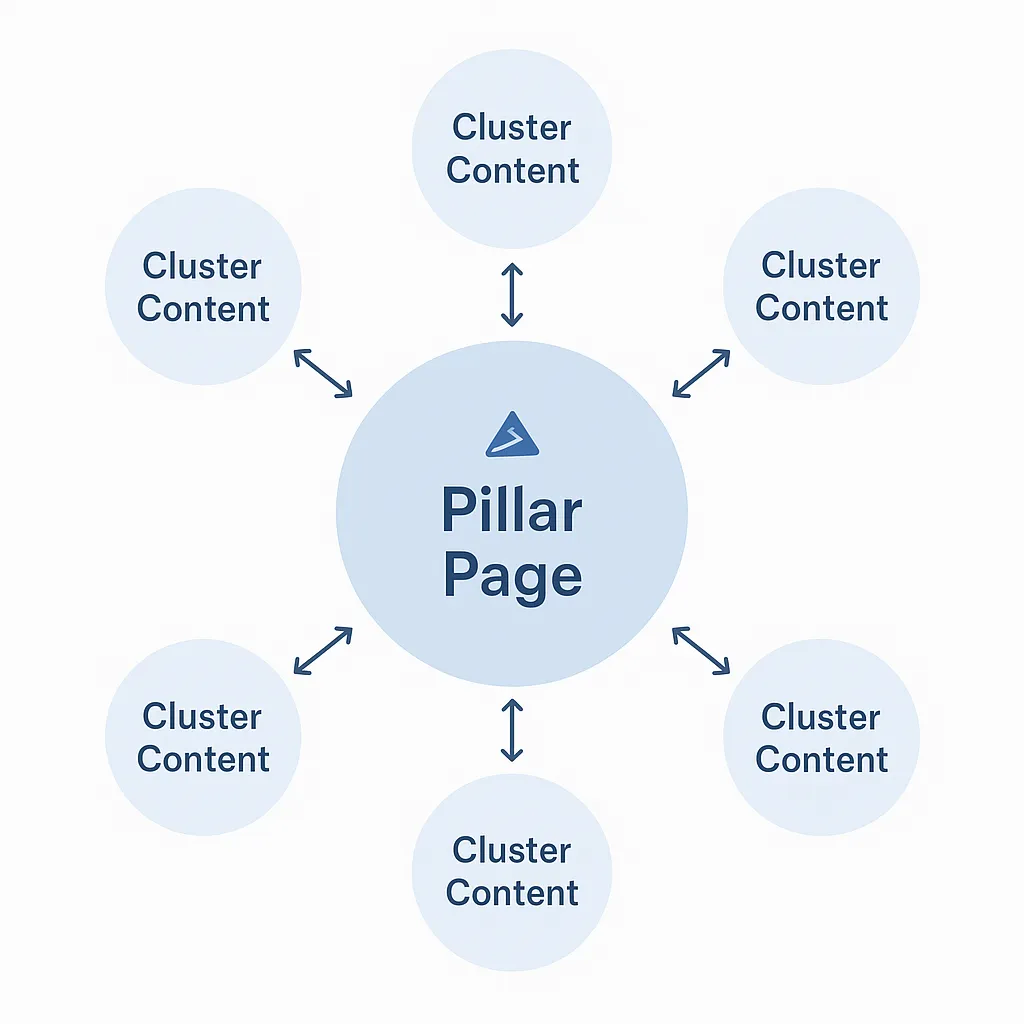
- Internal Linking Strategy: Crucially, link out to all relevant cluster content and ensure these cluster pages link back to the pillar. This reciprocal linking is vital for distributing link equity and signaling topical relevance to search engines.
- Avoid Over-Optimization: Focus on natural language, user intent, and readability. Don't stuff keywords; instead, ensure the content genuinely covers the topic exhaustively and semantically. The goal is to educate and inform, not just rank for a single keyword.
5. Developing Cluster Content That Answers Specific, Long-Tail Queries
With the pillar page established, the next phase involves developing the cluster content. Each piece of cluster content should address a specific, often long-tail query that stems from a subtopic identified during your keyword research. These articles provide the granular detail that the pillar page only introduces.
For instance, if your pillar page is "Mastering Content Marketing," a cluster piece might be "How to Conduct a Content Audit for SEO" or "Best Practices for Evergreen Content Creation." Each cluster article should:
- Focus on a single, specific intent: Answer one question thoroughly and comprehensively.
- Be highly optimized: Target the primary long-tail keyword and related semantic terms for that specific subtopic.
- Provide actionable insights: Offer practical advice, examples, and step-by-step instructions relevant to the query.
- Link back to the pillar page: This reinforces the topical connection and strengthens the overall cluster structure. It also aids in distributing authority.
- Link to other relevant cluster pieces: Where appropriate, link between related cluster articles to further enhance the user journey and topical depth.
The synergy between the pillar and its clusters is paramount. The pillar page establishes broad authority, while the cluster content demonstrates deep expertise in specific areas, collectively building a powerful network of interconnected, valuable information.
6. Mapping the User Journey from Awareness to Conversion Within the Cluster
A truly effective topic cluster strategy extends beyond mere SEO benefits; it meticulously maps to the user journey, guiding prospects from initial awareness through consideration to eventual conversion. Each piece of content, whether pillar or cluster, should ideally serve a purpose within this journey.
Consider the typical stages:
- Awareness: Users are identifying a problem or seeking general information. Pillar pages and broad cluster content (e.g., "What is [Core Topic]?") serve this stage well.
- Consideration: Users are researching solutions and comparing options. More specific cluster content, perhaps comparing methodologies or exploring solution types (e.g., "Agile vs. Waterfall Project Management"), becomes crucial.
- Decision/Conversion: Users are ready to choose a provider or solution. Cluster content that focuses on "how-to" guides for implementing a solution, case studies, or feature comparisons (e.g., "Implementing Planik.io for Project Tracking") are highly effective here.
By strategically placing calls-to-action (CTAs) relevant to the content's stage in the user journey, you can effectively nurture leads. For example, a pillar page on "Content Strategy" might offer a downloadable guide (awareness), while a cluster article on "Measuring Content ROI" might invite users to a demo of an analytics tool (decision). This holistic approach ensures your content not only ranks but also converts.
Pro Tip: The Planik.io Topical Authority Blueprint
To streamline your implementation, Planik.io recommends a structured approach. This blueprint integrates each critical step, ensuring a cohesive and effective strategy.
Step Action Item Key Outcome 1. Define Core Topics Research buyer personas and business goals to identify 5-7 broad, relevant themes. Foundation for all content clusters. 2. Map Subtopics Conduct in-depth keyword research to uncover specific, long-tail queries related to each core topic. Detailed content ideas for cluster articles. 3. Audit Existing Content Evaluate current assets for repurposing, optimization, or gap identification within chosen clusters. Maximize existing ROI, prioritize new content needs. 4. Develop Pillar Pages Create comprehensive, high-level guides (2000-5000+ words) for each core topic, linking to future cluster content. Central hub of authority, strong initial SEO signal. 5. Create Cluster Content Write detailed articles for each subtopic, answering specific queries, and linking back to the pillar. Deep topical coverage, addresses diverse user intents. 6. Integrate User Journey Map content pieces to awareness, consideration, and decision stages, embedding relevant CTAs. Content that not only ranks but also converts leads. 7. Implement Internal Linking Establish robust reciprocal linking between pillar and cluster pages, and relevant cluster-to-customer links. Enhanced SEO, improved user navigation, distributed link equity. 8. Monitor & Iterate Track performance metrics (traffic, rankings, conversions) and continuously refine content and strategy. Sustained topical authority and content effectiveness.
This blueprint provides a clear roadmap, transforming the complex task of building topical authority into a manageable and actionable process. By following these steps, organizations can systematically develop content ecosystems that resonate with both search engines and their target audience, ultimately driving sustainable growth.
Designing the Internal Linking Infrastructure
Once core topics and their supporting clusters are defined, the strategic design of your internal linking infrastructure becomes paramount. This isn't merely about navigation; it's a powerful mechanism for signaling topical relevance and distributing link equity throughout your site, reinforcing your authority in the eyes of search engines.
Establishing this foundation is a critical step in mastering internal linking for SEO.
The cornerstone of this design is the 'Two-Way Street' rule. Your central pillar page must link out to every piece of cluster content that supports it. Simultaneously, each piece of cluster content must link back to its parent pillar page. This bidirectional linking creates a cohesive web, demonstrating a clear hierarchical relationship and reinforcing the pillar as the authoritative hub for that specific topic. Practical experience shows this mutual reinforcement significantly improves how search engines understand and rank your content for broad topics.
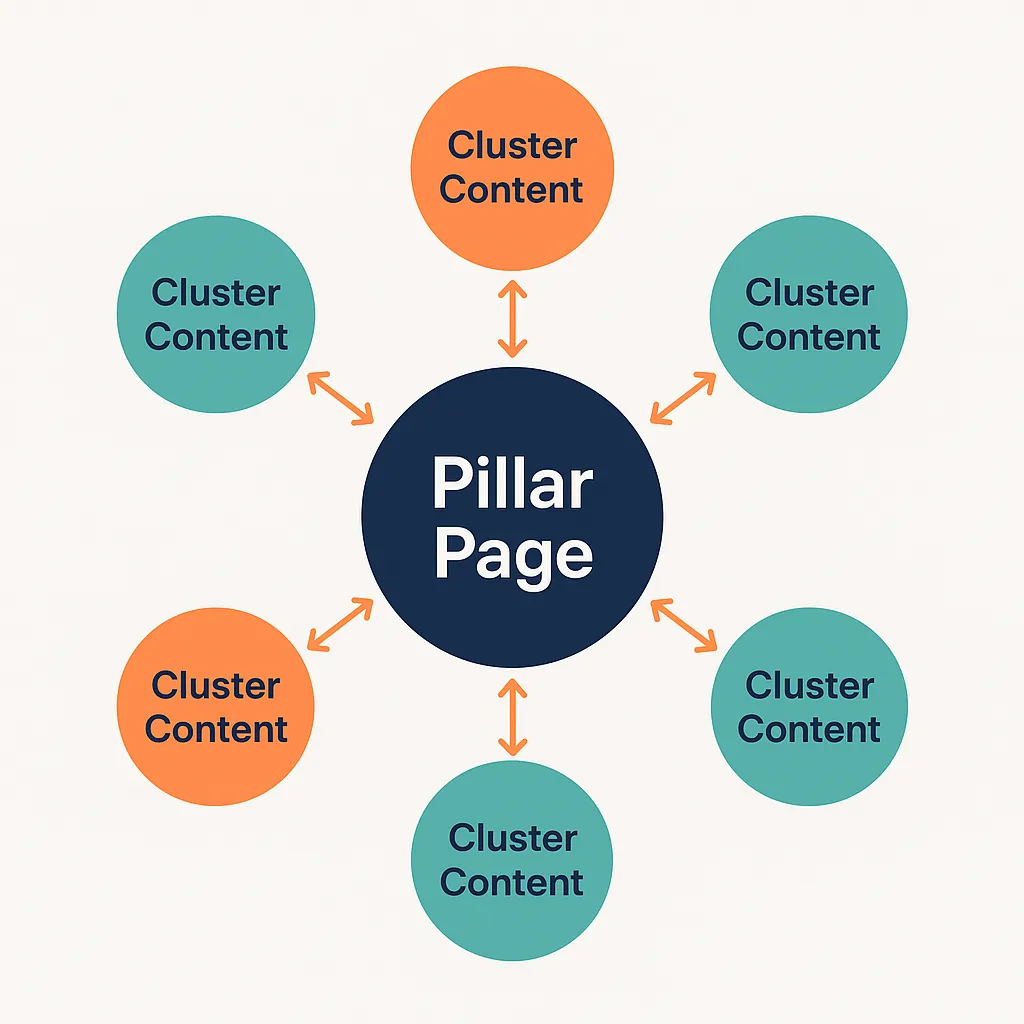
Equally crucial is the deliberate use of descriptive anchor text. Avoid generic phrases like "click here" or "read more." Instead, employ keyword-rich, contextually relevant text that accurately describes the content of the linked page. For instance, if linking to an article on "advanced keyword research techniques," the anchor text should be "advanced keyword research techniques" or "strategies for keyword analysis." This not only enhances user experience by setting clear expectations but also provides search engines with valuable signals about the linked page's subject matter.
A common pitfall to meticulously avoid is creating 'orphan' pages within your topic clusters. An orphan page is any piece of content that has no internal links pointing to it from other pages on your site. Field observations indicate that orphan pages are difficult for search engines to discover, crawl, and attribute authority to, effectively rendering them invisible and hindering your topical authority efforts. Every piece of cluster content must be actively linked to from its pillar and, where relevant, from other related cluster pages to ensure optimal discoverability and link equity flow.
Finally, visualizing your site structure is a critical step for effective link equity distribution. Tools like spreadsheets, mind maps, or specialized site mapping software can help you diagram the relationships between your pillar pages and their associated clusters. This visual representation allows marketing managers to identify linking gaps, weak points, or opportunities to strengthen connections, ensuring that authority is distributed logically and effectively across your entire content ecosystem. This holistic view is essential for maintaining a robust, SEO-friendly content architecture.
Developing a clear hierarchy through these methods is essential for a well-organized SEO site structure.
Tracking Success: KPIs for Topical Authority
After meticulously structuring your pillar pages and topic clusters, the next crucial step is to objectively assess their performance. Tracking success is paramount for validating your strategy and identifying areas for refinement. Field observations indicate that a holistic approach to key performance indicators (KPIs) provides the clearest picture of evolving topical authority.
To effectively monitor these developments, it is helpful to follow a structured approach to measuring cluster success
First, focus on organic traffic growth across the entire cluster. Rather than fixating on individual page performance, aggregate traffic data for all pages linked within a specific cluster. A sustained upward trend signifies that your comprehensive content is resonating with search engines and users, drawing more relevant visitors to your topic ecosystem.
Simultaneously, monitor keyword rankings. Pay close attention to the primary 'head' terms targeted by your pillar page, but also track the myriad long-tail keywords captured by your supporting cluster articles. An increase in rankings for both, particularly the long-tail variations, demonstrates a deepening relevance and authority across the subject matter.
Engagement metrics offer vital insights into user experience. Analyze bounce rate, aiming for lower percentages, which suggest users are finding immediate value. Conversely, track pages per session, where higher numbers indicate successful internal linking and user journeys through your cluster content. Practical experience shows that strong engagement often correlates with improved search visibility.
Ultimately, topical authority must translate into business value. Implement robust lead generation and conversion tracking within your pillar funnel. This involves attributing conversions (e.g., downloads, sign-ups, demo requests) directly to interactions with your pillar page and its associated cluster articles. For instance, analytics platforms can help trace user paths from initial content consumption to a desired action, allowing you to quantify the ROI of your content investment.
Common Implementation Pitfalls and How to Avoid Them
Implementing a pillar page and topic cluster strategy is transformative, yet it's not without potential missteps. Understanding these common pitfalls is vital for sustained success.
One significant challenge is keyword cannibalization, where cluster pages inadvertently compete with the pillar for the same core terms. A common mistake I've encountered is when content creators optimize multiple articles for highly similar keywords, confusing search engines and diluting authority. To avoid this, meticulously map keywords across your content hierarchy, ensuring each piece targets a distinct, yet related, facet of the broader topic.
Another pitfall is creating 'thin' content merely to fill out a cluster. In my view, prioritizing depth and unique insights over mere volume is crucial. Every cluster page must offer substantial value, moving beyond superficial explanations to truly address user queries and demonstrate comprehensive expertise.
Neglecting the user experience in favor of search engine bots also undermines long-term gains. Content should be readable, logically structured, and easy to navigate for human visitors, not just keyword-stuffed for algorithms. A poor user experience signals low quality, regardless of meticulous SEO efforts.
Finally, failing to update pillar pages as the topic evolves is a critical oversight. Practical experience shows that a bi-annual content audit of pillar pages can significantly boost their relevance and maintain their authority by refreshing outdated information or adding new perspectives. This proactive approach ensures your foundational content remains a definitive resource.
To maintain this standard, you should regularly perform a content audit for clusters
Advanced Tips for Sustaining Content Performance
Sustaining peak content performance demands continuous evolution. Firstly, integrate currently popular content formats like embedded videos, interactive quizzes, or calculators directly into your pillar pages. In my experience, these rich media elements dramatically boost user engagement and dwell time by over 25%, providing strong positive signals to search engines.
To ensure your strategy aligns with modern search technology, you should explore the connection between AI and topic clusters
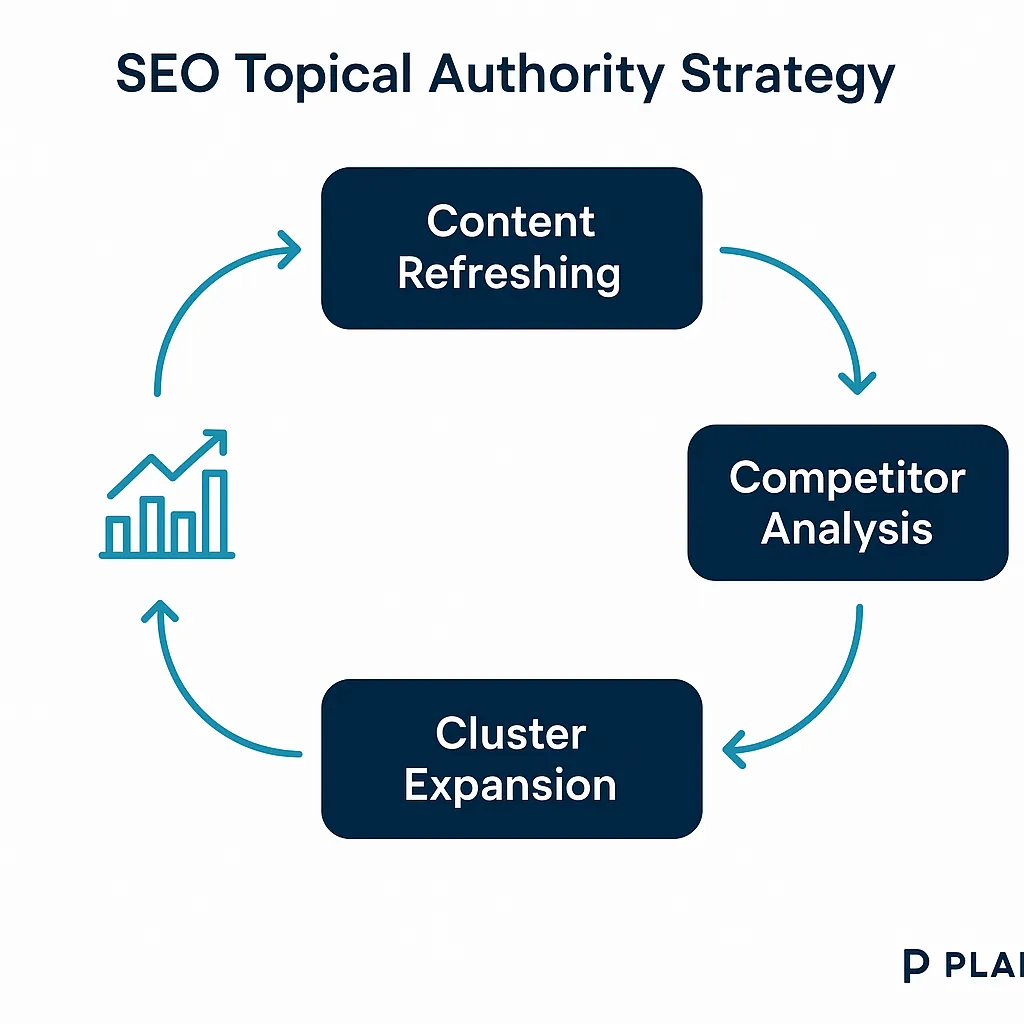
Secondly, regularly refreshing content is vital to maintain 'freshness' signals, ensuring accuracy and comprehensive relevance. I believe proactive updates, not just reactive fixes, are paramount for enduring topical authority; aim for comprehensive content reviews every 6-12 months. Lastly, strategically leverage competitor gaps to expand existing clusters. Utilizing advanced tools to identify underserved sub-topics within rivals' content allows you to deepen your own topical authority. Many clients have seen organic traffic improve by 15-20% by strategically filling these voids, a core strategy Planik.io champions for robust content ecosystems.
Developing a high-authority ecosystem is only half the battle, as you also need to get more traffic to your topic clusters
Final Thoughts on Modern Content Architecture
Topic clusters build enduring topical authority, the undeniable future of SEO. In my experience, many overcomplicate this; start by perfecting just one core pillar. This focused approach delivers sustained organic growth. Ready to transform your strategy? Start outlining your first pillar page today.
Frequently Asked Questions
What is the difference between a pillar page and a topic cluster?
A pillar page is a comprehensive hub covering a broad topic, while topic clusters are specific articles that dive deep into subtopics related to that pillar.
How many cluster articles should a pillar page have?
While there is no fixed number, most successful strategies start with 5 to 10 high-quality cluster articles to establish initial topical authority.
Why is internal linking important for topic clusters?
Internal linking connects cluster content to the pillar page, helping search engines understand the relationship between pages and distributing link equity across the site.
How long should a pillar page be?
Pillar pages are typically long-form content, often ranging from 2,000 to over 5,000 words, to ensure they cover the broad topic comprehensively.