Understanding Natural Language Processing in Search
The landscape of search engine optimization has fundamentally evolved, making nlp for seo a critical component of any modern digital strategy. Natural Language Processing (NLP) is currently at the core of how modern search engines interpret queries and evaluate content. No longer are algorithms solely reliant on exact keyword matches; instead, they employ advanced NLP techniques to grasp the semantic meaning, context, and user intent behind searches.
This profound shift from simple keyword recognition to deep linguistic understanding is paramount for content visibility. For instance, a search for "best coffee near me" isn't just about the words; NLP helps the engine understand that the user seeks a local business, a specific beverage, and a high-quality recommendation.
This advanced comprehension ensures that content aligned with user intent—rather than just keyword density—achieves visibility. Industry observations indicate that without integrating NLP insights, content struggles to compete for valuable SERP real estate. For a comprehensive overview, see Natural Language Processing.
This approach helps content creators in:
- Overcoming the challenge of ambiguous queries.
- Achieving higher content relevance and authority.
The Evolution of Search Engine Understanding
Search algorithms currently excel at interpreting context and nuance within content, grasping the true intent behind user queries even without exact keyword matches. Practical experience shows that focusing solely on keyword density is no longer effective; the emphasis has shifted toward comprehensive, semantically rich content.
Central to this evolution is the understanding of entities and their relationships, which form intricate search graphs. An entity can be a person, place, organization, or concept. Search engines identify these within content and understand their connections—for instance, linking "Elon Musk" directly to "Tesla." This enriches their overall comprehension of the topic.

This shift moves content strategy beyond exact-match keywords to topical relevance. Search engines prioritize content that thoroughly covers a topic from various angles, addressing related concepts and user questions. Field observations indicate that deep expertise and authority across a subject area consistently outperform mere keyword optimization, ensuring results are relevant by underlying meaning and intent.
Integrating NLP Techniques into Your Content Workflow
Effectively leveraging nlp for seo means moving beyond theoretical understanding to practical application within your daily content operations. This integration transforms how content is planned, created, and optimized, ensuring it resonates deeply with both users and search engine algorithms. Practical experience shows that a structured approach is key to seamlessly embedding these advanced techniques into existing workflows.
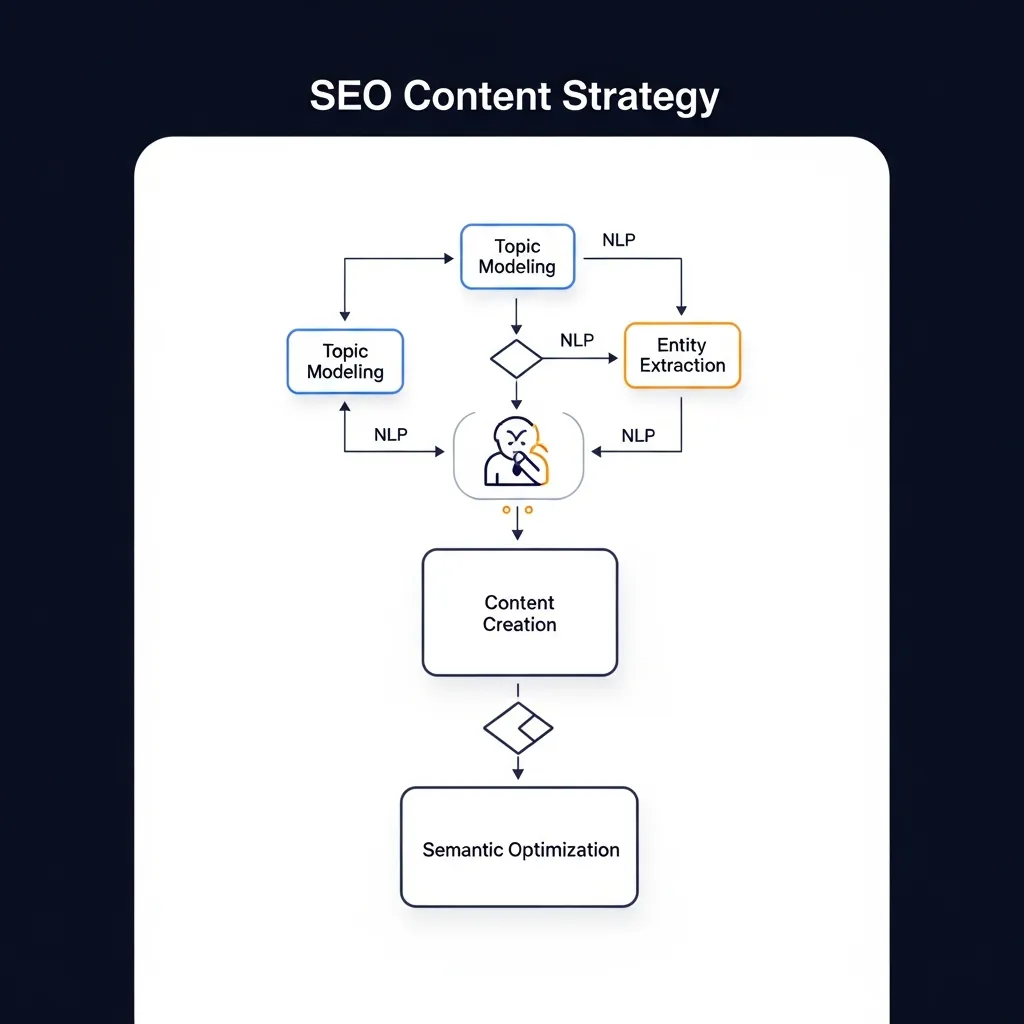
To guide this transformation, we introduce The Semantic Content Optimization Blueprint, a systematic framework designed to bridge the gap between NLP capabilities and actionable SEO strategies.
The Semantic Content Optimization Blueprint
- Comprehensive Topic and Entity Mapping:
- Action: Begin by conducting a thorough analysis to identify core topics and their associated entities (people, places, organizations, concepts, events, attributes). Tools like Google's Natural Language API, Surfer SEO, Clearscope, or Semrush's Topic Research can help extract these elements from high-ranking content and competitor pages.
- Outcome: Develop a detailed topical map that outlines the semantic landscape relevant to your target audience. This goes beyond simple keywords, revealing the intricate relationships between concepts. For example, analyzing "electric vehicles" might reveal entities like "lithium-ion batteries," "charging infrastructure," and "environmental impact."
-
Optimizing Content Structure for Readability and Machine Parsing:
- Action: Once topics and entities are mapped, structure your content with a clear semantic hierarchy. Use H1 tags for the main topic, H2 tags for primary sub-topics, and H3 tags for specific entities or detailed aspects. Break down complex information into short paragraphs, bullet points, and numbered lists.
- Outcome: This improves readability for human users and facilitates machine parsing for search engines. Logical headings and concise segments allow algorithms to better understand the relationships between different parts of your content, boosting its topical authority.
-
Aligning with User Expectations through Sentiment Analysis:
- Action: Employ sentiment analysis to gauge the emotional tone of top-ranking content for your target queries. Tools that offer sentiment scoring can reveal whether users expect a neutral, positive, critical, or empathetic tone based on existing high-performing results and social discussions.
- Outcome: Tailor your content's tone to match user expectations. For instance, an informational guide on a sensitive health topic might require a neutral, authoritative tone, whereas a product comparison article could benefit from a practical, balanced approach. Aligning sentiment ensures your content resonates emotionally, improving engagement metrics.
-
Building Content Clusters Based on Semantic Proximity:
- Action: Use insights from topic and entity mapping to group semantically related articles into content clusters around a central pillar page. The pillar page covers a broad topic comprehensively, while cluster content dives into specific sub-topics or entities in detail.
- Outcome: This strategy establishes clear topical authority. A robust internal linking structure signals to search engines the depth of your expertise and the semantic interconnectedness of your content.
-
Identifying and Filling Content Gaps:
- Action: Regularly audit your existing content against your topical maps. Pay close attention to "People Also Ask" sections in SERPs and competitor content. Tools like Ahrefs' Content Gap or Semrush's Keyword Gap can highlight missing topics.
- Outcome: This proactive approach helps identify areas where your content is superficial. Prioritize filling these gaps with new, high-quality content or by enhancing existing articles. Technical data suggests that addressing these voids significantly improves overall search visibility.
Evaluating the Best NLP Tools for SEO Professionals
Selecting the right tool is crucial for effective nlp for seo and semantic optimization. We'll compare Google NLP API, MarketMuse, and Frase, noting their strengths for keyword research and content auditing.
The Google NLP API offers direct access to machine learning for entity extraction, sentiment analysis, and syntax analysis. Its strength lies in granular data and customizability, making it ideal for developers building bespoke solutions. However, it demands technical expertise for implementation and is not a standalone SEO platform.
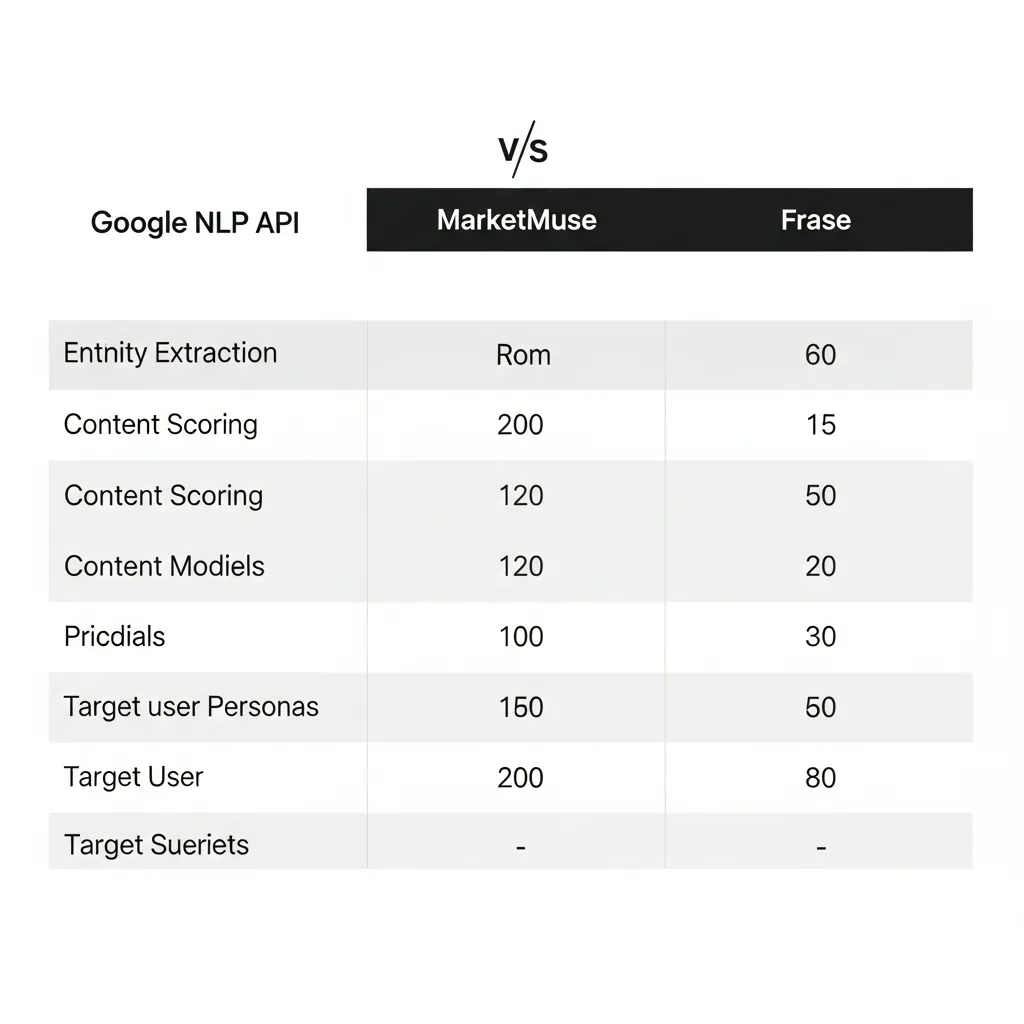
For content marketers, MarketMuse and Frase offer integrated solutions. MarketMuse excels at comprehensive content auditing, competitive analysis, and detailed content brief generation. It is a powerful choice for large-scale strategies and topic modeling, though it comes at a higher price point. Frase streamlines the content creation workflow with AI-powered outlines and optimization, making it more accessible for smaller teams.
Choosing a tool hinges on your budget and technical expertise. A common mistake is investing in high-end platforms without the internal resources to leverage their advanced features. Starting with an accessible tool like Frase and scaling to the Google NLP API or MarketMuse for strategic planning is often the most practical path.
Strategies for Aligning Content with User Intent
Aligning content with user intent is paramount. NLP empowers SEO specialists to meticulously analyze search queries, discerning whether the underlying need is informational (e.g., "how to fix a leaky faucet") or transactional (e.g., "buy new faucet").
A common mistake is misinterpreting queries that appear transactional but are actually early-stage research. For instance, "best running shoes" often signals an informational need for comparisons, requiring comprehensive content rather than a simple product page.
Best practices for answering long-tail questions involve crafting direct, concise answers within your content, often in dedicated FAQ sections. This approach is critical for voice search optimization, where understanding context is paramount. Voice queries are inherently conversational, requiring content that provides immediate, relevant answers. Anticipating the full user journey, from initial query to potential action, is key to achieving semantic alignment.
Navigating Ethical Challenges and Content Bias
Navigating the ethical landscape of nlp for seo is crucial. Content creators must address inherent content bias in algorithms and actively strive for inclusive content. Uphold data privacy and transparency by clearly communicating how data is used in your SEO efforts.
A common pitfall is prioritizing algorithmic appeal over genuine user experience. Avoiding over-optimization that compromises human readability is paramount, as this often leads to poor engagement metrics. Prioritize authentic content that serves both algorithms and human readers for sustainable success.
Tracking the Impact of Semantic Optimization
Measuring the success of semantic optimization is essential. Key performance indicators (KPIs) extend beyond individual keyword rankings to encompass overall organic visibility for broad topical clusters.
Field observations indicate significant improvements in organic traffic, dwell time, and conversion rates when content truly aligns with user intent. Monitoring ranking shifts across semantic themes, rather than just exact-match keywords, provides a clearer picture of enhanced search engine understanding. Furthermore, analyzing engagement metrics like bounce rate validates whether the optimized content effectively addresses user queries.
Future-Proofing Your SEO Strategy
The core of future-proofing SEO lies in embracing NLP’s principles: understanding profound user intent and semantic context beyond keywords. This foundation ensures enduring relevance as search technology evolves.
The ongoing importance of human-centric, high-quality content remains paramount; NLP enhances discoverability, but authentic value retains users. Solely relying on AI without human oversight often yields generic content, leading to high bounce rates despite initial ranking improvements.
The true power of nlp for seo emerges from the synergy between AI-driven insights and seasoned expertise. We leverage AI to inform and amplify human creativity, not replace it. Start now by applying semantic analysis to your next content audit.
Frequently Asked Questions
What is NLP for SEO?
NLP for SEO refers to the application of Natural Language Processing techniques to optimize content so search engines can better understand its semantic meaning, context, and user intent.
How do entities impact SEO?
Entities are specific people, places, or concepts. Search engines use NLP to identify these entities and their relationships, building a knowledge graph that helps determine the topical authority of a page.
What are the top NLP tools for content optimization?
Leading tools include the Google Natural Language API for deep data analysis, and platforms like MarketMuse and Frase for practical content auditing and semantic mapping.
Why is user intent important for NLP?
NLP allows search engines to go beyond keyword matching to understand why a user is searching. Aligning content with this intent ensures higher relevance and better user engagement.