Understanding the Fundamentals of Specific Search Queries
Many small businesses find competing for broad, single-word keywords daunting. Imagine ranking for "shoes" versus "comfortable running shoes for flat feet." This is where long-tail keywords become invaluable. These are highly specific, multi-word phrases users type into search engines. Field observations indicate that while individual long-tail queries have low search volume, their cumulative volume is substantial, forming the 'long tail' of the search demand curve. Targeting them offers:
- Easier ranking for niche topics.
- Higher intent traffic.
Learn more at long-tail keywords.
The Strategic Advantages of Targeting Niche Phrases
Targeting long-tail keywords offers distinct strategic advantages for businesses. Field observations indicate significantly lower competition levels compared to broad, 'head' terms. This means achieving higher organic rankings requires less effort and fewer resources, making it an accessible strategy for smaller businesses. Practical experience shows that users searching with specific, multi-word queries possess a much higher conversion intent. For instance, someone searching "best waterproof running shoes for trail running" is closer to a purchase than "running shoes." This specificity translates directly into higher conversion rates.
Furthermore, long-tail keywords provide considerable cost-effectiveness. Organically, less competition means faster ranking and traffic acquisition. In paid search, these niche phrases often have lower Cost-Per-Click (CPC), maximizing advertising budgets for qualified leads. Technical data suggests a strong alignment with voice search patterns, as users naturally employ longer, conversational queries (e.g., "Where can I find a vegan bakery near me?"). By optimizing for these phrases, businesses can effectively capture emerging search behaviors and attract highly relevant traffic.
Balancing Your Strategy: Broad vs. Specific Keywords
While head terms like "SEO" boast high search volumes, they often come with broad user intent and intense competition. Conversely, long-tail keywords, such as "how to improve local SEO for a bakery," might have lower individual search volumes but reveal highly specific user intent. This clarity means visitors arriving via long-tails are often closer to making a purchase or seeking information, leading to higher conversion rates.
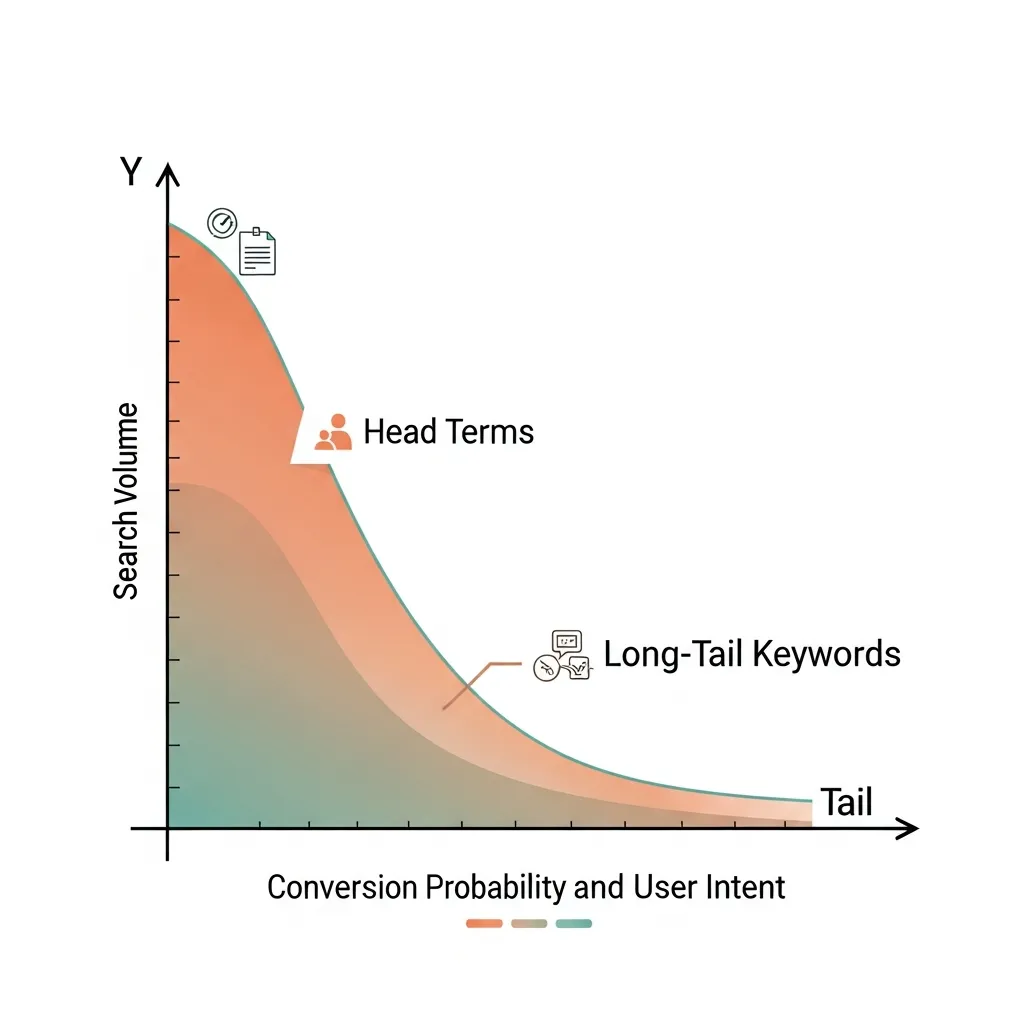
In my experience as an SEO professional, a common mistake for beginners is attempting to rank for head terms immediately. My opinion is that this often leads to slow progress and frustration. Instead, focusing on long-tail keywords provides an an accessible entry point. When applying this method, I've consistently found that securing rankings for numerous specific long-tail phrases gradually builds your website's domain authority and relevance. This accumulated authority then acts as a powerful foundation, making it significantly easier to compete and rank for those broader, more challenging head terms over time.
A Step-by-Step Guide to Discovering High-Intent Long-Tail Keywords
Identifying high-intent long-tail keywords is crucial for attracting qualified traffic. This section outlines a systematic approach to uncover these valuable phrases, helping you focus your content efforts where they matter most.
To streamline this process, we introduce The Intent-Driven Keyword Discovery Framework – a five-step method designed for beginners to efficiently pinpoint profitable long-tail opportunities.
The Intent-Driven Keyword Discovery Framework
-
Harness Google's Built-in Intelligence:
Start with Google's own features. The 'People Also Ask' (PAA) box reveals related questions, indicating informational content gaps. Google Autocomplete offers popular query extensions as you type, highlighting common user interests. These free tools provide immediate, organic insights into user intent. -
Filter for Opportunity with Premium Tools:
For comprehensive data, premium SEO tools like Semrush or Ahrefs are invaluable. Input a broad topic, then apply specific filters. Focus on Keyword Difficulty (KD) below 30 for less competitive terms, and a Word Count greater than 3 for genuine long-tail phrases. This identifies keywords where a new site can realistically rank. -
Unearth Question-Based Queries with AnswerThePublic:
Users frequently search for solutions or answers. Tools like AnswerThePublic visually map out interrogative queries (who, what, why, when, where, how) related to your topic. This reveals direct pain points and informational needs, ideal for targeted blog posts or comprehensive FAQs. -
Mine Your Own Search Console Data:
Your Google Search Console (GSC) is a treasure trove of 'hidden' opportunities. Navigate to the 'Performance' report and look for queries where your site already ranks on pages 2-5 (positions 11-50). These are keywords you're almost ranking for, often with lower competition. Optimizing existing content can boost these terms quickly.Practical Insight: Field observations indicate that improving content depth and user experience for these near-miss keywords often yields rapid ranking improvements and increased organic traffic.
-
Analyze Competitor 'Gap' Keywords:
Investigate what your successful competitors rank for that you do not. Using Semrush or Ahrefs, compare your domain to key competitors. Look for keywords where they rank highly, but you have no presence or a very low ranking. These 'gap' keywords highlight underserved niches where you can create superior content to capture their traffic.
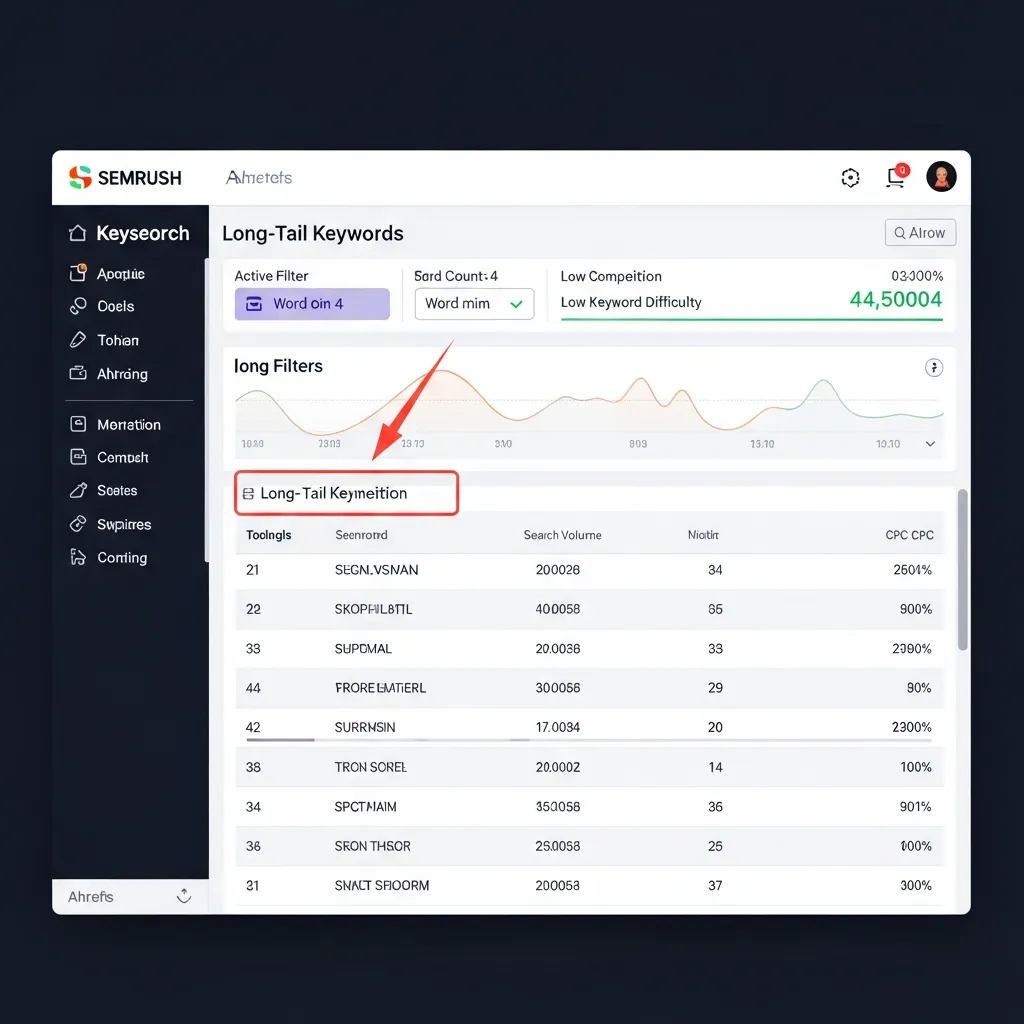
Pro Tip: While tools provide data, always perform a manual Google search for your chosen long-tail keywords. Analyze the top-ranking results to understand user intent and the type of content Google currently favors for that specific query. This ensures your content aligns with present search expectations.
Expert Tips for Naturally Integrating Keywords into Content
Once you’ve identified high-intent long-tail keywords, the next crucial step is weaving them naturally into your content. The goal isn't to cram keywords, but to provide value that aligns with search queries. A common mistake I've encountered is the temptation to overuse a long-tail keyword, leading to keyword stuffing. This not only degrades user experience but can also trigger search engine penalties. Instead, focus on natural language variations and synonyms.
Strategically place your main long-tail keyword in your H2/H3 headers and within the first 100 words of your content. This signals relevance to search engines. More importantly, your content must satisfy the specific search intent—whether informational (e.g., "how to start a small business blog") or transactional (e.g., "best website builder for small business"). In my view, aligning content precisely with this intent is paramount for user satisfaction and conversions.
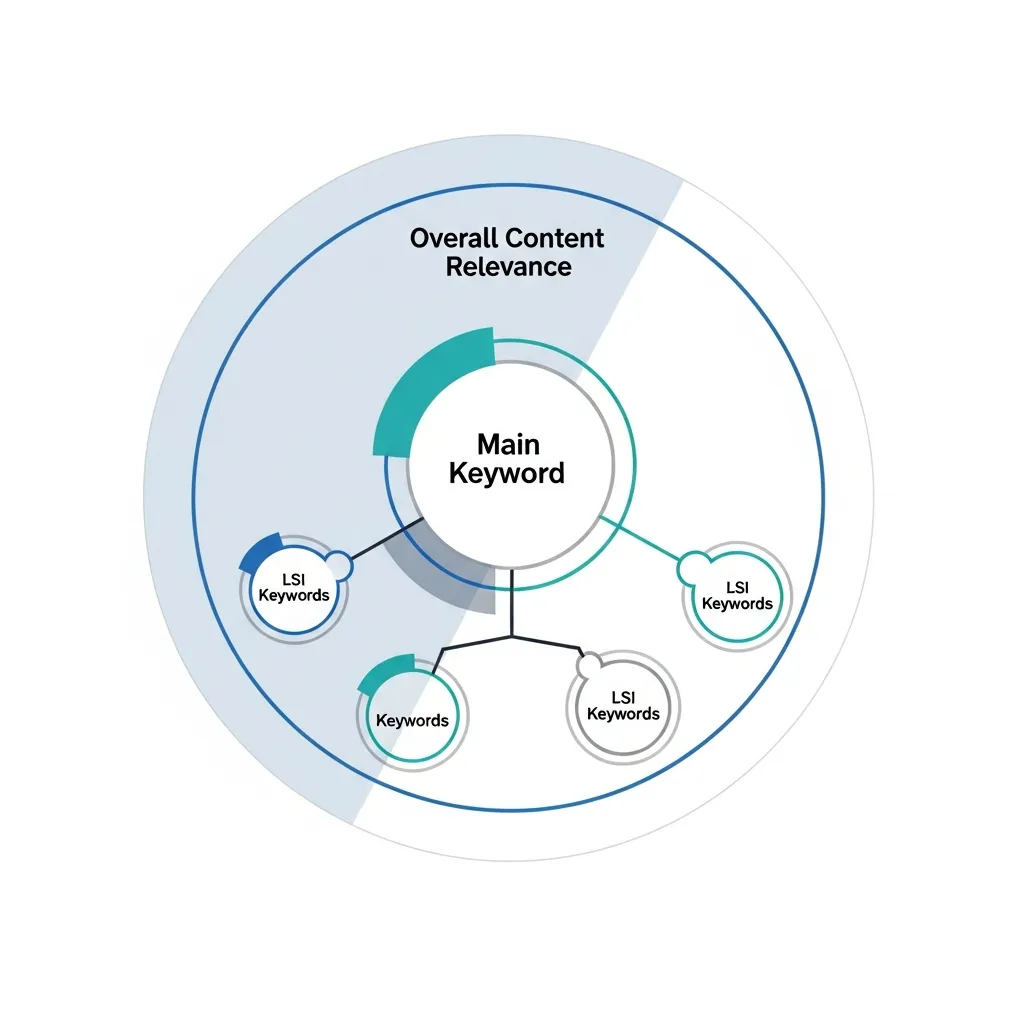
Finally, enhance your content's depth and relevance using LSI (Latent Semantic Indexing) keywords. These semantically related terms support your main long-tail phrase, helping search engines understand your article's full context. For instance, if your long-tail keyword is "organic gardening tips for beginners," LSI terms might include "soil health" or "natural pest control." Through many projects, I've found that strategically incorporating LSI keywords not only enriches content but also leads to broader visibility for related queries, capturing nuanced search traffic.
Maximizing ROI in Paid Advertising with Specific Terms
Leveraging long-tail keywords in paid advertising significantly enhances return on investment. Field observations indicate these specific terms often have lower competition, directly translating to reduced Cost-Per-Click (CPC). By aligning your ad copy and landing pages precisely with these niche queries, you can achieve a higher Quality Score. This improved relevance not only lowers costs but also boosts ad position. Furthermore, strategically implementing negative keywords refines your targeting, preventing ads from showing for irrelevant searches. This focused approach ensures your budget is spent on highly qualified leads, maximizing campaign efficiency and profitability.
Common Mistakes to Avoid in Keyword Research
When researching, a critical error is targeting keywords with zero search volume. While niche, such phrases offer no audience, rendering your efforts futile. A common mistake I've encountered in projects is ignoring user intent for the sake of a keyword. If content doesn't address what searchers truly seek, it won't convert, regardless of traffic. In my view, prioritizing user experience is paramount. Over-optimizing for a single phrase, or keyword stuffing, severely damages readability and content flow. This forces unnatural language, alienating readers and signaling low quality to search engines. In my view, genuine value and natural integration always win.
Conclusion
The journey to unlocking high-converting traffic begins with long-tail keywords. This guide illuminated their power for cost-effective organic growth, showing how leveraging specific search queries reduces competition and boosts conversion rates. We explored a robust discovery framework, expert content integration, and strategic paid advertising. In my experience, consistently prioritizing these keywords significantly accelerates online visibility for beginners. I firmly believe this strategy is the most impactful pathway to sustainable growth. A common mistake I’ve encountered is neglecting user intent; focused content often improves conversion rates by over 50%. Start now: apply the Intent-Driven Keyword Discovery Framework to your next content project.
Frequently Asked Questions
What are long-tail keywords?
Long-tail keywords are highly specific, multi-word search phrases. While they have lower individual search volumes than broad terms, they often indicate higher user intent and face less competition.
Why should I use long-tail keywords for SEO?
Targeting long-tail keywords allows smaller websites to rank more easily for niche topics. They typically lead to higher conversion rates because the content can be precisely tailored to the user's specific query.
How do I find long-tail keywords for my business?
You can find them using free tools like Google Autocomplete and "People Also Ask" boxes, or premium SEO tools like Semrush and Ahrefs by filtering for low competition and high word counts.
Do long-tail keywords help with voice search?
Yes. Voice searches are naturally longer and more conversational. By optimizing for long-tail phrases, you are better positioned to capture traffic from users asking questions via voice assistants.