The search landscape is undergoing a profound transformation driven by generative AI. For SEO strategists and marketing leaders, this shift demands immediate attention. Traditional SEO, while foundational, often falls short when optimizing for AI-driven search experiences that prioritize direct answers and synthesized information. Field observations indicate that content solely focused on keyword density may struggle for visibility within these new paradigms.
This evolving environment presents several key challenges:
- Adapting content for seamless AI consumption.
- Building robust and interconnected entity relationships.
- Ensuring content meets the criteria for AI citation-worthiness.
Imagine a brand with strong organic rankings suddenly being bypassed by AI summaries. To prevent this, a comprehensive Generative Engine Optimization (GEO) audit is now essential. This guide provides the framework to assess and optimize your digital presence for the future of search, ensuring prominent visibility within generative results. For a comprehensive overview, see Generative Engine Optimization audit.
Understanding the Shift: What is a GEO Audit?
The search landscape has fundamentally transformed, moving beyond mere lists of links to AI-driven summaries and direct answers. This seismic shift necessitates Generative Engine Optimization (GEO), a specialized approach focused on securing visibility within these evolving interfaces.
Traditional SEO audits, while foundational, no longer provide the full picture. Their primary focus on organic rankings often overlooks the critical influence of Large Language Models (LLMs). Field observations indicate that content can rank #1 traditionally yet be entirely absent from AI-generated summaries, effectively diminishing brand presence.
Adapting is paramount. Successful GEO means optimizing for AI consumption, structuring content for direct comprehension, and becoming a citation-worthy entity for LLM summaries and generative answers. This ensures your expertise is recognized where users currently find information. Navigating this shift presents distinct challenges:
- Ensuring content is explicitly understood by generative AI.
- Establishing your site as a preferred source for AI citations.
GEO vs. Traditional SEO: Key Differences in Audit Strategy
Traditional SEO audits primarily focus on ranking factors like backlinks and keywords to secure “blue link” positions. In contrast, a GEO audit strategically shifts emphasis to citation-worthiness and establishing robust entity relationships.
I believe the most significant shift is recognizing that AI prioritizes authoritative, interconnected entities over isolated keywords, demanding a deeper content structure. Auditing also evolves from a keyword-centric approach to deep intent and context-based analysis. In my experience, solely optimizing for keywords often misses the broader contextual understanding AI requires to synthesize information effectively.
The success metric transforms from tracking individual “blue links” to measuring share of voice within AI-generated responses, reflecting true generative visibility. This redefines how we evaluate content’s impact and its potential to serve as a primary source for AI.
The Systematic Framework for a Comprehensive GEO Audit
Navigating the evolving landscape of generative AI search requires a structured, analytical approach. A comprehensive GEO audit moves beyond surface-level metrics to deeply analyze how AI models perceive, process, and present your brand’s information. This systematic framework ensures all critical facets of generative search visibility are meticulously examined.
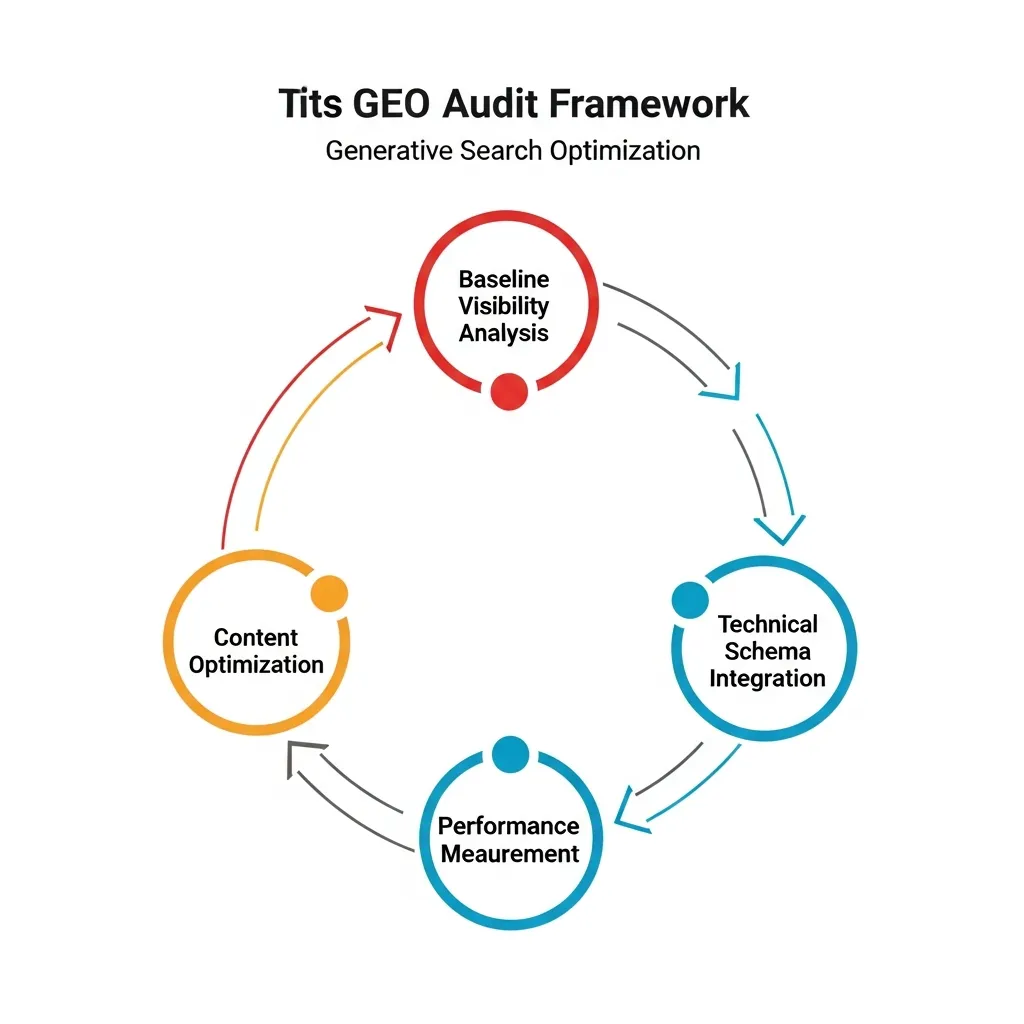
The GEO-Vision Audit Framework
This five-step protocol provides a robust methodology for evaluating your digital presence through the lens of AI, ensuring your content is optimized for the latest generative search environments.
- AI Query Testing: Benchmarking Generative Visibility
This initial phase involves simulating user queries across major Large Language Model (LLM) platforms and generative search experiences (GSEs). The goal is to benchmark how frequently, accurately, and prominently your brand, products, or services appear in AI-generated summaries and responses. Field observations indicate that direct brand mentions, sourced citations, and overall share of voice within these generative outputs are paramount. This step helps identify current visibility gaps and highlights which topics consistently fail to surface your content as a credible source. - Entity Mapping: Evaluating AI’s Brand Perception
Entity mapping assesses how thoroughly and consistently AI models connect your brand to relevant entities—such as key personnel, specific products, geographic locations, and industry concepts. An audit here evaluates the robustness of your brand’s presence within the broader knowledge graph. For instance, does AI correctly associate your CEO with your company? Practical experience shows that a strong, consistent entity footprint significantly bolsters AI’s perception of your authority, making your brand a more reliable source. - Content Chunking & Citability: Structuring for AI Extraction
This audit focuses on the internal structure of your content. AI models excel at extracting specific answers from well-organized text. We analyze if content is broken down into digestible, atomic chunks—short paragraphs, clear headings, bulleted lists, and succinct summary boxes. The emphasis is on citability: ensuring key facts and statistics are easily extractable and attributable. Content that provides direct, unambiguous answers is far more likely to be cited by an LLM.Pro Tip: Consider if each paragraph or sub-section could stand alone as a concise answer to a specific question, complete with an attributable source.
- Technical Readiness: Auditing LLM Crawlability & Schema
Beyond traditional technical checks, this audit scrutinizes aspects specifically relevant to AI consumption. This includes a thorough review of schema markup (e.g., Organization, LocalBusiness, Article, FAQPage) to ensure it explicitly defines your entities and their relationships. Site speed and Core Web Vitals remain critical, as AI models prioritize efficient data retrieval. Furthermore, the audit assesses LLM crawlability, identifying technical barriers—such as complex JavaScript rendering—that might hinder AI models from interpreting your content’s semantic meaning. - E-E-A-T Assessment: Verifying AI Trust Signals
AI models are designed to prioritize credible, trustworthy information. This step involves a rigorous assessment of your content’s Expertise, Experience, Authoritativeness, and Trustworthiness (E-E-A-T) signals. This means verifying author credentials, demonstrating firsthand experience through case studies, and securing mentions from authoritative third-party sources. The audit asks: Does your content clearly demonstrate its credibility? Is it frequently referenced by other reputable sources, signaling its value to AI as a reliable information provider?
Advanced Strategies for Enhancing AI Citation-Worthiness
To significantly enhance AI citation-worthiness, adopt an authoritative and objective language style across all content. Generative models prioritize sources demonstrating clear expertise and neutrality, increasing the probability of citation as a credible reference.
Concurrently, implementing robust structured data is vital. This extends beyond basic schema; it involves defining complex entity relationships using advanced vocabularies like Schema.org’s mentions or about properties, enabling AI to accurately map your brand within its knowledge graph. In my view, prioritizing semantic clarity through detailed structured data is paramount for precise AI recognition.
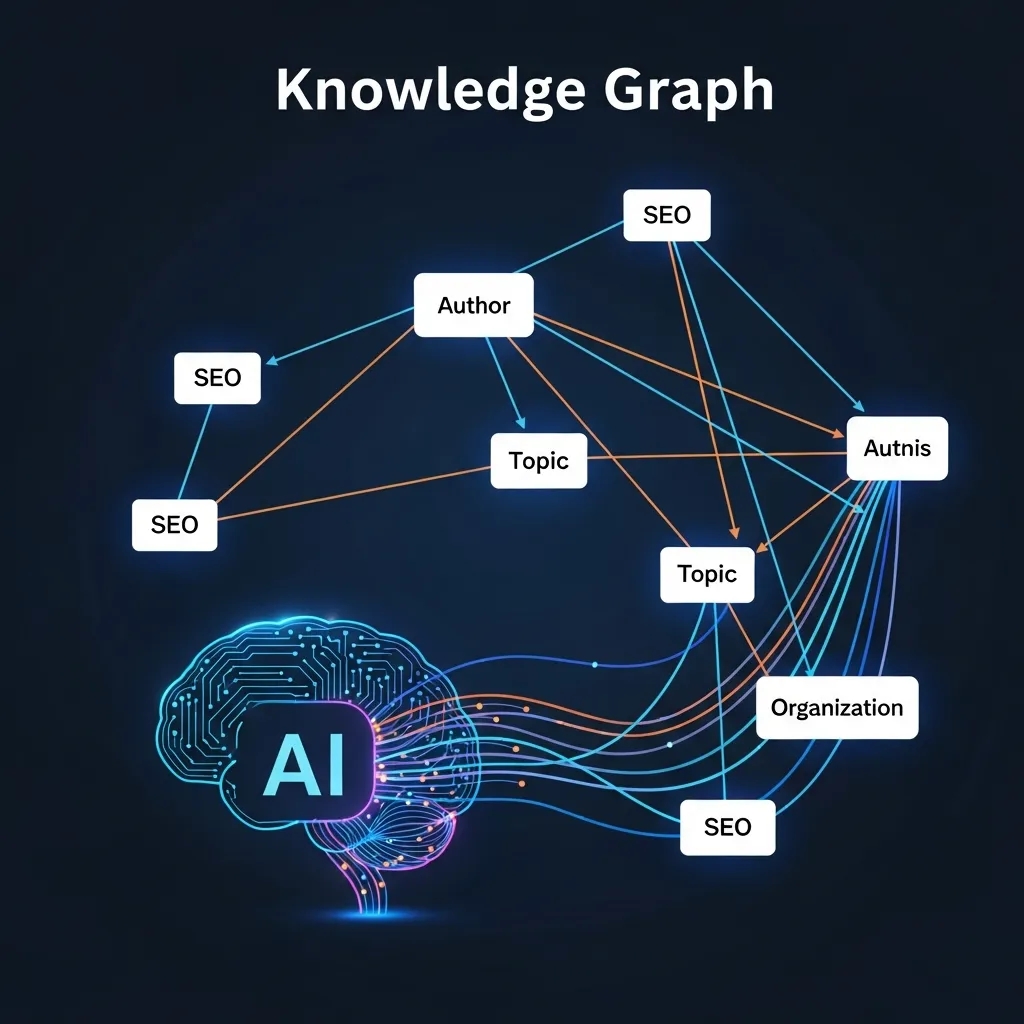
Furthermore, optimizing for local and geographic signals is critical for capturing location-based AI queries. Through many projects, I’ve found that neglecting granular local schema often limits AI’s ability to cite a brand for region-specific queries. A common mistake is relying on generic location data; specifying precise service areas via GeoJSON, for instance, dramatically improves local citation accuracy and enhances visibility for localized generative search.
Essential Technologies for Analyzing AI Search Performance
Navigating the generative search landscape demands specialized technological insights. AI search simulators and LLM-specific monitoring platforms are paramount, providing crucial insights into how AI models interpret complex queries and generate nuanced responses.
Practical experience shows these platforms help predict AI-driven user journeys and track brand citation patterns within generative outputs. Equally vital are entity analysis and knowledge graph visualization tools. These empower strategists to precisely map and understand the semantic relationships AI draws between a brand and its entire industry ecosystem.
Furthermore, leading traditional SEO suites are currently evolving, integrating robust generative search features. These hybrid platforms offer a holistic view, seamlessly combining classic ranking metrics with critical AI-specific performance indicators, significantly streamlining the GEO audit process for comprehensive analysis.
Quantifying Impact: Metrics for Generative Search Success
To truly gauge the efficacy of a GEO audit, traditional SEO metrics alone are insufficient. We must track Share of Model, which quantifies how frequently an AI model cites a brand as a primary source within its generative responses. Field observations indicate that consistent citation directly correlates with increased brand visibility in these new environments.
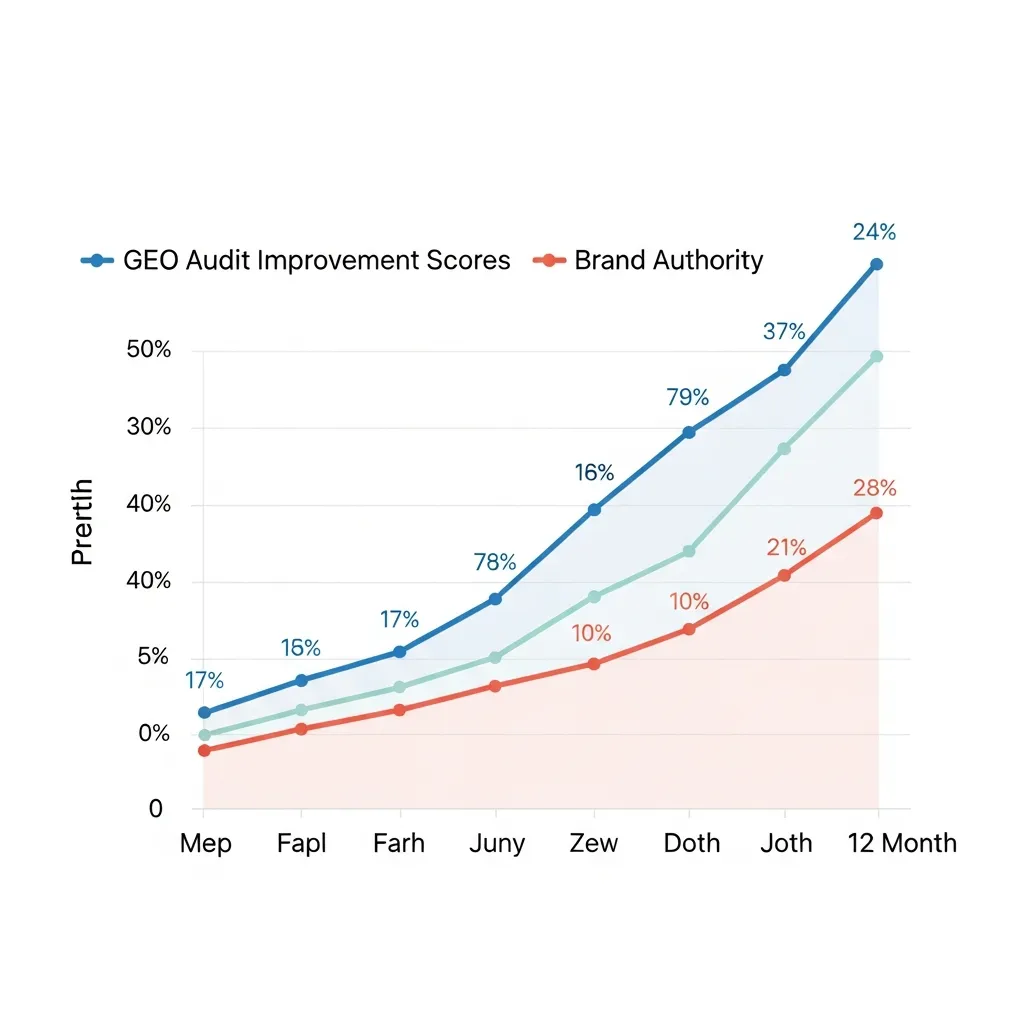
Beyond direct mentions, measuring referral traffic originating specifically from AI-powered search engines provides tangible evidence of user engagement driven by generative outputs. This traffic signifies successful redirection from AI summaries to authoritative brand content.
Furthermore, correlating GEO improvements with shifts in brand sentiment and authority scores offers a holistic view. Enhanced AI recognition often precedes positive shifts in public perception and strengthens a brand’s expert standing, validating the strategic investment in GEO.
Critical Mistakes to Avoid During Your GEO Transition
A common mistake I’ve encountered is over-optimizing for one generative AI model, which can inadvertently limit broad visibility across the diverse AI ecosystem. In my view, prioritizing solely AI-friendly content structures while neglecting the human user experience is detrimental, as AI models still learn from human engagement signals.
Practical experience shows that treating the GEO audit as a one-time task is a critical error. Instead, it must be an ongoing process of continuous adaptation, ensuring sustained relevance and citation-worthiness in the evolving generative search landscape.
The Future of Search and the Role of Continuous Optimization
Future search demands continuous GEO assessments. My experience shows that neglecting this leads to rapid visibility decay. Proactively embracing AI’s evolution ensures enduring relevance. I believe consistent optimization safeguards your generative search presence. Start your next review by evaluating entity alignment.
Conclusion
In conclusion, mastering Generative Engine Optimization (GEO) is paramount for securing visibility in the evolving AI-driven search landscape. This guide has detailed how GEO moves beyond traditional SEO, emphasizing AI citation-worthiness, robust entity relationships, and content structured for optimal AI comprehension.
Practical experience shows that proactive adaptation, continuous audits, and a focus on specialized metrics are essential for demonstrating true expert authority within generative answers. To remain relevant and influential, SEO strategists and marketing leaders must integrate GEO principles. Begin your comprehensive GEO evaluation now to ensure your brand’s enduring prominence and authoritative voice in the future of search.
Frequently Asked Questions
What is a GEO audit?
A GEO audit (Generative Engine Optimization audit) is a systematic framework used to assess and optimize a brand’s visibility within AI-driven search summaries and large language models.
How does a GEO audit differ from a traditional SEO audit?
While traditional SEO focuses on keyword rankings and backlinks for “blue links,” a GEO audit prioritizes citation-worthiness, entity relationships, and content structure for AI consumption.
Why is content chunking important for GEO?
Content chunking breaks information into digestible, atomic units, making it easier for AI models to extract specific answers and cite your content as a primary source.
What metrics track GEO success?
Key metrics include “Share of Model” (citation frequency), referral traffic from AI engines, and improvements in brand authority scores.