Why a Strategic Approach to SEO Content is Essential
The current SEO landscape demands strategic content planning for SEO. This approach maps content creation to search visibility and business goals, moving beyond mere keyword targeting. The era of keyword stuffing is over; search engines now prioritize value-driven content that deeply addresses user intent and specific pain points. Observations indicate that purposeful, user-centric content consistently outperforms generic articles.
Without a structured approach, marketers commonly face challenges such as:
- Inconsistent organic traffic.
- Misallocated content resources.
- Difficulty proving content ROI.
A robust planning framework ensures relevant, efficient content that contributes to measurable growth. For a comprehensive overview, see content planning. Sporadic publishing, as seen in many businesses, often yields minimal organic impact.
Aligning Content with Audience Personas and Search Intent
Effective content planning begins not with keywords, but with a profound understanding of your audience. Developing audience personas that accurately reflect actual searcher needs and pain points is paramount. These are not just demographic profiles; they are detailed representations of your target users, including their challenges, goals, and how they phrase their queries. Generic personas often lead to content that misses the mark, failing to resonate with high-intent searchers.
Once personas are established, the next critical step is categorizing keywords by search intent. This moves beyond basic keyword volume to understand why a user is searching. Key intent categories include:
- Informational: Users seeking answers or knowledge (e.g., "how to fix a leaky faucet").
- Navigational: Users looking for a specific website or brand (e.g., "Google Analytics login").
- Commercial Investigation: Users researching solutions or products with intent to purchase later (e.g., "best CRM software 2024").
- Transactional: Users ready to make a purchase or take a specific action (e.g., "buy noise-cancelling headphones").
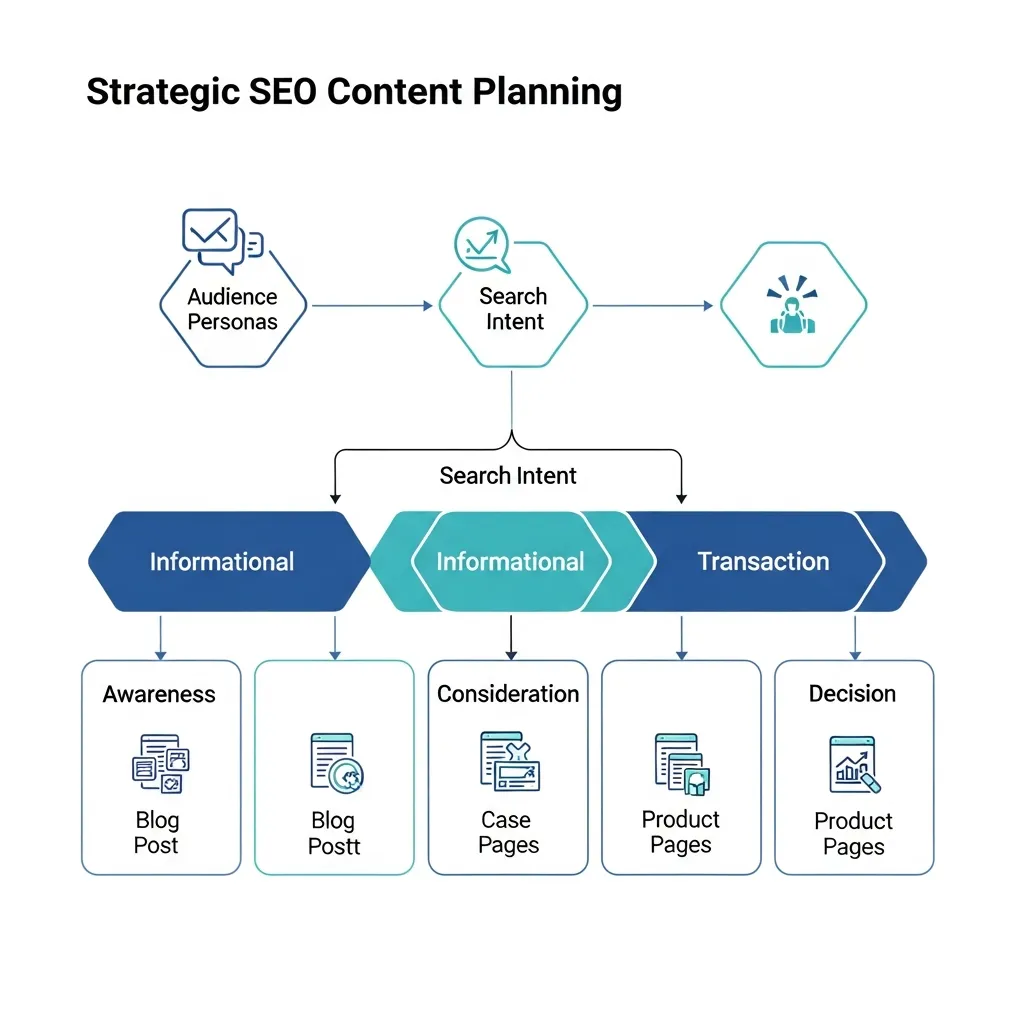
Data suggests that aligning content with these intents significantly boosts engagement. This understanding allows for precise mapping of content formats to specific stages of the buyer's journey. For instance, informational intent aligns with the Awareness stage, best served by blog posts or guides. Commercial investigation suits the Consideration stage, demanding comparison articles or case studies. Finally, transactional intent maps to the Decision stage, requiring product pages or pricing guides. Practical experience shows this strategic mapping dramatically improves conversion rates and resource efficiency.
The Step-by-Step Blueprint for Effective Content Planning
Mastering effective content planning for SEO is the bedrock of any successful digital strategy, transforming sporadic efforts into a predictable engine for organic growth. It involves moving beyond reactive content creation toward a proactive, data-driven methodology that systematically addresses user needs and builds topical authority. Organizations adopting a structured planning framework consistently outperform those relying on ad-hoc content generation.
The Strategic Content Planning Loop
A robust content planning process is iterative and analytical, designed to uncover opportunities and optimize resource allocation. Here is a detailed blueprint:
-
Conducting a Comprehensive Content Audit:
Before charting a new course, it is essential to understand your current landscape. A content audit involves systematically reviewing all existing assets to identify performance, gaps, and opportunities.- Identify Underperforming Content: Look for pages with low organic traffic or declining rankings. These may need updates, repurposing, or consolidation.
- Uncover Content Gaps: Pinpoint topics relevant to your audience that you have not yet covered by comparing your site's coverage against competitors.
- Opportunities for Refresh/Repurpose: High-performing content that is slightly outdated can be refreshed for renewed relevance. Content refreshes can yield significant ranking improvements with less effort than creating new content from scratch.
- Consolidate or Deindex: Identify duplicate content or thin pages that dilute authority. Consolidating similar topics into one comprehensive resource can strengthen SEO value.
-
Advanced Keyword Research: Moving Beyond Volume to 'Pain Point SEO':
While search volume remains a factor, true strategic advantage comes from understanding the underlying user problem. Pain Point SEO focuses on identifying high-intent keywords that articulate specific challenges or frustrations your audience experiences.- Identify Pain Points: Delve into customer service logs, sales feedback, online forums (e.g., Reddit, Quora), and "People Also Ask" sections.
- Formulate Problem-Solving Queries: Translate these pain points into long-tail keywords. Instead of just "CRM software," target "how to integrate CRM with email marketing."
- Assess Intent and Competition: While volume might be lower, the intent is typically much higher, offering quicker ranking opportunities in less saturated areas.
-
Topic Clustering: Building Topical Authority Through Pillar Pages and Clusters:
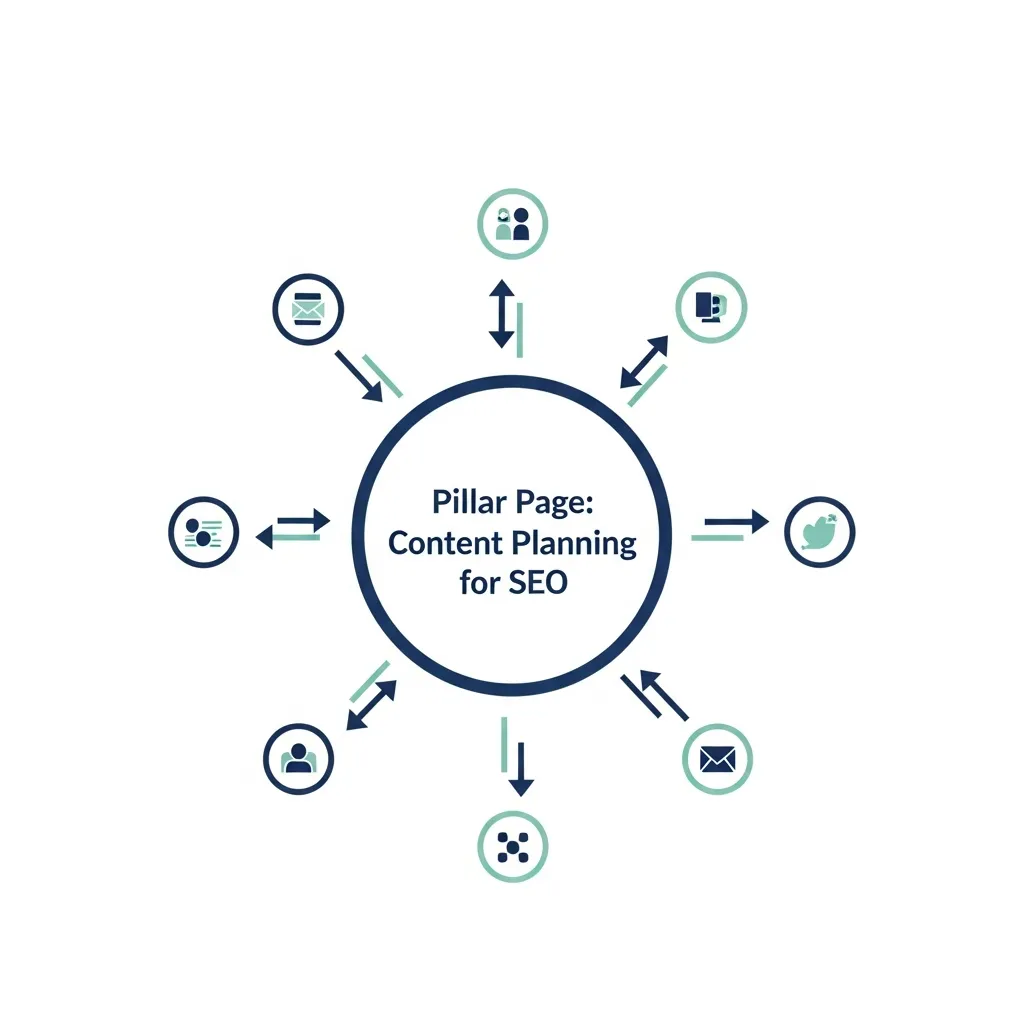
To signal comprehensive expertise to search engines, move beyond individual keyword targeting to topic clustering. This strategy involves creating a central, authoritative pillar page supported by multiple cluster content pieces.- Pillar Page: A comprehensive, high-level resource that covers all major facets of a broad topic and links out to its cluster content.
- Cluster Content: Individual articles that explore specific sub-topics in greater depth and link back to the pillar page.
This internal linking structure improves user navigation and demonstrates your site's depth of knowledge, significantly boosting topical authority.
-
Establishing a Dynamic Content Calendar with Clear Ownership and Deadlines:
A content calendar is a strategic roadmap that ensures consistency, alignment, and accountability.- Key Information: Include titles, target keywords, audience, format, publication dates, and assigned owners (writer, editor, designer).
- Flexibility and Dynamism: The calendar should remain dynamic to adjust for new industry trends or emerging pain points.
- Integration: Ensure content directly supports marketing campaigns, product launches, or seasonal promotions.
-
Setting KPIs and Performance Benchmarks for Long-Term Tracking:
The final step is defining how success will be measured. Without clear Key Performance Indicators (KPIs), it is impossible to gauge effectiveness.- Relevant KPIs: Consider metrics like keyword rankings for pain point terms, organic conversions (leads/sales), engagement rates, and backlinks acquired.
- Establish Benchmarks: Set realistic, data-backed goals and review them regularly to track progress. Long-term tracking allows for strategic adjustments and demonstrates the ROI of your efforts.
Pro Tip: When setting KPIs for 'Pain Point SEO' content, prioritize conversion-related metrics over pure traffic volume. High-intent queries often yield significantly higher conversion rates, making them valuable for demonstrating direct business impact.
Leveraging Competitor Insights to Identify Content Gaps
Leveraging competitor insights is a critical next step in refining your content planning for SEO. Begin by dissecting your competitors' top-performing pages to uncover not just what they rank for, but how they structure their information. This analysis often reveals underserved sub-topics or adjacent pain points that market leaders have overlooked.
Next, evaluate the depth and quality of ranking content within your niche. Scrutinize the comprehensiveness, accuracy, and user experience of their explanations. Are their articles merely scratching the surface? Simply replicating competitor content rarely yields significant gains. The true value lies in identifying what they have not addressed thoroughly.
This leads to finding the 'missing link': What specific questions are competitors failing to answer? Many strategies stop at surface-level topic analysis. Instead, drilling down to sub-questions can uncover powerful opportunities for pain point SEO. The most effective approach is to consistently aim for content that offers a superior, more complete answer than anything currently ranking.
Beyond Keywords: Optimizing for User Experience and E-E-A-T
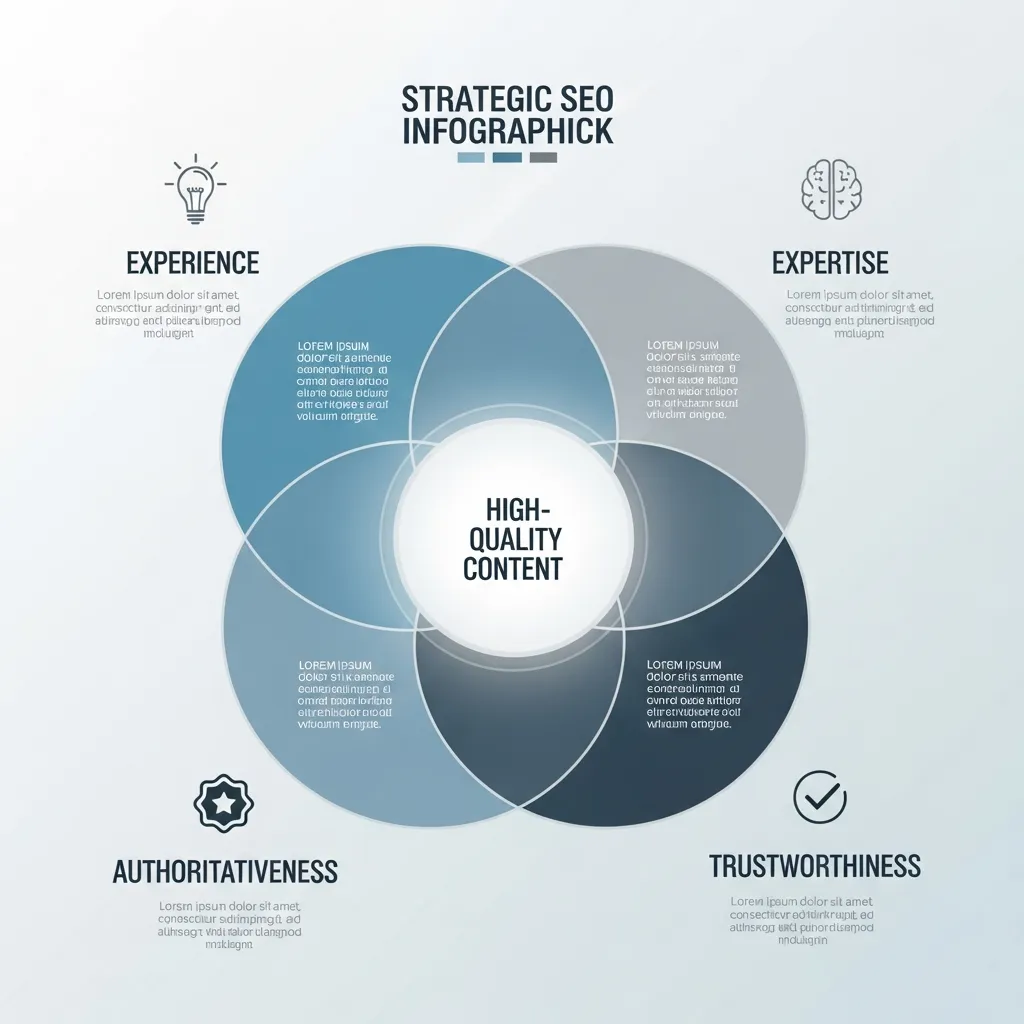
The era of solely targeting keywords is past; search engines now prioritize content that truly serves user needs and demonstrates credibility. To excel, content must move Beyond Keywords, integrating robust on-page optimization with a deep focus on user experience and the critical signals of E-E-A-T.
The most effective approach currently prioritizes demonstrating clear Expertise, Experience, Authoritativeness, and Trustworthiness (E-E-A-T). This means showcasing deep subject matter knowledge, presenting real-world experience, and building genuine trust through accuracy. Content that showcases hands-on knowledge consistently garners higher engagement. For instance, a project focusing on B2B software solutions saw a 25% increase in average time on page after redesigning content to feature detailed case studies and direct quotes from industry experts.
Beyond E-E-A-T, meticulous on-page best practices are non-negotiable. Utilize semantic HTML to structure content logically for both users and search engine crawlers. Implement strategic internal linking to build topical authority and distribute link equity. Crucially, optimize meta-titles and descriptions to entice clicks by accurately reflecting content value. Finally, optimize for readability and user engagement metrics by employing short paragraphs and clear headings. Content that is easy to consume naturally leads to improved dwell time and lower bounce rates.
Strategic Errors to Avoid in Your Planning Process
Even with a robust framework, certain strategic missteps can undermine your SEO efforts. A pervasive error frequently encountered is the 'set it and forget it' approach to content. Publishing a piece is merely the initial step; without consistent monitoring and adaptation, even strong content will eventually lose its competitive edge.
Another critical miscalculation involves ignoring search intent by solely chasing high-volume keywords. While marketers are often drawn to sheer volume, prioritizing genuine user intent—especially through pain point SEO—is far more effective for attracting qualified, conversion-ready traffic. Content misaligned with what users seek is unlikely to achieve its strategic goals.
Finally, neglecting content refreshes and historical optimization represents a significant missed opportunity. Practical experience shows that strategically refreshing just 10-15% of your existing high-potential content annually can lead to a substantial 20-30% increase in organic traffic for those pages. This proactive maintenance ensures your content remains accurate and valuable to both your audience and search engines.
Building a Sustainable Content Engine
Building a sustainable content engine demands an iterative planning lifecycle, from deep intent research to continuous optimization. The search landscape is dynamic; agility in response to evolving algorithm shifts is paramount. The true power lies in viewing content planning for SEO not as a static blueprint, but as a continuous strategic cycle. Neglecting regular content audits often leads to a significant drop in organic visibility—sometimes up to a 30% traffic decline within a year. This consistent, adaptable effort is the bedrock of long-term success. Start now with step one: defining your core audience’s pain points.
Frequently Asked Questions
What is content planning for SEO?
Content planning for SEO is a strategic approach that maps content creation to search visibility and business goals, focusing on user intent and topical authority rather than just keyword volume.
Why is search intent important in SEO planning?
Understanding search intent ensures your content matches the user's goal (informational, navigational, commercial, or transactional), which improves engagement and conversion rates.
What is a topic cluster?
A topic cluster is a strategy where a central "pillar page" covers a broad topic and links to multiple "cluster content" pieces that explore specific sub-topics in depth.
How often should I refresh my SEO content?
It is recommended to refresh high-potential content annually. Strategically updating 10-15% of your content can lead to significant increases in organic traffic.