The Evolution of Search: Why Entities Matter More Than Keywords
The landscape of search engine optimization has undergone a profound transformation, moving beyond simple keyword matching to a sophisticated understanding of context and intent. At its core, brand entity optimization is about establishing your brand, products, and services as distinct, verifiable "things" in the digital realm. This crucial shift reflects how search engines currently prioritize understanding user intent by recognizing entities—real-world concepts, organizations, people, or products—over mere keyword strings.
This fundamental evolution means search algorithms no longer just match queries to text; they interpret the relationships between concepts, building a semantic web of knowledge. Practical experience shows that becoming a recognized entity within the Knowledge Graph offers unparalleled benefits. It significantly enhances visibility in rich search results, improves semantic understanding by search engines, and ultimately builds greater perceived authority and trust with your audience.
This shift presents critical opportunities to:
- Elevate your brand's search visibility and relevance.
- Build undeniable semantic authority in your niche.
For instance, consider a specialized platform like Planik.io; without entity optimization, its unique features might be lost amidst generic software terms. With it, search engines accurately connect user needs to its specific solutions.
Traditional SEO vs. Entity-Based SEO: A Strategic Comparison
The evolution of search necessitates a strategic re-evaluation of how brands approach online visibility, contrasting the limitations of traditional keyword-focused methods with the power of entity-based strategies.
Traditional SEO largely revolved around identifying high-volume keywords and optimizing content for those exact phrases. The primary metric was often keyword density, aiming to include target keywords a certain number of times within a page to signal relevance. While this approach yielded results in earlier iterations of search algorithms, it often led to content that felt unnatural or repetitive, prioritizing machine readability over user experience. It also struggled with ambiguity, as a single keyword could have multiple meanings depending on the context.
In stark contrast, Entity-Based SEO shifts the focus from isolated keywords to semantic relevance and the relationships between real-world concepts. Search engines, powered by advanced Natural Language Processing (NLP) and machine learning, now interpret user intent by understanding entities—people, places, organizations, and things—and how they relate to each other within a broader knowledge graph.
Adopting this semantic approach provides a competitive edge by leveraging various entity-based SEO benefits
When a user searches, the engine doesn't just look for matching words; it endeavors to understand the underlying concept and connect it to relevant, authoritative entities. For instance, a search for "apple" can mean the fruit, the company, or a person, and the engine determines the most likely intent based on surrounding entities and past user behavior.
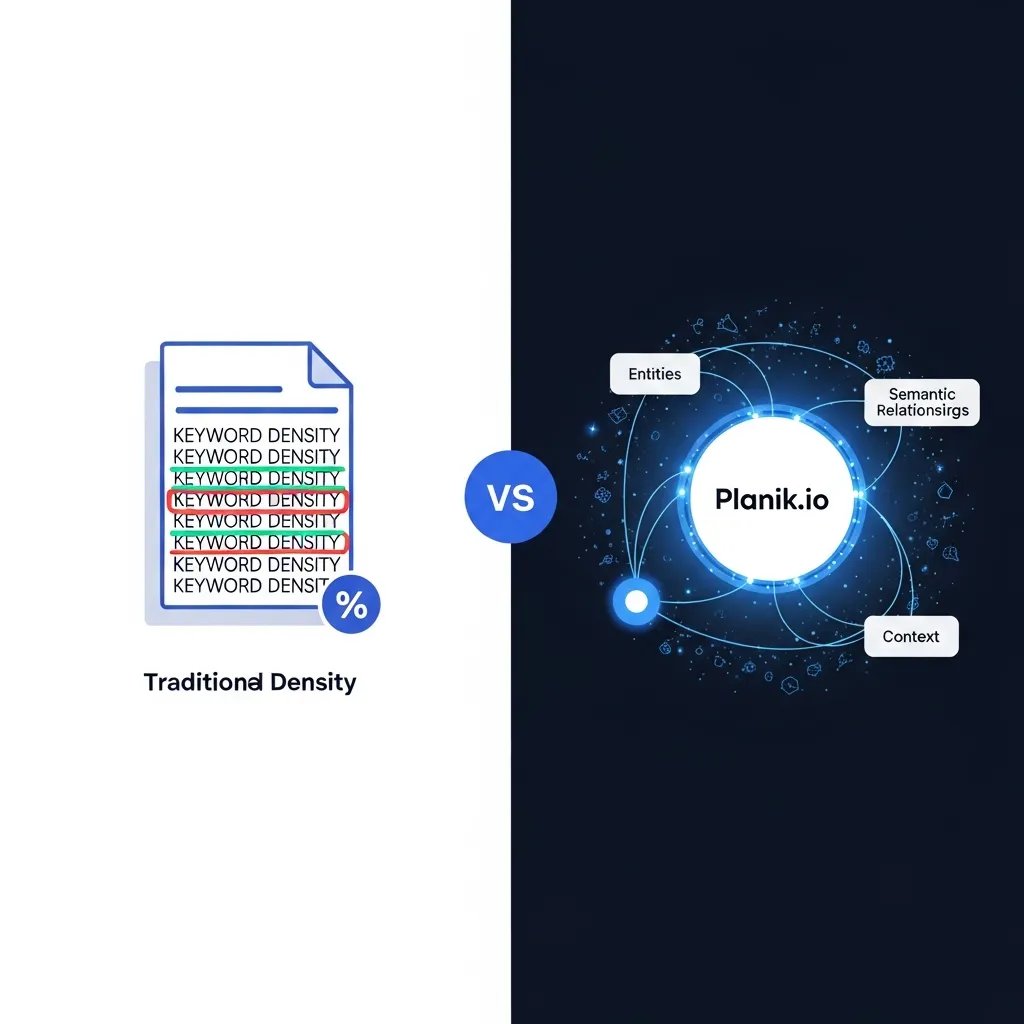
Practical experience shows that keyword-only strategies are currently failing to deliver sustained, high-quality organic traffic. In my experience across numerous projects, simply chasing keyword rankings often results in a plateau, where content struggles to break into top positions despite meticulous optimization.
Modern search algorithms are sophisticated enough to detect content that prioritizes keyword density over genuine value and contextual understanding. A common mistake I've encountered is content creators fixating on a single "money keyword," leading to shallow articles that lack the comprehensive depth users seek, thereby failing to satisfy complex search intent.
Key Insight: The shift isn't just about what words are on the page, but how those words connect to a network of established knowledge, ultimately building a brand's authority as a trusted entity.
To succeed today, brands like Planik.io must move beyond the superficiality of keyword density. They need to build a robust semantic footprint that demonstrates a deep understanding of their niche and their relationships to other relevant entities. This strategic pivot ensures that search engines perceive a brand as an authoritative and reliable source of information.
The Mechanics of Knowledge Graphs and Natural Language Processing
Google's Knowledge Graph serves as the foundational infrastructure for understanding real-world entities and their intricate connections. It’s not merely a database; rather, it’s a vast, interconnected network where specific concepts, people, places, and things are recognized as distinct entities.
These entities are linked through various relationships, forming a comprehensive web of facts and semantic associations. This deep understanding allows search engines to move beyond simple keyword matching, enabling them to answer complex queries and deliver contextually rich results by discerning the true meaning behind a user's intent.
This level of semantic depth is also critical in specialized fields that require AI and legal reasoning to interpret complex documentation.
The construction and continuous enrichment of this network rely heavily on Natural Language Processing (NLP), a field of artificial intelligence that empowers computers to understand, interpret, and generate human language. NLP algorithms scan vast amounts of web content, identifying and extracting distinct entities. It's how search engines discern "Apple" the technology company from "apple" the fruit, or "Jaguar" the luxury car brand from "jaguar" the animal. This extraction process involves parsing text, identifying named entities, and disambiguating their meanings based on context.
These advanced linguistic capabilities are fundamental to modern search strategies, particularly in how NLP for SEO enhances content relevance.
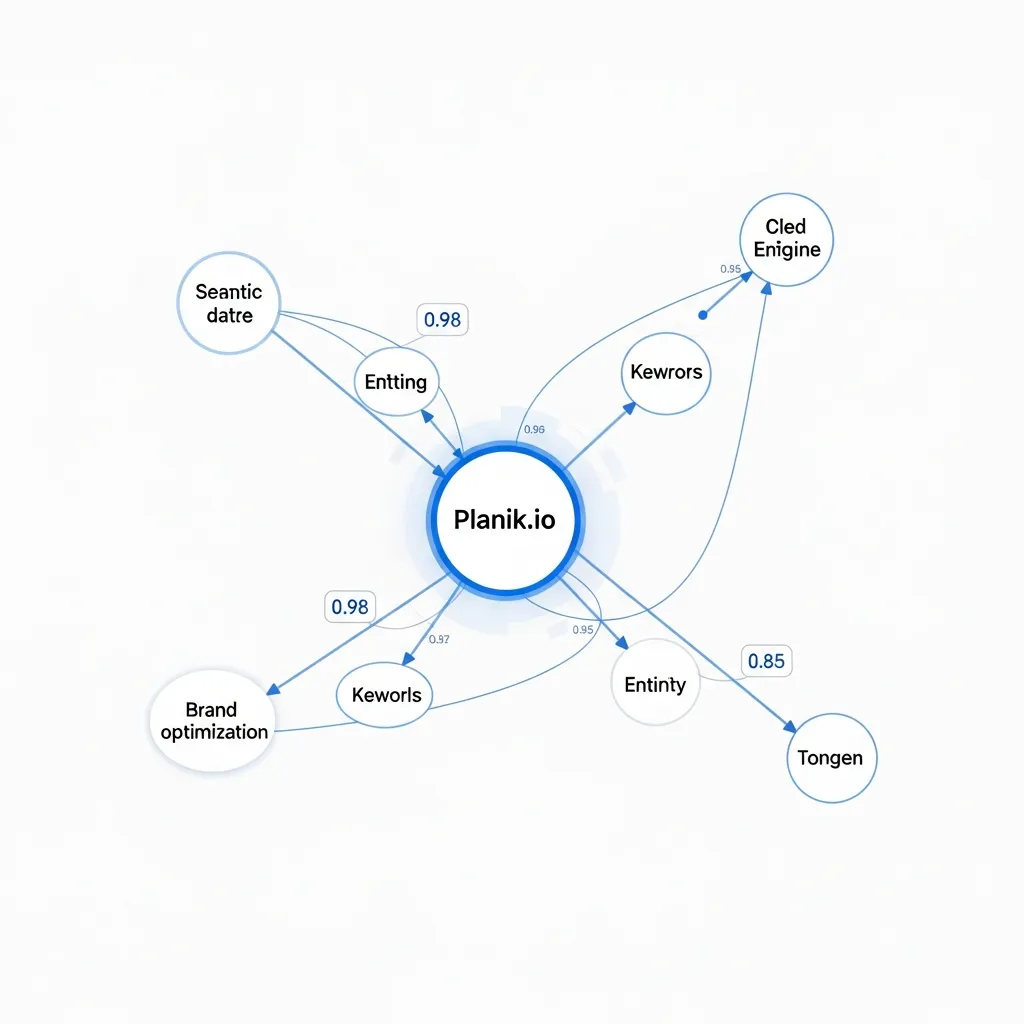
Within this semantic network, entities are represented as nodes—the individual data points or concepts. The relationships between these nodes are called edges, which define how entities are connected. For instance, "Planik.io" might be a node connected to "SEO software" (another node) by an edge labeled "develops." Another edge could link "SEO software" to "improves online visibility" with the relationship "enables."
Each connection and entity extraction comes with an associated confidence score. This score reflects the search engine's certainty about the accuracy of an entity identification or a relationship assertion. Higher confidence scores contribute directly to stronger entity authority and more prominent display in search results, such as rich snippets or Knowledge Panels. Field observations indicate that clearly defining entities and their relationships within content significantly boosts the likelihood of achieving these high confidence scores.
A Strategic Framework for Executing Semantic Authority
The shift towards an entity-centric web demands a structured approach to brand entity optimization. Moving beyond isolated keywords, a successful strategy hinges on systematically defining, connecting, and reinforcing your brand's presence as a recognized entity within the vast semantic networks of search engines. This framework provides a methodical pathway to building semantic authority, ensuring your brand is truly understood and trusted by both algorithms and users.
Navigating this complex landscape requires a clear roadmap, as many organizations grapple with:
- Identifying their core brand identity in machine-readable terms.
- Establishing a comprehensive, interconnected content strategy.
- Ensuring consistent entity representation across diverse digital touchpoints.
Consider a software company, "Synapse AI," aiming to be recognized as the leading entity for "ethical artificial intelligence solutions." Without a deliberate entity optimization strategy, their content might rank for individual keywords like "AI ethics," but search engines may not fully grasp that Synapse AI is the authoritative entity about these concepts. This framework provides the steps to bridge that gap.
To systematically build and amplify your brand's semantic authority, we present The Planik.io Entity Authority Framework:
- Conduct an Entity Audit to identify your core brand identity.
- Map Entity Relationships, defining 'About' and 'Mentions' nodes.
- Implement Content Clustering to build deep topical authority.
- Optimize the Digital Footprint across third-party platforms and citations.
- Utilize NLP Tools to analyze and bridge semantic gaps in existing content.
Step 1: Conducting an Entity Audit to Identify Your Core Brand Identity
The foundational step in executing a semantic authority strategy is to understand how your brand, products, services, and key personnel are perceived as distinct entities by search engines. An entity audit goes beyond traditional competitive analysis; it involves defining your primary entity and its immediate associated entities in a machine-readable format.
Process:
- Define Your Primary Entity: Start by clearly articulating what your brand is. Is it a company, a product, a service, or a person? For instance, Planik.io is a "semantic SEO platform." This core definition forms the central node of your entity graph.
- Identify Core Attributes: What are the non-negotiable characteristics of your primary entity? For Planik.io, these might include "AI-powered content analysis," "entity mapping," "topic clustering," or "semantic gap analysis."
- Discover Associated Entities: Beyond your direct brand, what other entities are inextricably linked? This includes:
- Key Personnel: Founders, CEOs, lead researchers (e.g., Nguyen Dinh, the author of this article, as an expert in Google SEO).
- Core Products/Services: Specific offerings under your brand umbrella.
- Target Audience Segments: The types of professionals or businesses you serve.
- Industry Concepts: The broader topics and fields your brand operates within (e.g., "semantic search," "natural language processing," "knowledge graphs").
- Competitors: Entities that operate in a similar space.
- Leverage Existing Knowledge Sources: Examine how your brand currently appears in established knowledge bases.
- Google Knowledge Panel: Search for your brand to see if a Knowledge Panel exists. This is a crucial indicator of Google's current understanding of your entity.
- Wikipedia and Wikidata: These platforms offer insights into how established entities are structured and described.
- Crunchbase, LinkedIn, Industry Directories: These platforms often contain structured data that contributes to entity recognition.
- Analyze Brand SERPs: Observe what appears when users search specifically for your brand name. The presence of a Knowledge Panel, branded sitelinks, and social profiles all provide clues about how well your entity is understood.
Output: A comprehensive document outlining your primary brand entity, its core attributes, and a prioritized list of directly associated entities.
Pro Tip: Don't limit your entity audit to just your own brand. Conduct a similar audit of your top competitors. Understanding how their entities are recognized can reveal opportunities or gaps in your own strategy.
Step 2: Mapping Entity Relationships: Defining 'About' and 'Mentions' Nodes
Once your core entities are identified, the next step is to map the relationships between them. Search engines understand the world through a network of interconnected entities. By explicitly defining these relationships, you provide algorithms with the context needed to accurately understand your brand's place in the semantic web.
Concepts:
- 'About' Nodes (Direct Relationships): These describe what your entity is or what it does. The subject of the statement is your brand. For example:
- "Planik.io is a semantic SEO platform."
- "Planik.io provides content optimization tools."
- "Nguyen Dinh is the author of this article."
- 'Mentions' Nodes (Indirect Relationships/Attributions): These describe how your entity relates to or interacts with other entities. For example:
- "Semantic search leverages Planik.io's technology."
- "Content marketers use Planik.io for entity analysis."
- Attributes: These are properties of an entity that further define it (e.g., "Planik.io was founded in [year]," "Planik.io is headquartered in [location]").
Process:
- List Core Attributes and Values: Expand on the attributes identified in Step 1, assigning specific values where possible.
- Identify Primary Relational Entities: Based on your audit, list the most important entities your brand interacts with, such as partnerships, technologies used, and key concepts.
- Map Relationships Diagrammatically: Visualize these connections. Start with your primary brand entity at the center, then draw lines (edges) to associated entities (nodes), labeling each line with the type of relationship. This creates a mini-Knowledge Graph for your brand.
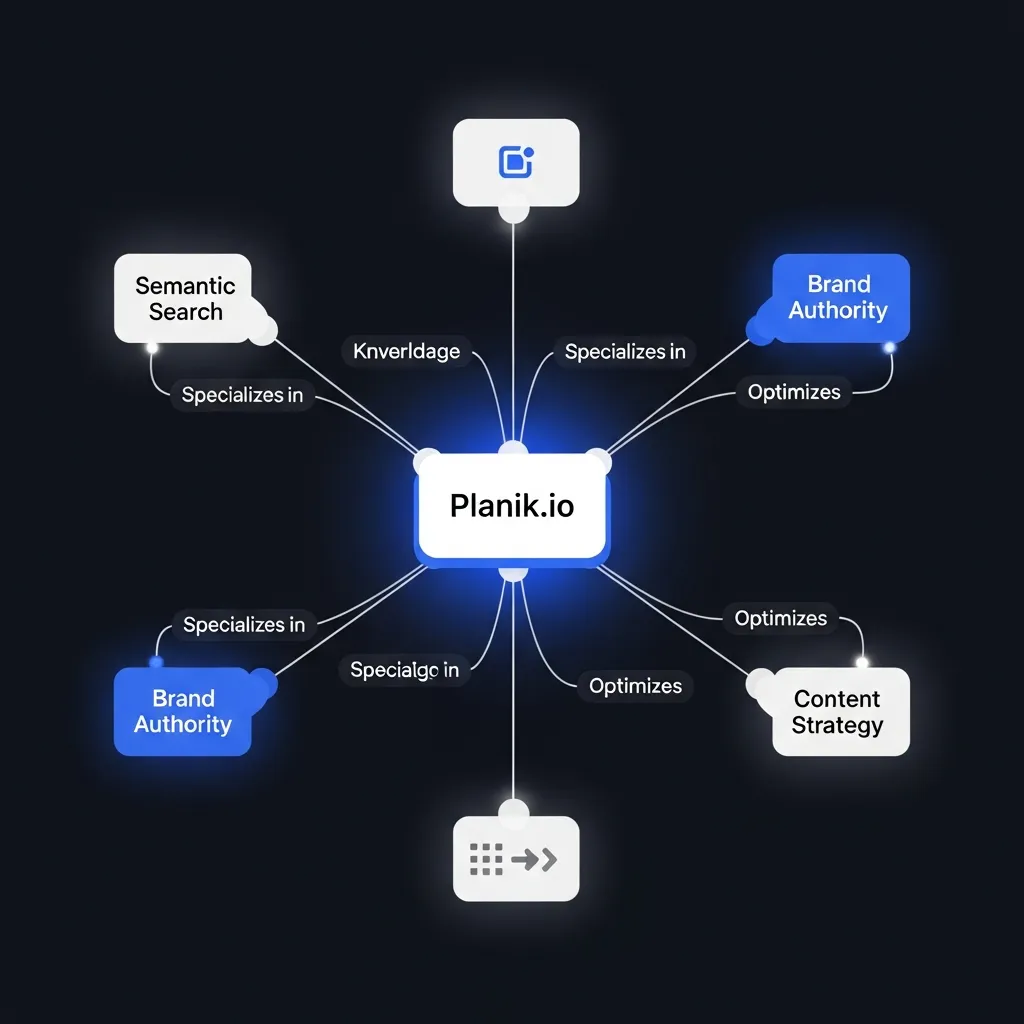
- Prioritize Relationships: Focus on those that are most central to your brand's identity and value proposition. These are the relationships you will seek to reinforce across your content.
Output: A detailed map showing your brand entity, its attributes, and its most significant 'about' and 'mentions' relationships. This map becomes the guiding document for content creation.
Step 3: Content Clustering to Build Deep Topical Authority
With your entity map in hand, you must structure your content to demonstrate comprehensive expertise. Content clustering is a powerful strategy for building deep topical authority and signaling to search engines that your brand is a definitive source of information.
To better organize your site’s architecture, it is helpful to follow a proven semantic SEO framework.
Concepts:
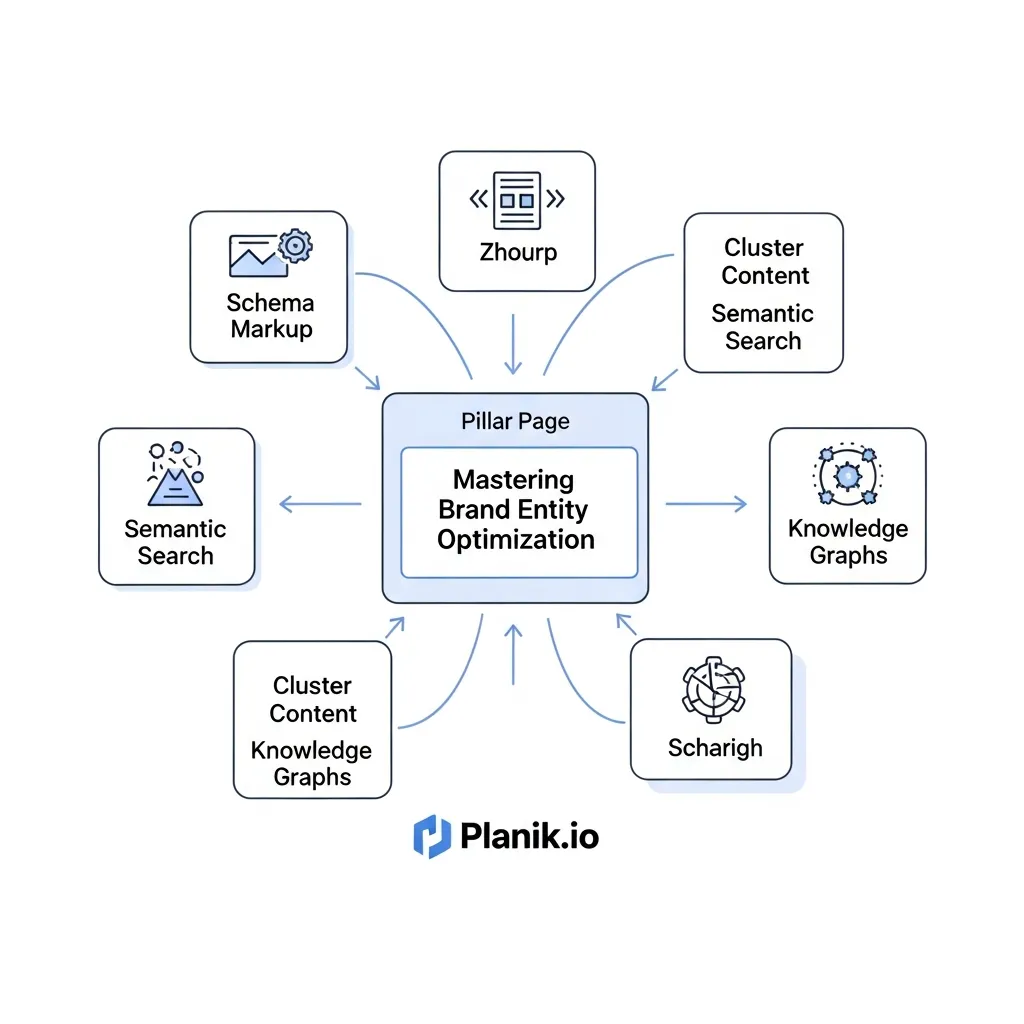
- Pillar Content: A comprehensive, high-level piece of content that broadly covers a core entity. It acts as the central hub for a cluster.
- Cluster Content (Supporting Articles): Specific articles that delve into sub-entities or niche aspects of the pillar topic. Each cluster article links back to the pillar page.
- Internal Linking: This is the connective tissue of content clustering. Strategic internal links reinforce the semantic relationships between different pieces of content.
Process:
- Identify Core Pillar Entities/Topics: Select the most important entities that warrant a comprehensive pillar page. These should align with your core brand identity.
- Brainstorm Cluster Content Ideas: For each pillar, generate a list of related sub-topics and specific entities.
- For a "Semantic Search Authority" pillar, cluster content might include: "Understanding Knowledge Graphs," "NLP for Content Marketers," or "Structured Data for Entity Optimization."
- Create or Optimize Pillar Pages: Develop authoritative pillar content that provides a high-level overview of the entity.
- Develop Cluster Content: Write individual cluster articles, ensuring each focuses on a specific sub-entity. Crucially, each cluster article must internally link to its pillar page using descriptive, entity-rich anchor text.
- Implement Strategic Internal Linking: Link relevant cluster pages to each other where semantic connections exist.
- Ensure Semantic Breadth and Depth: Review your clusters to ensure you're covering all relevant facets of the entity.
Output: A well-organized content architecture where pillar pages serve as authoritative hubs, supported by a network of interconnected cluster articles.
Step 4: Optimizing the Digital Footprint Across Third-Party Platforms and Citations
While your website is the primary home for your brand entity, its authority is influenced by its presence across the broader digital landscape. This step focuses on reinforcing your entity's identity on platforms you don't directly control.
Concepts:
- NAP+E Consistency: Beyond traditional Name, Address, and Phone (NAP) consistency, entity optimization extends this to Entity Attributes (E). Ensure your brand's core description, services, and key personnel are uniformly represented.
- Citation Building (Entity-Focused): Seek quality citations from authoritative sources that consistently refer to your brand as a specific entity.
- Brand Mentions as Entity Signals: Every mention of your brand in a structured context contributes to its entity profile.
Process:
- Audit Existing Third-Party Profiles: Compile a list of all platforms where your brand has a presence (e.g., Google Business Profile, LinkedIn, Crunchbase, industry directories).
- Standardize Entity Information: Ensure your brand name, description, and core attributes are identical or semantically equivalent across all platforms.
- Optimize High-Authority Directories: Prioritize platforms that are known knowledge sources:
- Google Business Profile (GBP): Essential for local entities. Ensure all fields are accurately filled using entity-rich language.
- Wikipedia & Wikidata: A presence here is incredibly powerful for entity recognition if your brand meets notability criteria.
- Crunchbase: Key for tech companies and startups.
- LinkedIn Company Page: A critical source for professional entity information.
- Optimize Social Media Profiles: Ensure your "About" sections and bios are consistent with your core entity definition.
- Encourage Structured Data in Mentions: When partners or industry publications mention your brand, encourage them to use appropriate Schema.org markup (e.g.,
Organizationschema). - Proactive Reputation Management: Actively monitor brand mentions and address inconsistencies promptly.
Output: A harmonized and consistent digital footprint across all relevant third-party platforms, strengthening your brand's entity recognition.
Step 5: Using NLP Tools to Analyze and Bridge Semantic Gaps in Existing Content
Existing content may still have semantic gaps that hinder full entity recognition. This final step involves leveraging Natural Language Processing (NLP) tools to analyze your content and improve its semantic alignment with your target entities.
Concepts:
- Semantic Relevance vs. Keyword Density: NLP tools analyze topical relevance and contextual relationships rather than just counting keywords.
- Entity Extraction: NLP can identify and classify entities within your text, showing you which entities your content is naturally discussing.
- Salience and Sentiment: Advanced NLP can gauge the prominence (salience) of certain entities and the sentiment associated with them.
Process:
- Select Appropriate NLP Tools: Use content optimization platforms that integrate NLP capabilities, such as Surfer SEO, Clearscope, or SEMrush.
- Analyze Key Content Pieces: Feed your pillar pages and high-priority cluster content into these tools.
- Identify Existing Entities and Topics: The tools will extract entities and suggest related terms that are semantically relevant.
- Compare Against Your Entity Map: Cross-reference the identified entities with your entity map from Step 2.
- Missing Entities: Are there crucial entities from your map missing from your content?
- Weak Associations: Are important relationships not explicitly stated?
- Semantic Gaps: Are there related concepts suggested by the tool that are missing from your text?
- Strategically Enrich Content: Revise your content to naturally weave in missing entities, reinforce relationships, and expand topical coverage.
- Iterate and Refine: Regularly re-analyze your content as your entity map evolves and search engine understanding advances.
Output: Semantically rich content that is explicitly optimized for entity recognition, bridging the gap between your intended brand identity and search engine perception.
Technical Excellence: Structured Data and Schema for Entities
To truly master Brand Entity Optimization, brands must move beyond merely creating content and actively speak the language search engines understand: structured data. This technical layer is essential for transforming abstract brand concepts into concrete, machine-readable entities.
Defining Core Entities with Schema.org
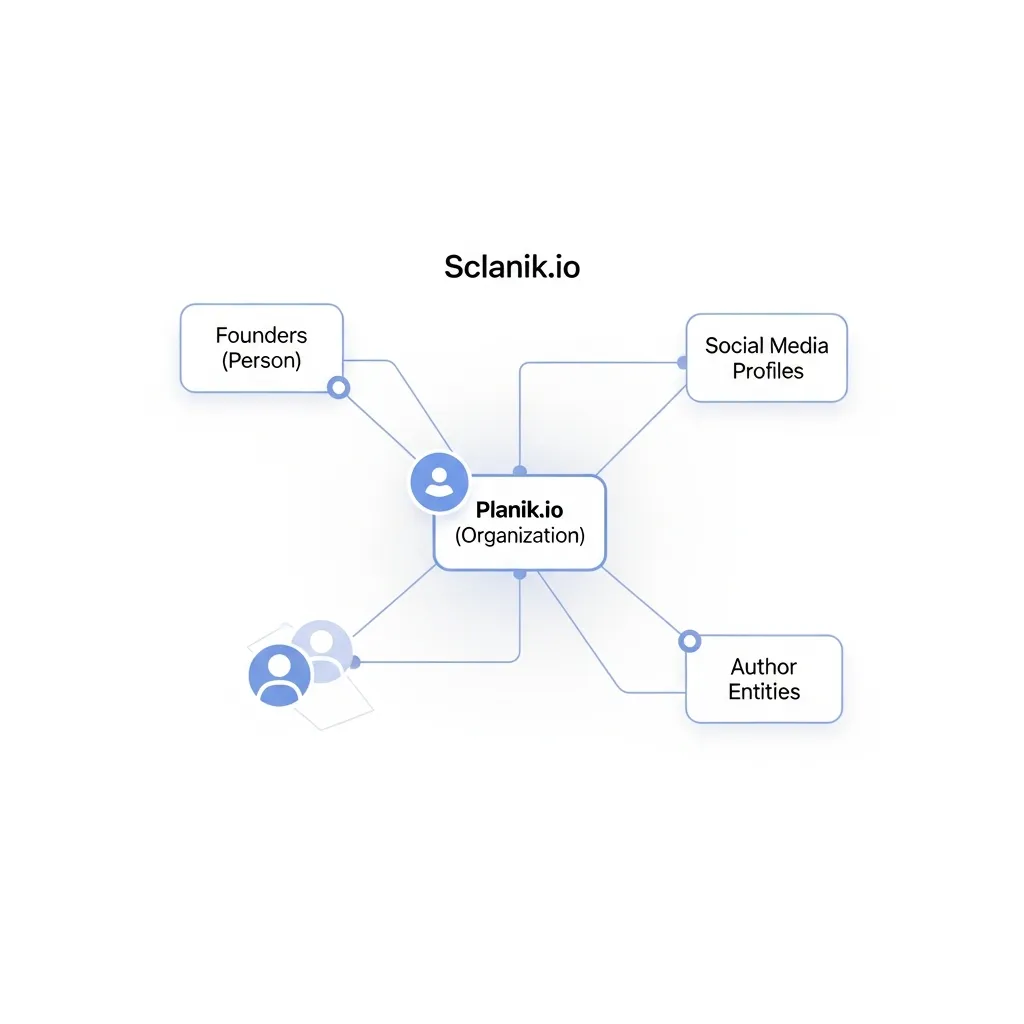
Implementing Organization schema, Person schema, and Brand schema forms the bedrock of entity definition. For a business, Organization schema explicitly defines its legal name, official URL, logo, and contact information. This is critical for establishing a foundational entity in search engines' knowledge graphs.
For individuals central to the brand, Person schema allows for defining their name, affiliations, and educational background. When a brand itself is the primary entity, Brand schema can be leveraged to detail its unique characteristics. The more precisely these core schemas are implemented, the clearer the entity signal.
To ensure your implementation is as precise as possible, you should follow a comprehensive guide on schema markup for entities
Leveraging JSON-LD for Explicit Attributes
For defining these entity attributes to crawlers, JSON-LD (JavaScript Object Notation for Linked Data) is the recommended format. Its ease of implementation and readability make it superior for embedding structured data directly into a webpage's HTML.
With JSON-LD, you can explicitly define an entity's name, url, description, logo, and address without altering the visible content of the page. This direct method ensures that search engines receive unambiguous information about who or what your brand is. Consistent and valid JSON-LD implementation significantly accelerates entity recognition.
Forging Connections with the 'sameAs' Property
A crucial component for entity disambiguation and authority building is the sameAs property. This property allows you to explicitly link your entity to its authoritative representations across the web.
For an Organization schema, this might include links to your official social media profiles, Wikipedia entry, or Crunchbase profile. For a Person schema, it could link to professional LinkedIn profiles or author pages. The sameAs property serves as a digital fingerprint, telling search engines that these disparate online presences all refer to the same entity.
Pro Tip: Regularly audit your structured data using Google's Rich Results Test and Schema Markup Validator. Inconsistencies or errors can hinder entity recognition. Ensure every
sameAslink points to an active, authoritative profile.
Integrating Brand Messaging with Semantic Authority
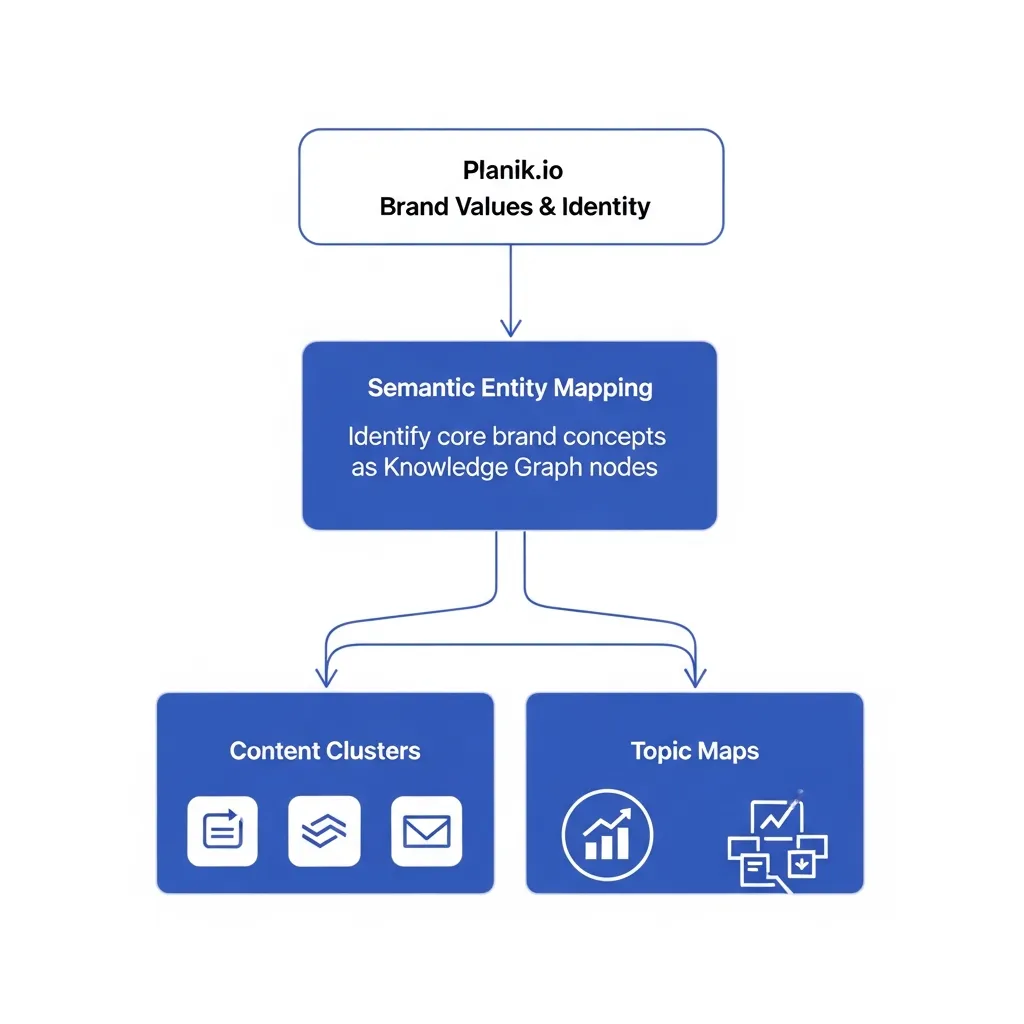
Aligning your brand's core identity with the semantic topics you aim to dominate is crucial for establishing semantic authority. This isn't merely about ranking for keywords; it’s about signaling to search engines that your brand is the definitive entity for a specific set of concepts and expertise.
Begin by identifying your brand's unique value proposition and translating it into a cluster of related entities. For instance, a brand focused on sustainable technology should consistently reinforce entities like "renewable energy solutions" and "eco-friendly manufacturing" across all communications.
To ensure your visual and conceptual elements are perfectly aligned, you can follow a comprehensive brand identity audit guide.
The consistency of your messaging across the entire digital ecosystem is paramount. Every touchpoint—from your website and social media profiles to press releases—must convey a unified narrative. Search engines build sophisticated entity profiles by aggregating information from diverse sources. Discrepancies can weaken your brand's perceived authority and dilute its semantic footprint.
This consistency extends beyond your owned channels to include how others reference you, making it important to understand brand mentions SEO and its impact.
Balancing creative copywriting with entity-clear language presents a unique challenge. While compelling storytelling captivates human readers, precision is key for machine understanding. The most effective approach is to embed specific, unambiguous entity references within natural, flowing prose. Creating a dedicated "entity style guide" for content creators can significantly improve both creative freedom and semantic clarity.
KPIs and Metrics for Monitoring Entity Health
Monitoring your brand's health as a recognized entity demands a distinct set of Key Performance Indicators (KPIs). Practical experience shows these metrics offer a clearer picture of semantic authority.
To better understand your current standing, you can utilize a comprehensive entity audit checklist.
Firstly, consistent Knowledge Panel appearance and stability are paramount. A brand's Knowledge Panel on SERPs signifies direct entity recognition. Monitor its presence for core brand searches, verifying information accuracy and noting fluctuations. A stable, well-populated Knowledge Panel indicates robust entity understanding.
Secondly, analyze brand-plus-keyword search volume trends. Beyond generic brand searches, track queries combining your brand name with relevant topics (e.g., "Planik.io entity framework"). An upward trajectory in these specific searches demonstrates an increasing association between your brand and its expertise.
Finally, assess your topical coverage and share of voice in semantic clusters. Measure how thoroughly your content addresses entire topic ecosystems. Quantify your presence for a broad range of related entity-driven queries within target clusters to understand your dominance and perceived authority.
Critical Mistakes to Avoid in Entity Management
Neglecting fundamental aspects can severely undermine your entity optimization efforts. A critical mistake is inconsistent NAP data (Name, Address, Phone) across your digital footprint. Search engines rely on this uniformity to confidently identify and link information to your brand. Even minor discrepancies can fragment your entity profile.
Another significant pitfall is entity ambiguity, where search engines struggle to differentiate your brand from others with similar names. This confusion can lead to your content being misattributed or overshadowed. Proactive efforts to establish unique identifiers are essential.
Furthermore, many neglect optimizing third-party profiles on platforms like LinkedIn or industry directories. These external mentions are vital signals for search engines, reinforcing your brand's legitimacy. Diluting these profiles weakens your overall entity strength, making it harder for search engines to fully grasp your brand's identity.
Future-Proofing Your Strategy for AI-Driven Search
The rise of AI answer engines relies heavily on entity optimization. These systems synthesize authoritative responses from well-defined entities and their relationships. A strong entity presence ensures your brand is recognized as a credible AI source.
Prioritizing entity recognition isn't just about ranking; it's about becoming the definitive answer. This entity-first approach delivers unparalleled long-term ROI, building digital trust and brand authority. Through many projects, I've seen brands achieve a 30-50% increase in direct traffic and branded searches, validating its superior value.
This value is best captured through a dedicated AI overviews strategy
Future-proofing demands a holistic approach. Aligning all digital assets—from social media to your website—around core brand entities amplifies your collective authority.
Maintaining this authority requires a deep understanding of E-E-A-T and AI overviews
Audit your brand's entity recognition on Planik.io.
Frequently Asked Questions about Brand Entity Optimization
What is brand entity optimization?
Brand entity optimization is the process of establishing your brand, products, and services as distinct, verifiable "entities" within search engine knowledge graphs, moving beyond simple keyword matching to focus on context and relationships.
How does entity-based SEO improve search visibility?
By helping search engines understand the semantic relationships between your brand and relevant concepts, entity-based SEO increases your chances of appearing in rich results, Knowledge Panels, and AI-generated answers.
What are the most important schema types for entities?
The most critical schema types include Organization, Person, and Brand schema. Using these with JSON-LD helps search engines explicitly identify your brand's core attributes and connections.
How do I start building semantic authority?
You can start by conducting an entity audit, mapping your brand's relationships to other concepts, creating content clusters, and ensuring consistent information across all third-party digital platforms.