Defining the Role of Meaning in Modern Search
Modern search engines have fundamentally redefined how content achieves visibility. Individual keywords are no longer the sole arbiters of ranking; instead, semantic clustering SEO represents the strategic grouping of related keywords and concepts into comprehensive content hubs. Search algorithms now leverage sophisticated natural language processing (NLP) to interpret the true intent and contextual relationships between words, moving far beyond mere lexical matching.
This paradigm shift signifies a critical move from targeting isolated keywords to building topical authority by covering entire subjects thoroughly. For instance, optimizing for "eco-friendly packaging solutions" now demands addressing related terms like "sustainable materials," "biodegradable options," and "recycling logistics."
This holistic approach ensures content aligns with complex user queries. To effectively navigate this evolving landscape, a deep dive into semantic clustering techniques is essential.
Outcomes of embracing this methodology include:
- Achieving comprehensive topic coverage.
- Enhancing search engine understanding of site context.
- Boosting overall domain authority.
Comparing Semantic Strategies vs. Traditional Keyword Targeting
The evolution of search has reshaped our approach to content. Historically, SEO revolved around exact-match keyword targeting, where ranking meant meticulously weaving specific phrases into copy. While effective in its time, this approach frequently led to content fragmentation, resulting in numerous thin articles that inadvertently competed against each other for similar queries.
Modern search engines, powered by AI and natural language processing (NLP), have moved toward entity-based SEO. They prioritize understanding the full context and user intent behind a query rather than just the keywords. In my experience, chasing a multitude of exact-match keywords often creates content silos that dilute authority rather than consolidating it. A common mistake is creating multiple articles that address slightly different keyword variations but the same underlying user intent, which hinders overall visibility.
Semantic grouping addresses the complexity of modern intent by organizing content around broad topics and their related sub-topics. This strategy allows for comprehensive coverage, satisfying diverse user queries within a single, authoritative cluster. The shift to semantic strategies isn't merely an optimization tactic; it is a fundamental alignment with how users think and how search engines process information for richer, more relevant results.
The Business Case for Topical Authority and Grouping
Transitioning to a semantic approach presents a compelling business case for any entity aiming to solidify its digital footprint. Field observations indicate that by organizing content around comprehensive topics, websites unlock significantly improved ranking potential for long-tail variations. This holistic approach captures a broader spectrum of user queries, including complex and conversational searches that traditional targeting often overlooks.
Beyond visibility, a logically structured content cluster enhances the user experience through intuitive organization. Visitors can seamlessly navigate related articles, deepening their engagement and time on site—strong signals of value to search engines. Practical experience shows this leads to improved site metrics and better conversion pathways.
Crucially, semantic grouping leads to a substantial reduction in keyword cannibalization risks. Rather than multiple pages competing for similar terms, each content piece serves a distinct, complementary purpose. This clarity helps search engines accurately assign relevance, bolstering overall domain strength. Ultimately, this strategic pivot builds sustainable topical authority that is difficult for competitors to replicate, forming a lasting competitive advantage.
A Practical Workflow for Implementing Semantic Clusters
Implementing semantic clustering SEO effectively moves beyond theoretical understanding into a structured, actionable process. Many organizations struggle with content fragmentation, where numerous articles exist but fail to reinforce each other's authority. This often results in scattered keyword rankings and diluted organic visibility.
A systematic approach is crucial for transforming disparate content efforts into a cohesive, authority-building engine. The following workflow outlines a practical methodology to build robust clusters that resonate with modern search algorithms and user intent.
Here is The 5-Phase Semantic Cluster Blueprint for building topical authority:
- Conduct Deep Keyword Research and Identify Core Entities: Move beyond surface-level keywords to uncover foundational concepts within your niche.
- Analyze SERPs to Group Keywords by Shared Search Intent: Decipher the user's underlying goal by examining top-ranking results.
- Design the Hub-and-Spoke Architecture (Pillar and Cluster Pages): Structure content strategically with broad pillar pages and detailed cluster articles.
- Develop a Strategic Internal Linking Map to Distribute Equity: Create a deliberate linking strategy that guides both users and search engine crawlers.
- Optimize Content for Semantic Relevance and Entity Density: Ensure content speaks to the full breadth of a topic, incorporating related terms naturally.
Step 1: Conducting Deep Keyword Research and Identifying Core Entities
The foundation of a successful strategy lies in comprehensive keyword research, but the focus must shift from individual keywords to core entities and conceptual relationships. This phase requires moving beyond simple volume or difficulty metrics to map the entire landscape of terms relevant to your overarching topic.
Begin by identifying your primary seed keywords and expanding outwards. Utilize advanced tools to uncover long-tail variations, related questions, and "people also ask" queries. Pay close attention to the nouns, verbs, and adjectives that frequently appear; these are indicators of core entities—people, places, products, or abstract concepts—that define your topic.
For instance, if your broad topic is "sustainable living," you would identify entities like "renewable energy," "zero-waste," and "ethical consumption." Mapping these entities early provides a clearer roadmap for content creation, ensuring comprehensive coverage rather than just keyword targeting.
Step 2: Analyzing SERPs to Group Keywords by Shared Search Intent
Once you have a list of keywords and entities, analyze the Search Engine Results Pages (SERPs) to understand the underlying search intent. Search engines prioritize content that best matches a user's intent, not just keyword presence.
For each significant keyword, review the top 10–20 organic results. Ask yourself: What type of content is ranking? Is it an informational guide, a product review, or a "how-to" tutorial? Keywords that consistently bring up similar types of content and address similar needs should be grouped together.
For example, "best running shoes for flat feet" and "running shoe reviews flat feet" share a commercial investigation intent. Conversely, "how to prevent running injuries" indicates an informational intent. Grouping keywords by intent is crucial for avoiding keyword cannibalization and ensuring each piece of content serves a distinct purpose.
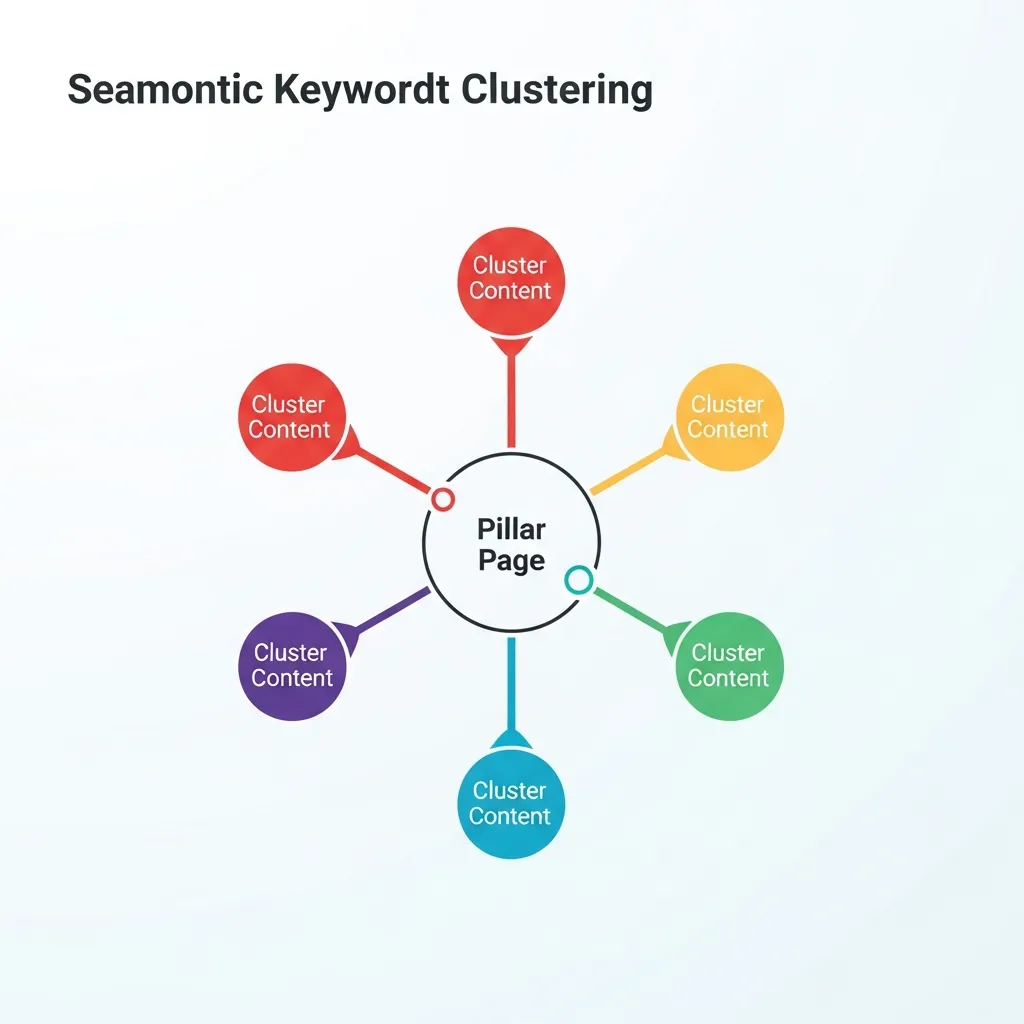
Step 3: Designing the Hub-and-Spoke Architecture (Pillar and Cluster Pages)
With keywords grouped by intent, architect your content using the hub-and-spoke model. This structure is fundamental to semantic organization.
A Pillar Page (Hub) serves as a high-level overview of a broad topic. It should be substantial, covering the main facets of the subject without going into excessive detail on any single sub-topic. Its purpose is to establish initial authority and provide a broad answer to a wide range of queries. Think of it as the table of contents for your topic.
Cluster Pages (Spokes) are individual articles that dive deep into specific sub-topics mentioned in the pillar. Each cluster page targets a specific set of keywords and addresses a particular user intent in detail. While the pillar provides breadth, the clusters provide the depth necessary to satisfy diverse user needs.
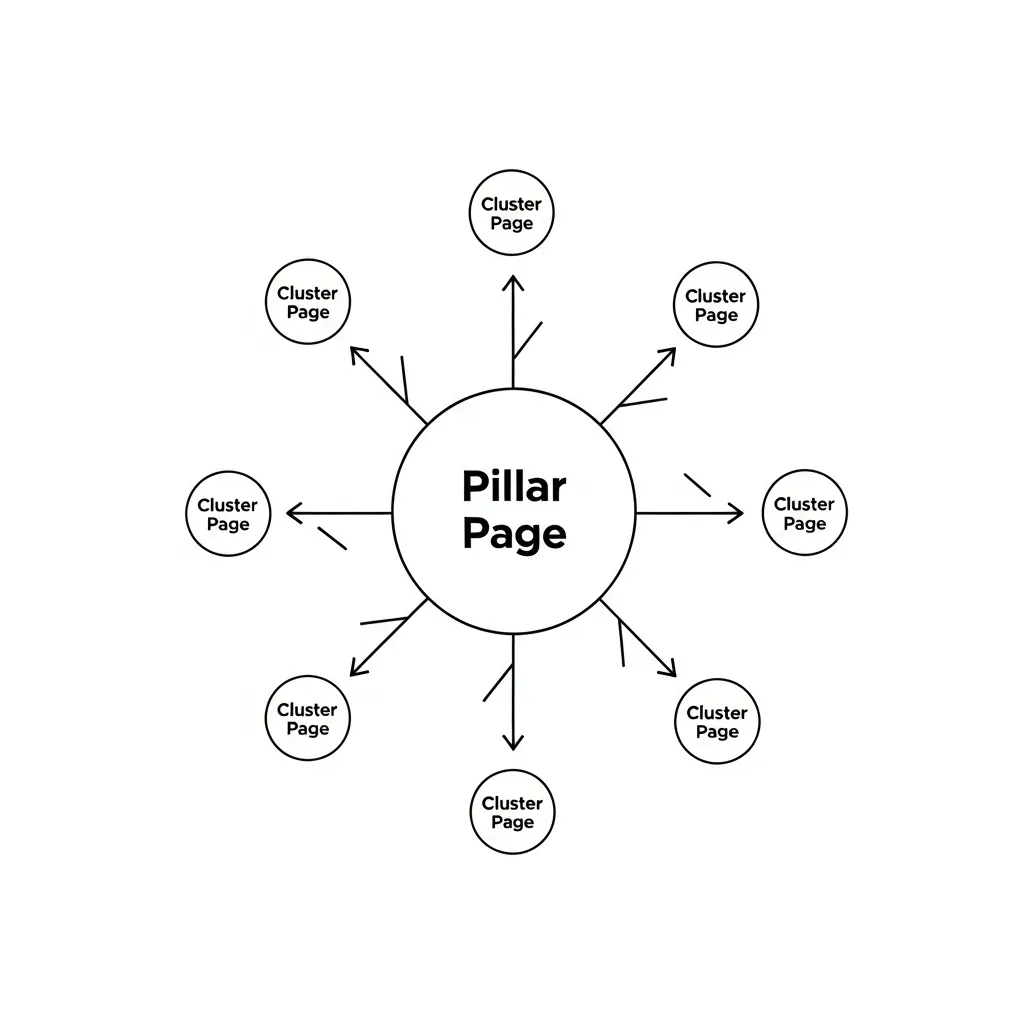
Step 4: Developing a Strategic Internal Linking Map to Distribute Equity
The internal linking strategy is the circulatory system of your semantic cluster, vital for distributing PageRank/link equity and signaling relevance to search engines. Without a deliberate linking map, even perfectly structured content can fail to achieve its potential.
Every cluster page should link back to its central pillar page, and the pillar page should link out to all relevant cluster pages. Use descriptive anchor text that accurately reflects the destination page, incorporating target keywords or entities. Furthermore, link between related cluster pages where natural connections exist. This interconnectedness helps search engine crawlers understand the relationships between your content and guides users through a logical journey, reducing bounce rates.
Pro Tip: Don't just link from the introduction or conclusion. Integrate internal links naturally within the body paragraphs where the topic is contextually relevant to signal deeper semantic connections.
Step 5: Content Optimization for Semantic Relevance and Entity Density
The final step involves optimizing the content itself, moving beyond keyword stuffing to focus on semantic relevance and entity density. This means ensuring your content covers the topic thoroughly by incorporating a rich tapestry of related terms and synonyms.
When writing, aim for comprehensive coverage. For a cluster page on "French Press Coffee," include related terms like "coarse grind," "immersion brewing," "plunger," and "brew time." These LSI (Latent Semantic Indexing) keywords signal to search engines that your content is an authoritative resource. Utilize optimization tools to analyze top-ranking competitors and identify concepts search engines expect to see. The goal is to demonstrate deep expertise and answer all potential user questions related to the sub-topic.
Navigating the Landscape of Semantic Analysis Tools
Practical execution of these strategies relies heavily on effective tooling. Historically, manual methods using spreadsheets and SERP observation were the bedrock. SEO specialists would aggregate keywords in Google Sheets and group them based on perceived intent. This approach provides an unparalleled depth of understanding but is labor-intensive.
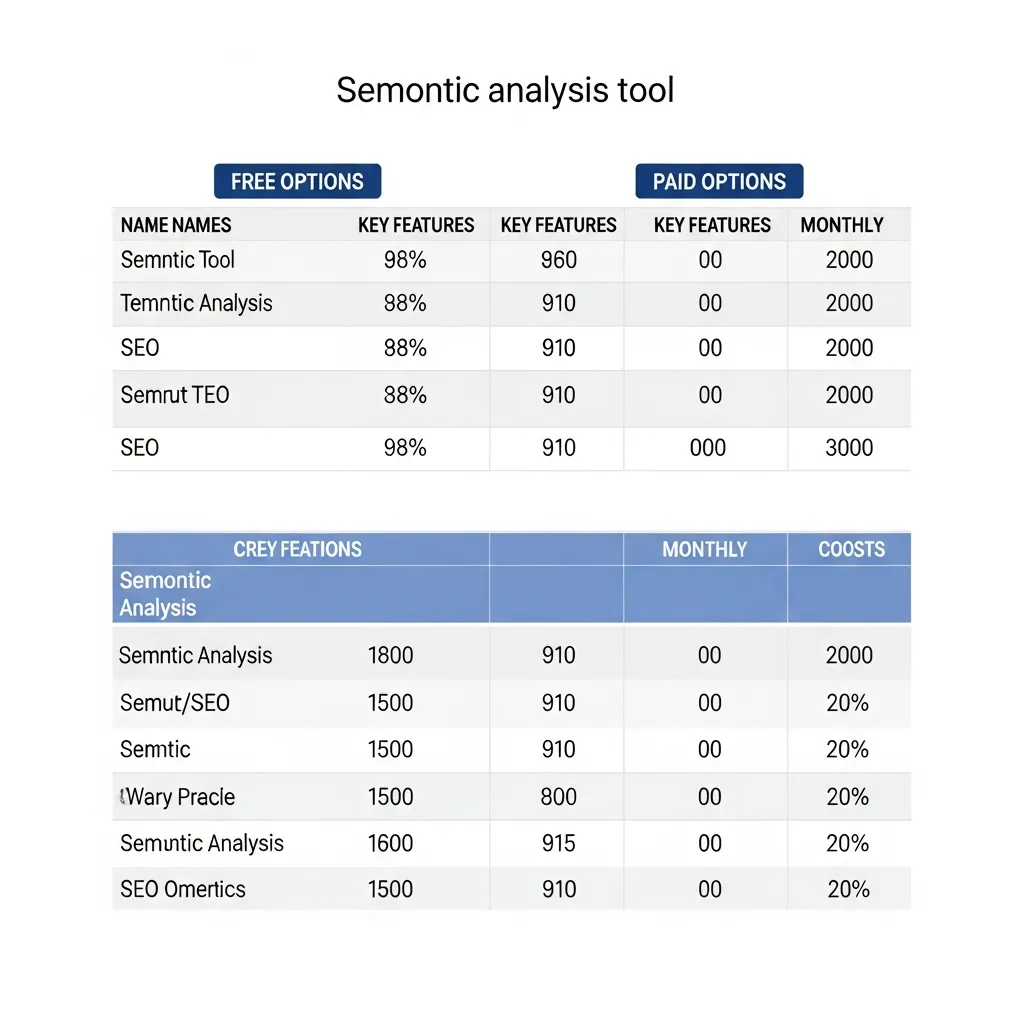
Currently, the landscape is rich with automated software designed for semantic clustering SEO. Tools like Semrush, Ahrefs, Surfer SEO, and dedicated platforms like Keyword Insights leverage algorithms to identify relationships and group keywords at scale. The primary pros include speed and efficiency, while the cons often involve cost and a potential for less nuanced interpretation compared to human analysis.
For identifying relationships, free options like Google Keyword Planner offer initial ideas but lack sophisticated clustering. Paid tools provide comprehensive data and built-in clustering algorithms. In my experience, solely relying on automation can lead to clusters that miss subtle nuances. The most effective approach balances automation with human editorial oversight to ensure topical authority aligns with genuine user needs.
Critical Errors That Undermine Semantic Success
Several pitfalls can undermine your success. One prevalent issue is over-clustering, where topics are excessively fragmented. This results in multiple shallow pieces competing against each other, diluting authority. I have often seen robust topics split into too many unique articles, leading to none ranking effectively.
Another critical error is prioritizing theoretical semantic relationships over actual search volume. While relevance is key, a perfectly linked concept with no user demand will not generate traffic. Ignoring this reality leads to resource misallocation. Teams focusing solely on theoretical connections often see a 15–20% drop in expected organic traffic.
Many also neglect the dynamic nature of search. Search intent is not static; it evolves. Failing to regularly audit and update your clusters means content quickly becomes outdated. Finally, the best semantic strategy will fail without a solid technical SEO foundation. Issues like poor internal linking or unoptimized crawl paths can prevent search engines from understanding your cluster's structure.
Metrics to Validate Your Semantic Content Strategy
Validating your strategy requires a shift from singular keyword tracking to a holistic approach. Success is measured by the aggregate keyword growth across the entire cluster, demonstrating increased visibility for a broader range of related terms.
Monitor internal link click-through rates and analyze user journey depth. A well-structured cluster should encourage deeper exploration, indicating stronger engagement. Beyond direct traffic, assess changes in your overall topical authority and 'share of voice' within specific subject areas. Finally, leverage Google Search Console to identify emerging semantic associations and new query patterns, allowing for timely content expansion.
Summary of Best Practices for Long-Term Visibility
The current search landscape demands a mastery of semantic clustering SEO, prioritizing user intent over exact keywords. A common mistake is neglecting consistent topical depth. Sustained effort in building comprehensive content clusters is crucial for long-term visibility. Start now by mapping your core topics and building the authority your brand deserves.
Frequently Asked Questions
What is semantic clustering SEO?
Semantic clustering SEO is the strategic process of grouping related keywords and topics into comprehensive content hubs. This approach focuses on topical authority and user intent rather than targeting isolated, exact-match keywords.
How does semantic grouping improve search rankings?
By organizing content into clusters, you signal deep expertise to search engines. This improves your ranking potential for long-tail keywords, reduces keyword cannibalization, and helps search algorithms understand the contextual relevance of your site.
What is the difference between a pillar page and a cluster page?
A pillar page is a broad, high-level overview of a core topic (the hub). Cluster pages are more specific articles that dive deep into sub-topics (the spokes) and link back to the pillar page to distribute authority.
Why is search intent important for semantic clustering?
Search intent tells you why a user is searching. Grouping keywords by shared intent ensures that your content actually answers the user's question, which is a primary ranking factor for modern AI-driven search engines.