The Evolution of Digital Relevance through AI
Marketing managers and content strategists are currently battling extreme content saturation. Generic, one-size-fits-all approaches are increasingly failing to capture audience attention, resulting in declining engagement, lower conversion rates, and missed opportunities for meaningful connection.
This article explores how ai content personalization has transitioned from a luxury to a strategic imperative for transforming digital experiences and driving superior results.
The fundamental shift involves moving from static content delivery to dynamic, user-centric experiences. AI bridges the gap between individual user intent and precisely tailored content delivery, ensuring every interaction feels uniquely relevant. This evolution creates a future where digital content directly addresses specific needs, significantly enhancing user engagement. For a comprehensive overview, see Understanding zero-click search.
Understanding the Technology Behind Personalized Content AI
At its core, ai content personalization is powered by sophisticated machine learning (ML) algorithms. These algorithms ingest vast amounts of behavioral data—including clicks, viewing history, purchase patterns, and search queries—to identify recurring patterns and explicit preferences. By synthesizing these insights, ML builds detailed user profiles that reveal which content resonates most effectively with each individual. This continuous analysis ensures that content delivery remains dynamic, evolving alongside the user journey.
Natural Language Processing (NLP) further enhances these capabilities by allowing AI to grasp the nuance and context of both user input and the content itself. By analyzing text for sentiment, intent, and semantic relationships, NLP ensures that personalized content is not just keyword-matched, but deeply aligned with the user’s specific information-seeking stage. For example, NLP enables an AI Overview to distinguish between a request for a product comparison and a general informational guide, tailoring the response to match that intent.
Building on the foundation of ML and NLP, predictive analytics pushes personalization even further by anticipating user needs before they are explicitly stated. By leveraging historical data and real-time signals, predictive models forecast future actions and interests. This enables proactive content delivery—such as recommending a complementary article or product based on a previous interaction—significantly enhancing the experience within dynamic environments like AI Overviews by staying one step ahead of the user's next move.
Strategic Implementation of AI Overviews Personalization
Strategic implementation transforms the theoretical understanding of ai content personalization into tangible improvements in user experience and business outcomes. Moving beyond the underlying technology, this section focuses on actionable strategies for deploying AI-powered personalization, particularly within the context of AI Overviews and dynamic content delivery.
Optimizing Content for AI Overviews
A primary challenge today is preparing content to be effectively summarized and presented by AI-driven search overviews. This requires a strategic shift toward clarity, conciseness, and semantic relevance. Content must be structured to allow AI algorithms to quickly identify core information, answer direct questions, and interpret implicit user intent. This involves using clear headings, bullet points, and short paragraphs that directly address potential user queries.
For instance, a product page should do more than list features; it should answer common questions regarding benefits, use cases, and comparisons in easily digestible chunks. Front-loading key information in introductions and summary sections significantly aids AI in generating accurate, comprehensive overviews. This approach ensures that when an AI system synthesizes information, it extracts the most pertinent details, offering a valuable, personalized summary without requiring the user to navigate multiple pages.
Mapping Content to the Buyer Journey with AI Insights
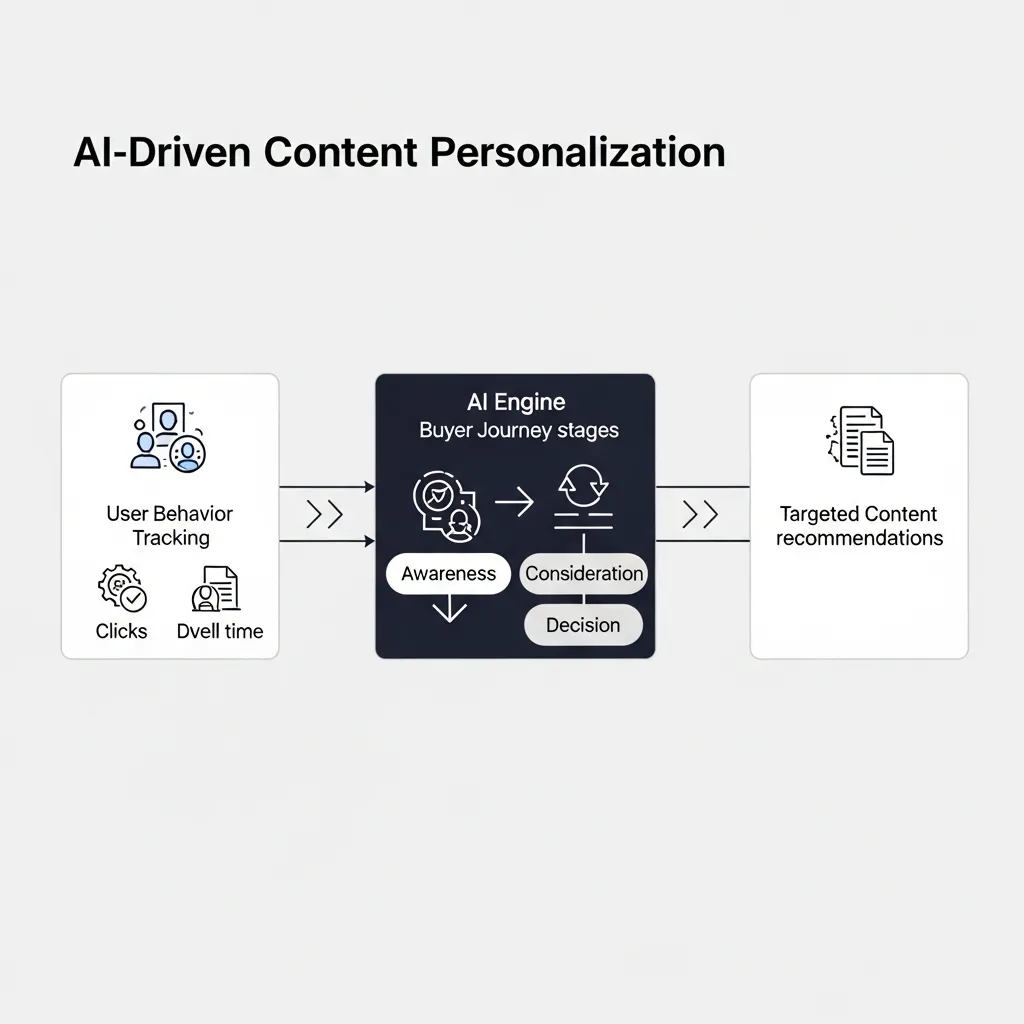
Effective personalization relies on delivering the right message at the right time—a process significantly enhanced by AI’s ability to map content to the buyer journey. AI algorithms analyze user behavior—such as search queries, page visits, download history, and past interactions—to infer their position in the awareness, consideration, or decision phases. This enables highly targeted content delivery.
For a user in the awareness stage, AI might recommend introductory guides or thought leadership pieces that address broad pain points. As they move into consideration, the system can present comparison articles, case studies, or product demonstrations. Finally, for the decision stage, personalized content could include product configurators, testimonials, or special offers. This mapping is dynamic, adapting as AI continuously re-evaluates user intent based on evolving behavioral data to ensure relevance throughout the journey.
Dynamic Content Customization for Real-Time Adaptation
The pinnacle of ai content personalization is dynamic content customization, where elements of a webpage or email adapt in real-time based on individual user data. This goes beyond simple recommendations, modifying specific text, images, calls-to-action (CTAs), or even entire layout sections. AI-powered recommendation engines and machine learning models analyze immediate user context—such as device type, location, time of day, current browsing session, and historical preferences—to serve the most relevant content variation.
Consider an e-commerce site where a returning user, who previously browsed specific categories, sees a homepage instantly reconfigured to highlight those items alongside complementary products suggested by predictive analytics. Similarly, an email marketing campaign can feature subject lines, body copy, and images tailored to each recipient's engagement history. These techniques create a highly responsive, individualized experience that significantly boosts engagement and conversion rates.
Leveraging Structured Data for Personalized Snippets
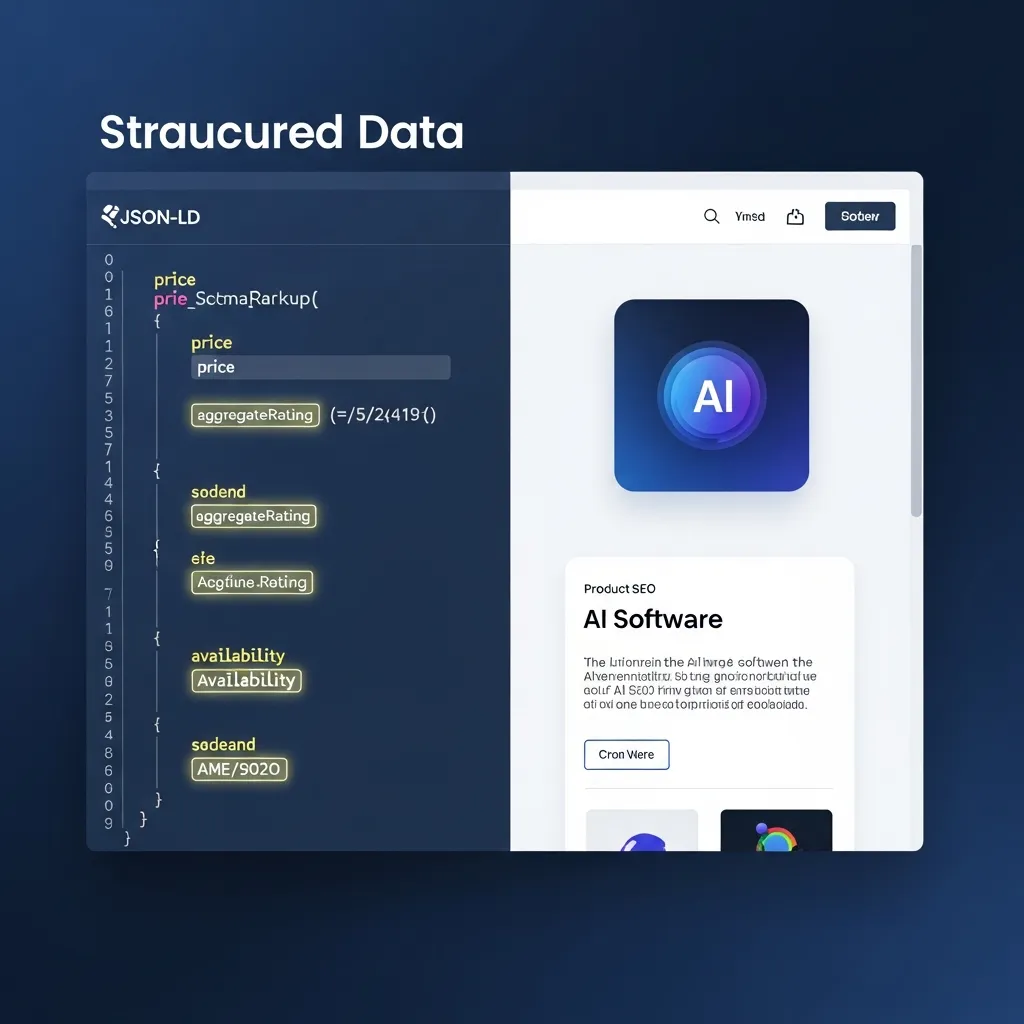
To empower AI algorithms to categorize, understand, and serve personalized snippets effectively, structured data is indispensable. Implementing schema markup (e.g., Schema.org vocabulary) within your content provides explicit semantic signals to search engines and AI systems. This tells the AI precisely what each piece of information represents—whether it is a product, a review, an event, an FAQ, or a how-to guide.
For AI Overviews, well-structured data allows algorithms to quickly identify answers to specific questions and extract key facts for clear presentation. For example, marking up FAQs with Question and Answer schema helps AI generate direct answers in search results. Likewise, marking up product specifications, pricing, and availability enables AI to compare offerings and present personalized product information. This foundational work significantly improves the accuracy and relevance of AI-generated content snippets.
Balancing Automated Personalization with Human-Centric Storytelling
While AI offers unparalleled capabilities in scaling personalization, the human element remains critical. Balancing automated personalization with human-centric storytelling ensures that content retains authenticity, brand voice, and emotional resonance. Over-reliance on automation can lead to generic or even "uncanny" experiences if the AI fails to grasp nuanced user intent or brand personality.
Content strategists must define guardrails for AI to ensure that personalized outputs align with brand guidelines and maintain a consistent tone. This involves using AI to handle the heavy lifting of data analysis and content delivery while content creators focus on crafting compelling narratives, developing unique value propositions, and injecting creativity. The goal is a seamless experience where AI enhances the delivery of genuinely valuable, human-crafted content rather than replacing it.
The AI Content Personalization Compass: A 7-Point Strategic Blueprint
To effectively navigate the complexities of AI Overviews personalization, a structured approach is essential. This blueprint outlines key strategic steps for content managers and marketing professionals.
| Step | Focus Area | Actionable Insight |
|---|---|---|
| 1 | Content Audit & Structure | Review existing content for clarity and logical flow. Restructure to prioritize key information for AI summarization using clear headings and concise paragraphs. |
| 2 | Schema Markup Implementation | Apply relevant Schema.org markup (e.g., Article, Product, FAQ) to all content to explicitly define your data for AI snippet generation. |
| 3 | Buyer Journey Mapping | Define clear buyer journey stages and categorize content accordingly, enabling AI to serve relevant information based on user progression. |
| 4 | Behavioral Data Integration | Establish robust data pipelines to collect and integrate user behavioral data (clicks, views, purchases) to feed AI personalization engines. |
| 5 | Dynamic Content Elements | Identify key elements (headlines, images, CTAs) that can be dynamically customized by AI based on user profiles and real-time context. |
| 6 | Brand Voice & Oversight | Establish clear brand guidelines for AI-generated content. Regularly review outputs to ensure consistency in tone and messaging. |
| 7 | A/B Testing & Optimization | Continuously test personalization strategies. Use AI-driven analytics to identify what resonates with specific segments and refine your approach. |
Pro Tip: When implementing dynamic content, start small. Identify one or two high-impact elements—such as a personalized hero image or a tailored CTA—and expand incrementally based on performance data. This allows for controlled experimentation and minimizes risk.
Quantifying the Impact on Engagement and Conversions
AI content personalization directly boosts user engagement, a shift clearly reflected in metrics like increased time-on-page and reduced bounce rates. By tailoring information to individual preferences, browsing history, and real-time intent, AI Overviews deliver content that is inherently more relevant. This precision captivates users, encouraging deeper exploration and more thorough consumption of the information provided.
This heightened engagement serves as the foundation for significant Conversion Rate Optimization (CRO). AI marketing personalization dynamically optimizes content—including calls-to-action and product recommendations—to ensure they resonate with the user’s current stage in the customer journey. For example, an e-commerce platform leveraging AI to suggest complementary products based on a user’s cart or viewing history often sees a measurable uplift in both average order value and completed purchases.
Beyond immediate conversions, the consistent delivery of highly relevant content across all touchpoints fosters profound customer loyalty. AI ensures that every interaction, from initial search results within AI Overviews to subsequent communications, reinforces the brand’s understanding of user needs. This seamless, personalized experience builds trust and cultivates stronger, long-term relationships, encouraging repeat engagement and brand advocacy.
Real-World Applications of AI Content Personalization
AI content personalization is transforming user experiences across various sectors, moving beyond theoretical benefits to deliver tangible results through predictive analytics and machine learning.
E-commerce
In e-commerce, AI algorithms analyze browsing history, purchase patterns, and search queries to deliver highly dynamic product recommendations. For example, a shopper viewing running shoes might see complementary activewear or related accessories, while a returning customer receives suggestions based on their past purchases. This precision significantly boosts conversion rates and average order value by ensuring every recommendation is relevant to the individual.
SaaS
For SaaS platforms, personalization is critical for driving user adoption and long-term retention. AI tailors onboarding content to a new user's specific role or initial actions, highlighting the features most relevant to their immediate needs. Subsequent interactions may include proactive suggestions for underutilized tools or personalized educational resources, fostering deeper engagement and demonstrating immediate value.
Media and Publishing
The media and publishing industry leverages AI to curate personalized news feeds and article suggestions. By understanding a reader's preferred topics, authors, and content formats, AI presents a unique, individualized content stream. This ensures users are consistently exposed to content they find compelling, which increases time spent on the platform and encourages repeat visits, ultimately building a more loyal readership.
Essential Best Practices and Data Privacy Standards
Ethical AI implementation requires strict adherence to data privacy regulations such as GDPR and CCPA. To foster audience trust, organizations must prioritize explicit user consent, robust data anonymization, and transparent data usage policies. Compliance is more than a legal obligation; it is a foundational pillar for scalable ai content personalization strategies that safeguard user rights.
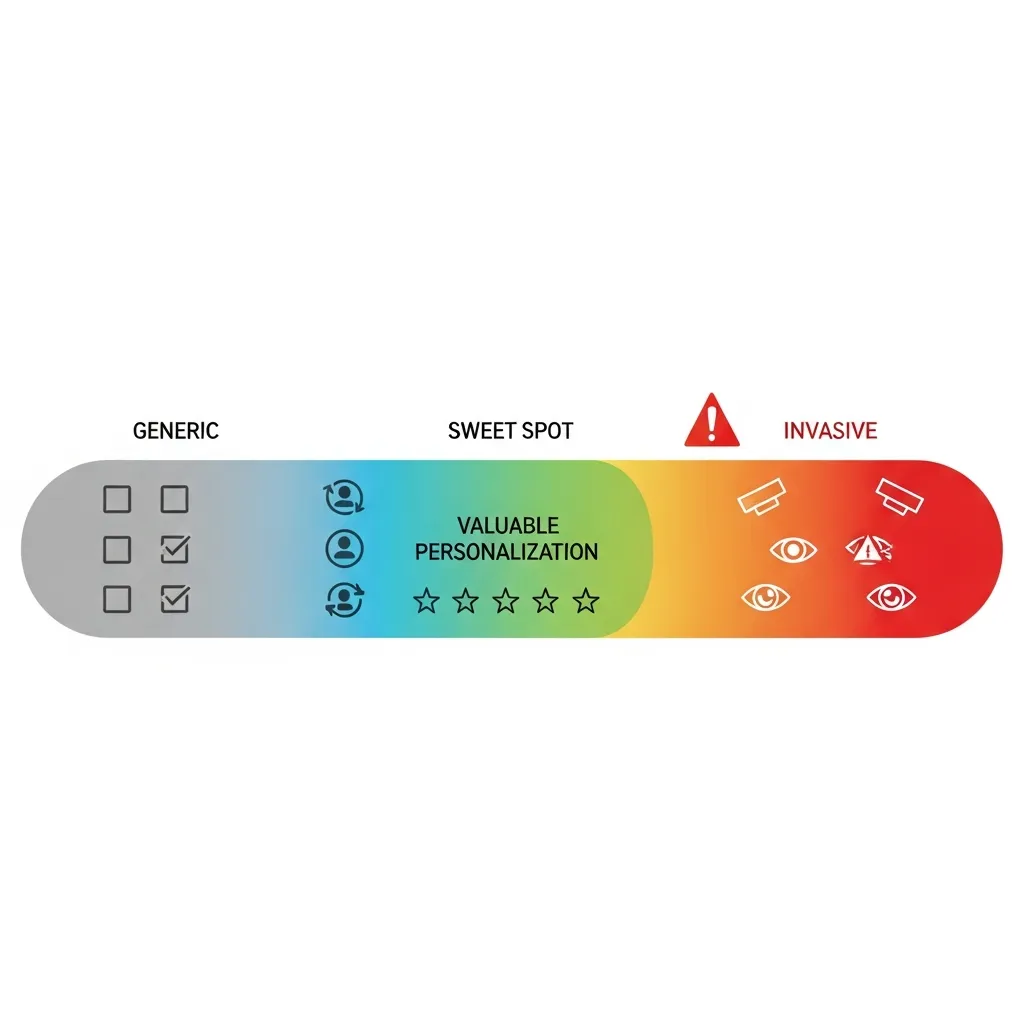
While AI-driven content aims to enhance relevance, it is crucial to avoid the "uncanny valley" of personalization. Overly aggressive or hyper-specific recommendations can feel intrusive, alienating users rather than engaging them. Striking the right balance involves respecting user boundaries and delivering genuine value without appearing invasive. Finally, maintaining a consistent brand voice across all automated variations is non-negotiable. AI models must be meticulously trained on existing brand guidelines to uphold a unique tone and messaging, ensuring a cohesive and authentic experience that preserves brand integrity and strengthens recognition.
Navigating the Future of AI Content Personalization
The long-term value of ai content personalization lies in its ability to cultivate deeper user relationships and drive sustained engagement. Content strategists should prioritize clear, measurable objectives and leverage existing data to inform initial AI model training for dynamic content optimization. While AI algorithms excel at tailoring content for AI Overviews, human oversight remains essential. Strategic human intuition ensures ethical alignment, preserves an authentic brand voice, and injects the creative nuances that AI cannot replicate. This synergistic partnership between AI and human expertise is key to future-proofing marketing and enhancing the user experience.
Start now by auditing your current content performance to identify high-impact personalization opportunities.
Frequently Asked Questions
What is AI content personalization?
AI content personalization uses machine learning algorithms to analyze behavioral data and deliver dynamic, user-centric experiences tailored to individual intent and preferences.
How does AI improve content for AI Overviews?
AI optimizes content for AI Overviews by mapping information to the buyer journey and leveraging structured data to ensure snippets are highly relevant to specific user queries.
Why is human oversight important in AI personalization?
Human oversight ensures ethical alignment, maintains an authentic brand voice, and provides the creative nuance and strategic intuition that automated algorithms cannot replicate.