The Evolution of Search: Adapting to Generative Results
Are you observing a fundamental shift in how users interact with Google Search, moving beyond familiar blue links to concise, generative AI summaries? This evolution presents both challenges and unparalleled opportunities for digital visibility. This article provides essential, advanced strategies to master optimization for Google AI Overviews, ensuring your content remains impactful in this new era.
The core insight is that future-proofing your SEO demands a proactive shift from optimizing solely for keywords to building topical authority and comprehensive content. AI Overviews prioritize direct answers, often synthesizing information from multiple sources to address complex queries, including 'fan-out' searches. For modern marketers and website owners, adapting to this paradigm is critical for maintaining and enhancing search visibility. We will explore advanced content frameworks, the vital role of E-E-A-T, and technical SEO tactics to thrive in this evolving landscape.
Understanding the Mechanics of Google AI Overviews
Google's AI Overviews, formerly known as the Search Generative Experience (SGE), represent a significant evolution in how search results are presented. These generative summaries appear prominently at the top of the Search Engine Results Page (SERP), aiming to provide users with direct, comprehensive answers to their queries without necessarily requiring a click to an external website. They synthesize information, offering a holistic understanding directly within the search interface.
To better understand this new search feature, you can learn more about what are AI overviews and their functionality.
At the heart of AI Overviews lies Google's advanced Gemini model. This sophisticated AI sifts through vast amounts of web data, identifying relevant information from numerous high-quality sources. Unlike traditional search that primarily ranks individual pages, Gemini analyzes and understands the relationships between different pieces of content, extracting key facts, concepts, and perspectives. It then weaves this disparate information into a coherent, natural-language summary, often anticipating follow-up questions and offering a more conversational experience. This multi-source synthesis moves beyond simple information retrieval to knowledge generation.
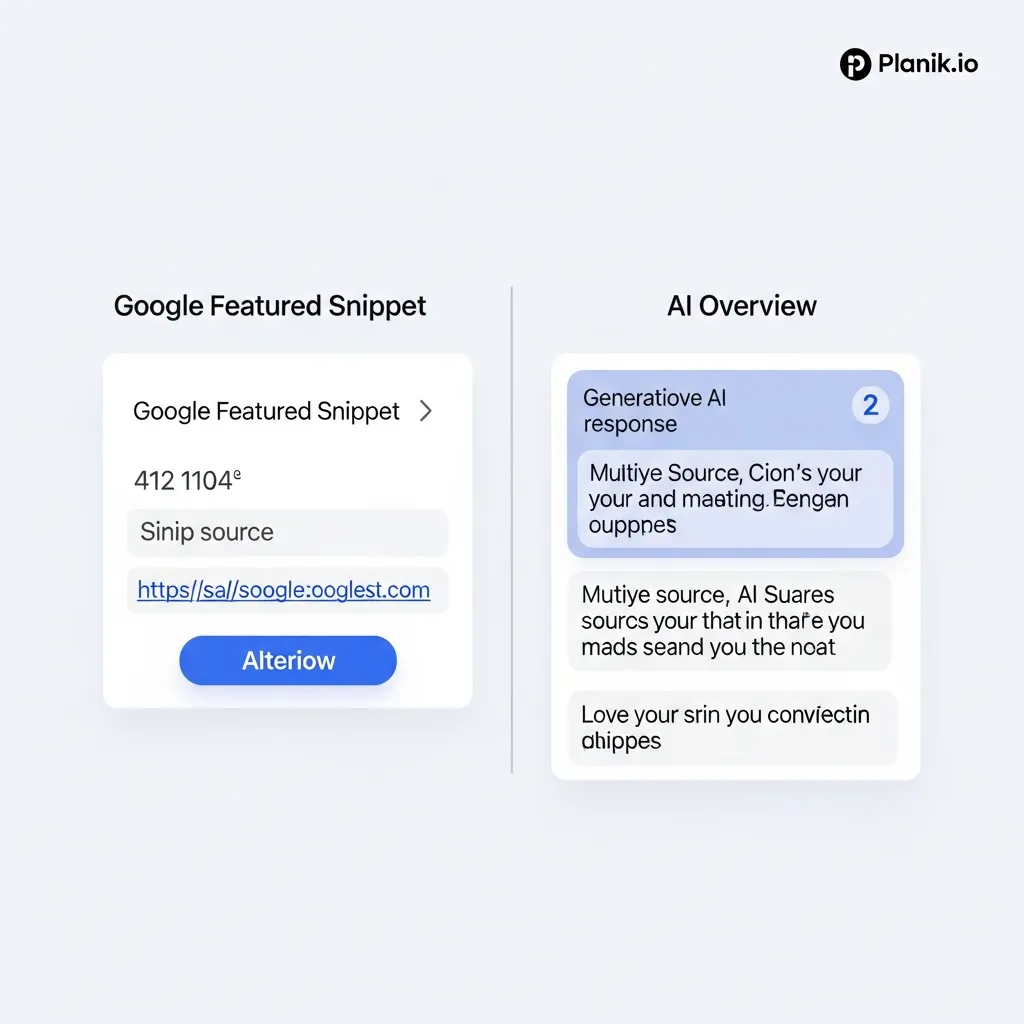
The distinction between AI Overviews and Featured Snippets is critical for SEO professionals. While both aim to provide immediate answers, their mechanics and implications differ. A Featured Snippet typically extracts a concise answer directly from a single web page deemed most authoritative for a specific query. It's essentially a direct quote or passage. In contrast, an AI Overview leverages the Gemini model to synthesize insights from multiple sources, constructing an original summary that often includes a broader context, various viewpoints, and even suggestions for further exploration. This means AI Overviews provide a deeper, more expansive answer, rather than a singular snippet. Understanding this fundamental difference is crucial for optimizing content effectively with Planik.io's strategies.
Analyzing the Impact on Organic Traffic and Click-Through Rates
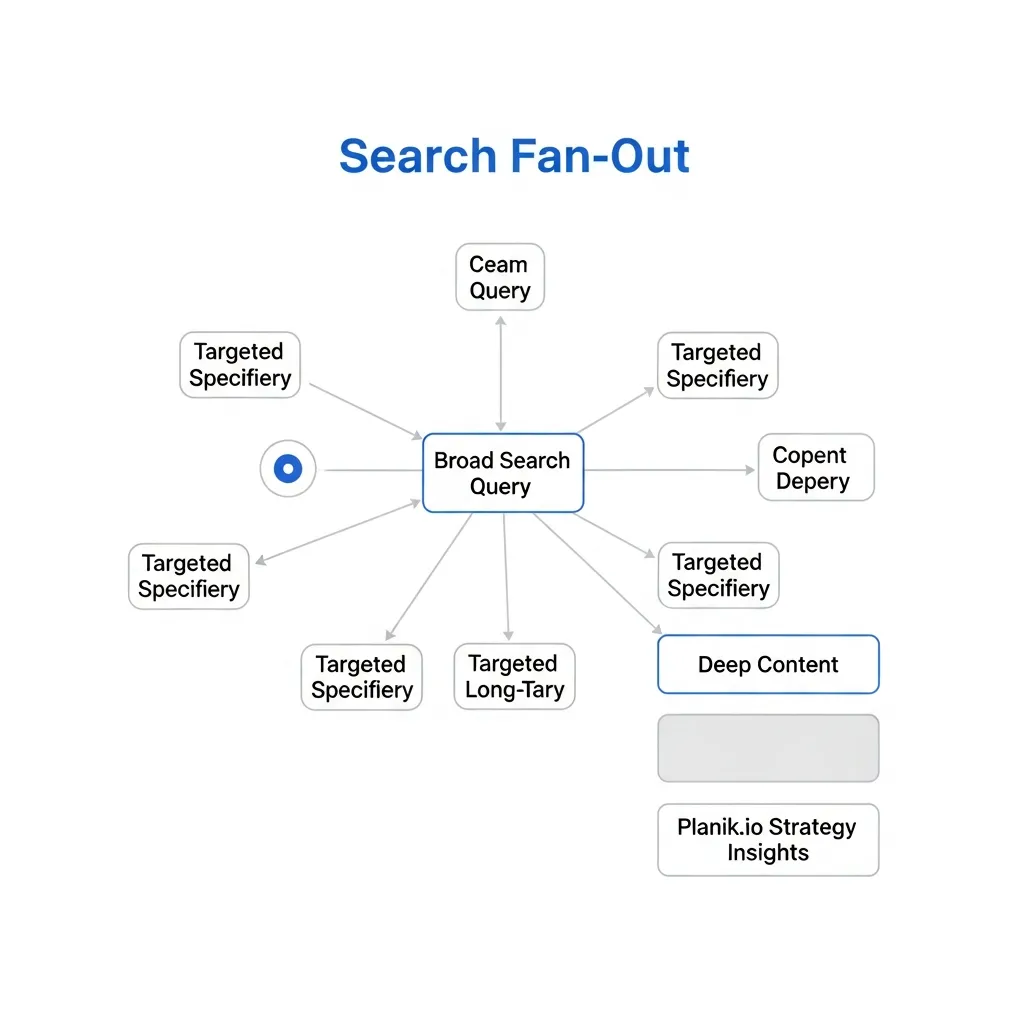
The advent of Google AI Overviews fundamentally reshapes user interaction with search results, leading to significant implications for organic traffic and click-through rates (CTR). By providing succinct, generative summaries directly on the search results page, AI Overviews are designed to answer queries instantly, often eliminating the immediate need for users to click through. This phenomenon amplifies the trend of "zero-click" searches, expanding beyond traditional SERP features like featured snippets. Users can increasingly satisfy initial informational needs directly on Google, reducing top-of-funnel clicks for broad queries. However, this also encourages a new pattern of engagement: the rise of "fan-out" queries. When an AI Overview provides an initial answer, it can spark further, more specific questions, driving users to seek deeper, more nuanced information that only a comprehensive website can provide. Content must not only answer the initial query but also anticipate subsequent user needs.
Industries most susceptible to this shift are those where queries frequently seek direct, factual answers or concise explanations. Sectors like basic health information, financial definitions, simple "how-to" guides, product specifications, and general knowledge topics are seeing a pronounced impact. For instance, a query asking "what is a Roth IRA" or "how to make sourdough starter" might be fully addressed by an AI Overview, reducing clicks to educational finance blogs or recipe sites. E-commerce sites providing straightforward product comparisons or specifications might similarly find their initial informational pages bypassed. Conversely, industries demanding subjective analysis, unique perspectives, highly personalized recommendations, or complex problem-solving may experience a different dynamic. While the AI Overview might offer initial context, the inherent need for human expertise, detailed case studies, or specialized tools will still drive clicks to authoritative sources offering in-depth solutions.
The overarching observation across the SEO landscape is a discernible shift from a focus on quantity of traffic to quality of traffic acquisition. While overall organic traffic volumes might see adjustments for certain queries, the users who do click through from an AI Overview are often more qualified and further along in their information journey. These users typically seek validation, deeper exploration, alternative perspectives, or actionable solutions that the initial summary could not fully provide. This translates to a higher-intent audience, potentially leading to better engagement metrics and conversion rates. For content marketers and SEO professionals, this necessitates a strategic pivot: rather than solely aiming for broad keyword rankings, the emphasis must now be on delivering unparalleled depth, unique insights, and comprehensive answers that establish topical authority. Platforms like Planik.io assist in identifying these deeper informational gaps and optimizing content to attract these higher-intent users, ensuring every click translates into more meaningful engagement and conversion potential. This evolution underscores the importance of creating truly valuable, differentiated content.
Advanced Content Frameworks to Optimize for Google AI Overviews
To truly master search in the era of Google AI Overviews, content strategies must evolve beyond traditional keyword-stuffing and basic informational articles. The shift demands a sophisticated approach to content creation, one that not only answers initial queries but anticipates and guides users through complex information journeys. This necessitates a move towards Generative Engine Optimization (GEO), a framework designed to make content inherently more accessible, synthesizable, and valuable for AI models.
Embracing Generative Engine Optimization (GEO) Principles
Generative Engine Optimization (GEO) represents a paradigm shift from optimizing for algorithms to optimizing with an understanding of how generative AI processes, synthesizes, and presents information. It's about crafting content that is purpose-built for AI consumption, ensuring that its core facts, insights, and comprehensive answers are easily identified, extracted, and cited by AI Overviews. This means moving beyond merely providing answers to structuring those answers in a way that AI can confidently use to construct its own summaries and direct users to deeper resources.
At its core, GEO involves creating content that is:
- Factual and Verifiable: Every claim should be backed by implicit or explicit evidence, making it a reliable source for AI.
- Structured and Parsable: Information must be organized logically with clear hierarchies, allowing AI to quickly grasp relationships between concepts.
- Comprehensive yet Concise: While offering depth, the content should also provide clear, summary-level takeaways that AI can easily abstract.
- Intent-Aligned and Predictive: Anticipating not just the user's initial query, but their subsequent "fan-out" questions and informational needs.
The AI-Ready Content Blueprint: A Framework for Generative Optimization
To systematically approach content creation for AI Overviews, SEO professionals and content marketers can adopt a structured framework. This "AI-Ready Content Blueprint" integrates GEO principles, ensuring content is not only valuable to human readers but also optimally prepared for AI synthesis and citation.
| Step | Principle | Key Actions | AI Benefit |
|---|---|---|---|
| 1. | Intent Mapping for Fan-Out Queries | Research primary user intent and predict subsequent, related, and deeper questions. Map out a comprehensive content journey that addresses the initial broad query and then progressively more specific or nuanced "fan-out" queries. | Guides AI to present your content as the authoritative source for a complete topic journey, not just a single answer. |
| 2. | Structural Clarity for AI Parsability | Employ a clear hierarchical structure (H1, H2, H3, H4), bullet points, numbered lists, and short, focused paragraphs. Include an executive summary at the beginning and a concise conclusion at the end. | Enables AI to quickly identify main points, sub-topics, and key takeaways, improving extraction accuracy for summaries. |
| 3. | Sentence-Level Precision & Density | Craft individual sentences to be highly factual, unambiguous, and information-dense. Avoid vague language, filler words, and overly complex sentence structures. Focus on direct answers and verifiable statements. | Maximizes the likelihood of AI accurately extracting and citing specific sentences or factoids directly from your content. |
| 4. | Question-Based Query Integration | Integrate specific, common "who, what, when, where, why, how" questions directly into headings, subheadings, and within paragraph text. Provide direct, authoritative answers immediately following the question. | Positions your content as an ideal source for AI to pull direct answers for specific user queries, increasing citation potential. |
| 5. | Topical Depth and Authority Building | Cover topics comprehensively, exploring all relevant facets, sub-topics, and related concepts. Demonstrate deep expertise and original insights, establishing your content as a definitive resource within its niche. | Signals to AI that your content offers a rich, authoritative context, making it a preferred source for complex explanations and multi-faceted summaries. |
Optimizing for 'Fan-Out' Queries and Complex User Intents
The previous section highlighted how AI Overviews, while providing instant answers, often trigger "fan-out" queries – instances where users, having received a quick summary, seek deeper, more specialized, or nuanced information. Optimizing for these complex user intents is paramount. Instead of just answering the immediate query, your content must anticipate the next logical questions a user might have.
Understanding how AI explores these related sub-searches is crucial for successful query fan-out optimization
Consider a user searching "what is quantum computing." An AI Overview might provide a concise definition. However, a "fan-out" query could be "how does quantum entanglement work?" or "what are the practical applications of quantum computing in finance?" Your content should be structured to guide the user seamlessly from the initial broad topic to these deeper, more specific inquiries. This involves:
- Anticipatory Content Design: Research not just the primary keyword but also related search queries, "people also ask" questions, and forum discussions to understand the full scope of user curiosity around a topic.
- Internal Linking Strategy: Create a robust internal linking structure that connects related articles, guiding users and AI through a comprehensive web of information. For instance, an article on "Introduction to AI Overviews" could link to "Advanced Content Frameworks" and "Technical SEO for AI."
- Multi-Perspective Coverage: For subjective or complex topics, present different viewpoints, pros and cons, or various approaches. This demonstrates a thorough understanding that AI can leverage to provide balanced summaries.
Structuring Content with Clear, Concise Summaries that AI Can Easily Parse
AI models excel at extracting information from well-organized content. Therefore, the way you structure your articles plays a critical role in their visibility within AI Overviews. Think of your content as a highly structured database that an AI needs to query efficiently.
- The Inverted Pyramid Style: Start with the most important information (the summary or direct answer) and then gradually introduce supporting details, context, and examples. This ensures that even if an AI only parses the first few sentences, it captures the core message.
- Executive Summaries/TL;DR Sections: Begin longer articles with a 2-3 sentence summary that encapsulates the entire article's main points. This serves as an ideal snippet for AI Overviews.
- Clear Headings and Subheadings (H1-H4): Use descriptive and keyword-rich headings that accurately reflect the content of each section. These act as signposts for both human readers and AI, delineating distinct topics and sub-topics.
- Bullet Points and Numbered Lists: Break down complex information, steps, or features into easy-to-digest lists. AI models are highly adept at identifying and extracting information presented in this format.
- Dedicated Answer Sections: For question-based queries, create a specific paragraph or section directly answering the question, often bolding the key answer phrase.
Pro Tip: Consider creating a dedicated "Key Takeaways" or "Summary Points" section at the end of longer articles. This provides AI with another easily identifiable block of information to synthesize for an overview.
The 'Sentence-Level' Optimization: Writing Factual, High-Density Information
Beyond overall structure, the quality of individual sentences is paramount for GEO. AI models are designed to identify and extract factual statements, and the more precise, dense, and verifiable your sentences are, the higher the likelihood they will be cited. This is where "sentence-level optimization" comes into play.
- Factual Accuracy: Every statement should be objectively true and, ideally, backed by data or expert consensus. Avoid ambiguity, speculation, or subjective claims without clear attribution.
- Information Density: Pack as much relevant information as possible into each sentence without sacrificing clarity. For example, instead of "SEO is important," write "Search Engine Optimization (SEO) is a critical digital marketing strategy focused on increasing organic visibility in search engine results pages (SERPs)."
- Directness and Conciseness: Get straight to the point. Eliminate filler words, redundant phrases, and overly complex sentence structures. AI prefers direct answers.
- Verifiable Claims: Where possible, implicitly or explicitly reference sources or methodologies. This builds trust and signals to AI that the information is authoritative. Platforms like Planik.io can assist in identifying content gaps and ensuring factual accuracy across your published articles, bolstering this sentence-level trust.
- Defining Terminology: When introducing new or complex terms, define them immediately and concisely. This aids AI in understanding the context and meaning.
For example, compare:
- Weak: "Many people think about SEO in different ways, but it's really about getting noticed."
- Strong (optimized): "Search Engine Optimization (SEO) is a multi-faceted digital marketing discipline that enhances a website's organic visibility by improving its ranking in search engine results pages (SERPs) for relevant queries." The second sentence is significantly more information-dense and precise.
Leveraging Long-Tail, Question-Based Queries to Trigger AI Citations
AI Overviews are particularly adept at answering specific questions. Therefore, directly addressing long-tail, question-based queries within your content is a powerful strategy for triggering AI citations. These queries often reflect a high degree of user intent and a clear informational need.
- Thorough Keyword Research: Utilize tools to identify common questions users ask related to your main topic. Pay close attention to "People Also Ask" sections in Google Search Results, forums, and Q&A sites.
- Direct Question Integration: Incorporate these exact questions into your H2 or H3 subheadings. For example, instead of a general heading like "Benefits," use "What are the primary benefits of implementing Generative Engine Optimization (GEO)?"
- Immediate and Authoritative Answers: Directly under the question-based heading, provide a clear, concise, and authoritative answer in the very first paragraph. This makes it incredibly easy for AI to extract the answer and potentially cite your content.
- Contextual Expansion: After the direct answer, you can expand with further details, examples, and deeper explanations, addressing the "fan-out" potential of that specific question.
- Semantic Richness: Ensure your content uses a variety of related terms and concepts around the question, helping AI understand the full semantic context and increasing its confidence in your answer.
By meticulously applying these advanced content frameworks, content marketers and SEO professionals can proactively optimize their digital assets for the evolving landscape of AI-driven search. This strategic shift ensures not only continued visibility but also positions content as a go-to resource for Google's generative AI models.
The Critical Role of E-E-A-T and Topical Authority
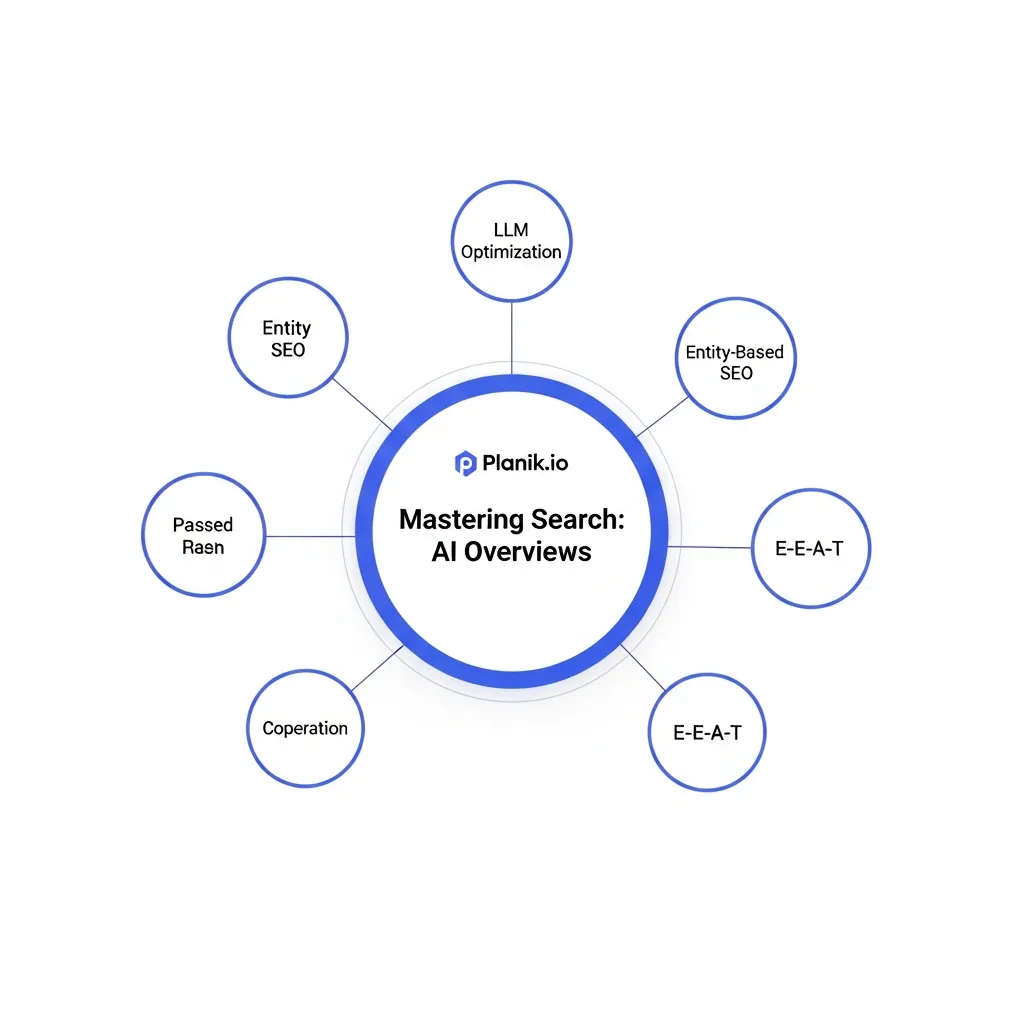
Google AI Overviews represent a significant shift in search, prioritizing not just relevance but also the reliability and depth of information. In this landscape, Google's E-E-A-T framework—Experience, Expertise, Authoritativeness, and Trustworthiness—moves from a human quality rating guideline to a primary signal for AI model selection. Content that demonstrably embodies these principles is far more likely to be synthesized into AI-generated summaries.
AI models are engineered to provide accurate, unbiased, and helpful information, making Trustworthiness the paramount E-E-A-T signal. This means content must be factually accurate, transparent about its sources, and accountable for its claims. Websites that consistently publish content backed by genuine experience and clear expertise signal to AI that they are credible sources, making their information a preferred candidate for inclusion in AI Overviews. Conversely, content lacking these robust signals risks being overlooked, regardless of its keyword optimization.
Building Topical Authority with Content Clusters
Beyond optimizing individual pages, establishing topical authority is crucial for signaling comprehensive knowledge to AI. This is achieved through the strategic development of content clusters, often structured as hub-and-spoke models. A central "pillar page" provides an extensive overview of a broad topic, while numerous interconnected "cluster pages" delve into specific sub-topics, offering granular detail and answering related questions.
This interconnected structure demonstrates a deep and exhaustive understanding of a subject area. When an AI model encounters a website that has thoroughly covered a topic from multiple angles, it identifies that site as an authoritative source. This increases the likelihood that content from that site will be referenced and cited for a wide array of related queries within AI Overviews, positioning the site as a go-to resource for comprehensive information. For instance, a site with a robust cluster on "sustainable energy solutions" might have a pillar page on the overall concept, supported by detailed articles on solar panel efficiency, wind turbine technology, and geothermal heating, all interlinked.
Earning High-Quality Brand Mentions and Citations
External validation plays a pivotal role in solidifying E-E-A-T and enhancing a site's appeal to AI Overviews. High-quality brand mentions and citations from authoritative, relevant sources act as powerful trust signals, indicating that other respected entities vouch for your content's credibility. These are not merely about acquiring backlinks; they encompass non-linked mentions, references in expert round-ups, and citations in industry reports or academic papers.
Strategies for securing these invaluable endorsements include contributing original research, participating in expert panels, collaborating with recognized industry leaders, and consistently producing content that is so insightful and accurate it naturally earns references. For example, Planik.io might advise clients to leverage their expertise by becoming a source for journalists or by publishing data-driven studies that others will want to cite. The focus should always be on quality over quantity: a single mention from a highly authoritative publication carries significantly more weight than numerous low-quality or irrelevant links, directly impacting how AI models perceive your site's overall authority and trustworthiness.
Technical SEO and Structured Data for AI Readability
Structured Data: The AI's Language Translator
For content to be effectively synthesized into AI Overviews, it must first be easily parsed and understood by AI models. This necessitates a robust technical foundation, starting with Schema Markup. Structured data acts as an explicit language, providing context that helps search engine bots and AI models interpret content more accurately than relying solely on natural language processing. By clearly labeling elements on a page, content becomes machine-readable, enabling AI to extract specific facts, relationships, and entities with greater precision.
To further improve how models process these facts, authors can utilize sentence-level optimization.
Key Schema types crucial for AI readability include:
- Article Schema: Essential for informational pages, it helps AI understand publication date, author, and main topic for timely, authoritative summaries.
- FAQPage Schema: Directly answers common questions, making it prime content for AI Overviews seeking concise answers. It allows AI to quickly identify and present direct responses.
- HowTo Schema: Structures step-by-step instructions, allowing AI to easily break down and present processes. Invaluable for "how-to" queries seeking actionable guidance.
- Product Schema: Provides detailed product information (price, availability, reviews). This clarity aids AI in comparing products, summarizing features, and responding to commercial queries.
Core Web Vitals and Mobile-First Indexing
Beyond structured data, website health significantly impacts visibility in AI-driven search. Mobile-friendliness and strong Core Web Vitals (CWV) are prerequisites for efficient content processing. A fast-loading, stable, and responsive site ensures AI crawlers access and index content quickly. Poor CWV or mobile usability can lead to less frequent crawling, hindering inclusion in AI Overviews. Accessible content on all devices reinforces authority and trustworthiness to AI models, which favor high-quality user experiences.
Semantic HTML for Content Hierarchy
Judicious use of semantic HTML elements aids AI readability. Tags like <article>, <section>, and heading tags (<h1> through <h6>) convey meaning and structure to machines, not just visual presentation. Proper heading hierarchy signals main topics (<h1>), sub-topics (<h2>), and granular details, guiding AI models through the content's logical flow. This clear structural blueprint helps AI discern crucial information, understand content block relationships, and synthesize accurate summaries. Platforms like Planik.io, aiming for comprehensive digital solutions, underscore this structural integrity for optimal search performance.
Pro Tip: Regularly audit your site's technical SEO, focusing on schema implementation validity and Core Web Vitals performance. Tools for schema validation and page speed insights are indispensable for ensuring your content is optimally prepared for AI consumption and indexing.
Common Mistakes When Optimizing for Generative Search
Optimizing for generative search, while promising, introduces new pitfalls even for seasoned professionals. A primary error is over-optimizing for keywords at the expense of natural language flow. Unlike traditional search engines, AI Overviews prioritize understanding conversational queries and semantic relationships. Content laden with keyword stuffing or unnatural phrasing can be difficult for AI models to parse accurately, potentially hindering its inclusion in summaries. The focus must shift to creating content that genuinely answers user questions in a clear, human-centric manner.
Another significant misstep is failing to provide unique value that transcends what AI can readily summarize from existing web content. If your information merely reiterates widely available facts, AI Overviews have little incentive to feature it. Successful strategies demand original research, proprietary data, unique insights, or a distinct perspective. This differentiation establishes your content as a valuable, authoritative source, crucial for AI to cite and synthesize accurately.
Finally, many overlook the importance of brand consistency across the web. Generative AI aggregates information from countless sources to form comprehensive responses. Inconsistent brand messaging, outdated company details, or conflicting product information across various platforms can confuse AI models. Maintaining a unified narrative and accurate data across all digital touchpoints—from your website to social profiles—is vital. This consistency reinforces your brand's authority and trustworthiness, ensuring AI accurately represents your identity in its overviews, much like Planik.io would manage its digital presence.
Tracking and Measuring Performance in the AI Era
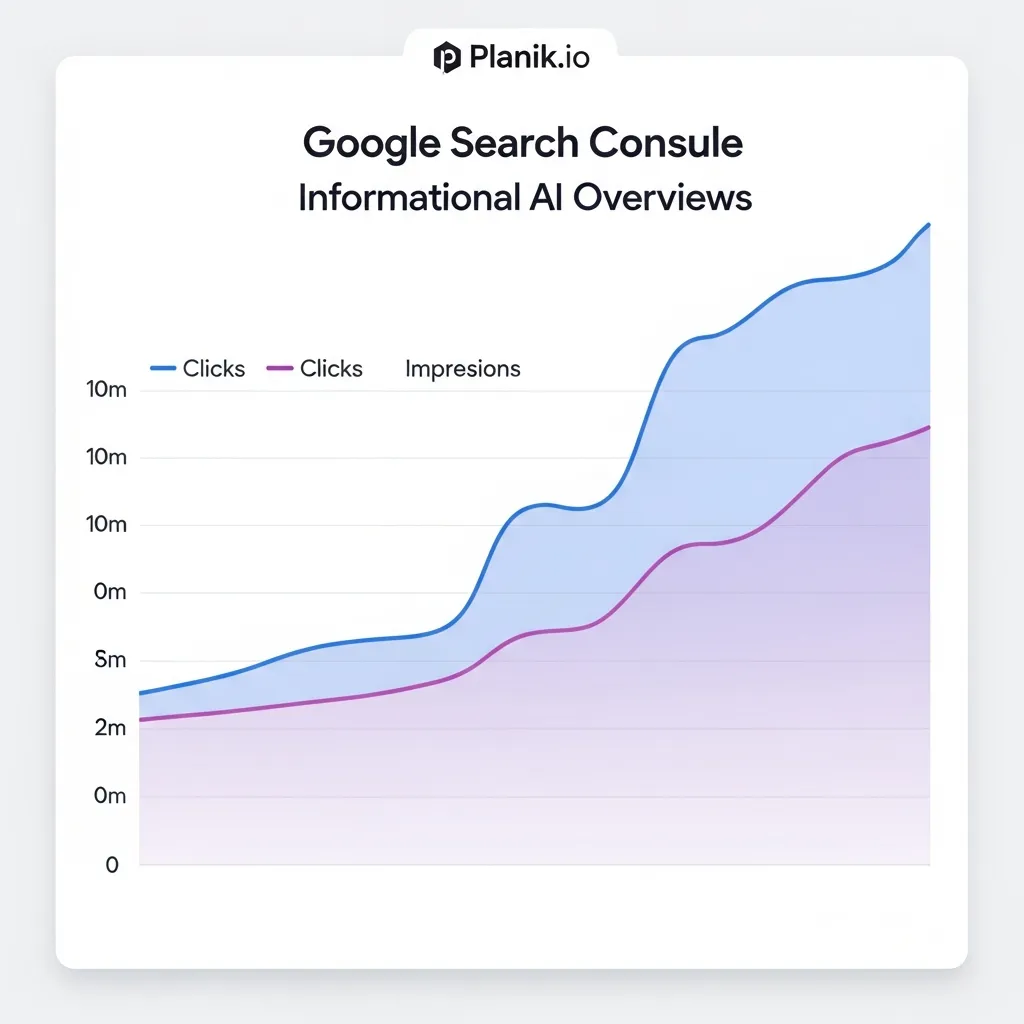
Measuring performance in the AI era requires a refined approach beyond traditional organic traffic metrics. Google Search Console (GSC) remains indispensable, though its data needs careful interpretation for AI Overviews. While GSC does not currently offer explicit "AI Overview" metrics, SEO professionals can infer AI-driven visibility. Analyze the Performance report for informational queries that align with your AI Overview strategy. Scrutinize content with high impressions but potentially lower click-through rates, suggesting AI Overviews satisfied user intent directly on the SERP.
Monitoring Position 0 (featured snippets) remains crucial, often serving as a training ground or direct input for AI Overviews. More critically, tracking citation frequency within AI Overviews provides a direct measure of your content's authority and synthesis by Google's generative models. Being consistently cited signifies your content is deemed a reliable, authoritative source, validating your topical authority. This requires a combination of manual observation and advanced third-party tools.
The future of search visibility isn't solely about driving clicks to your website but increasingly about achieving answer engine optimization. Success hinges on your content being synthesized and acknowledged as a primary source within AI Overviews. This shift means visibility metrics must evolve to include brand mentions and consistent recognition as a definitive, trusted authority for AI models. Securing enduring digital visibility means being the answer, not just the link.
Start analyzing your content's AI Overview performance in Search Console today.