The Shift Toward Machine-Assisted Search Strategy
The landscape of SEO analysis has undergone a profound transformation. What once demanded extensive manual data crunching now critically benefits from machine-assisted insights. This shift empowers SEO specialists to transcend rudimentary data aggregation, focusing instead on strategic interpretation and execution. This transition is fundamental for scaling modern AI for SEO analysis efforts.
Currently, Large Language Models (LLMs) are pivotal in revolutionizing how we understand search intent. Tools like those offered by Planik.io, leveraging LLMs, can dissect complex queries, identify nuanced user needs, and categorize content gaps with unprecedented speed. This capability far surpasses traditional keyword research, enabling a deeper grasp of user motivation.
However, amidst this technological leap, human oversight remains the critical differentiator. While AI excels at processing vast datasets and uncovering patterns, it lacks the intuitive understanding of market nuances, brand voice, and ethical considerations. A machine identifies a content gap, but a seasoned SEO professional must validate its strategic relevance and refine the output for human appeal.
- Key shifts in SEO:
- From manual to automated insights.
- Enhanced intent understanding via LLMs.
- Human expertise guiding AI outputs.
Fundamental AI Technologies Powering Modern Search Insights
Modern SEO analysis hinges on a sophisticated understanding of underlying AI technologies. For experienced marketers, appreciating these foundational elements is crucial for leveraging AI tools effectively and interpreting their outputs with strategic insight. Field observations indicate that a grasp of these technologies empowers professionals to move beyond mere tool usage to genuine strategic integration.
Central to modern search insight is Natural Language Processing (NLP). This technology enables AI to understand, interpret, and generate human language, moving beyond keyword matching to grasp semantic search and user intent. NLP algorithms analyze content for context, sentiment, and entity recognition, allowing tools to evaluate content relevance, identify gaps in topic coverage, and optimize for complex, conversational queries. Practical experience shows that effective NLP integration significantly enhances content's ability to rank for nuanced long-tail keywords and answer specific user questions.
Building on these linguistic capabilities, many experts recommend utilizing semantic clustering SEO
Complementing NLP are machine learning (ML) algorithms for pattern recognition. These algorithms analyze vast datasets of SERP features, ranking factors, and user behavior to identify correlations and predictive patterns. They can discern how changes in content structure, backlink profiles, or technical SEO elements impact performance, helping marketers adapt to algorithm updates and competitive shifts. Technical data suggests ML models can uncover non-obvious ranking signals, providing a competitive edge in dynamic search environments.
Furthermore, predictive modeling leverages historical data and ML algorithms to forecast future organic traffic trends, keyword performance, and content saturation points. By analyzing seasonality, market shifts, and competitor movements, these models allow marketers to anticipate future opportunities and allocate resources strategically. This foresight is invaluable for proactive content planning and identifying emerging niches before they become oversaturated.
Finally, computer vision plays a vital role in optimizing for visual search and image SEO. This AI discipline allows machines to "see" and interpret images, understanding their content, context, and relevance. It facilitates automated alt-text generation, identifies opportunities for visual content optimization, and helps ensure images contribute effectively to overall SEO performance, especially with the rise of visual search platforms.
Key Insight: While each technology offers distinct advantages, their combined application within an integrated platform like Planik.io provides a holistic view of the search landscape, transforming raw data into actionable strategic insights.
A Comprehensive Framework for Executing AI-Driven SEO Analysis
The transition from manual data crunching to machine-assisted insights demands a structured approach. Modern marketers face the challenge of synthesizing vast datasets, identifying subtle patterns, and translating complex AI outputs into actionable strategies. For instance, a global e-commerce brand recently leveraged AI to identify a previously overlooked niche market, leading to a 30% increase in organic traffic within six months by precisely targeting long-tail intent. This strategic shift requires a comprehensive framework that systematically integrates AI for SEO analysis at every stage of the analytical workflow.
Here is The Planik.io Strategic AI SEO Analysis Framework, designed to guide experienced SEO professionals through a complete, AI-driven process:
- Phase 1: Automated Keyword Discovery & Semantic Clustering
- Phase 2: AI-Powered Competitor Gap Analysis & Share-of-Voice Tracking
- Phase 3: Technical SEO Auditing with Machine Learning Prioritization
- Phase 4: Content Optimization through Real-time NLP Scoring
- Phase 5: Integrating AI Insights into Cross-Functional Marketing Reports
Phase 1: Automated Keyword Discovery and Semantic Clustering
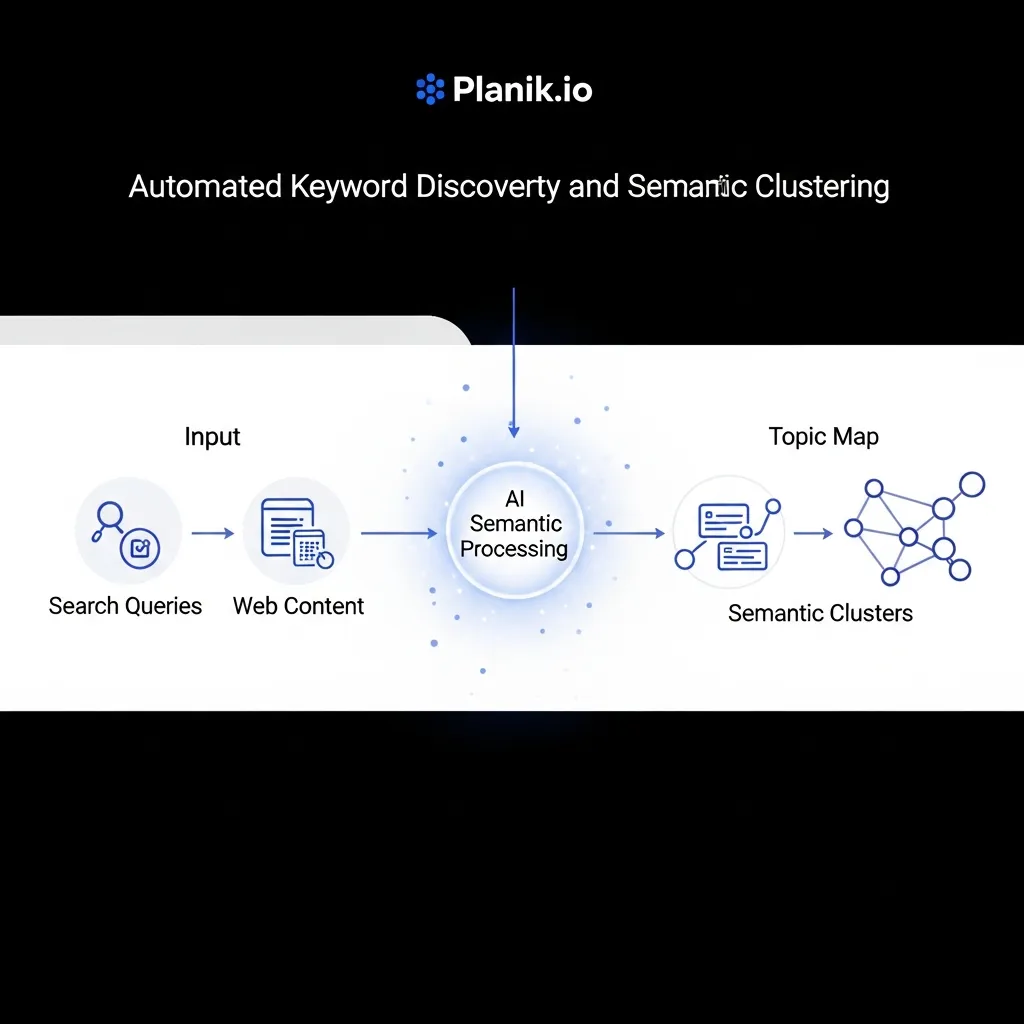
Traditional keyword research, while foundational, often struggles with the sheer volume and evolving nature of user queries. AI elevates this process by moving beyond simple keyword matching to understand intent and topic relevance through AI for SEO analysis. Tools leveraging Natural Language Processing (NLP) can process billions of search queries, forum discussions, and social media trends to uncover emerging long-tail keywords and latent semantic indexing (LSI) terms that human analysts might miss.
The core of this phase involves AI algorithms grouping related keywords into semantic clusters or topic models. This is not just about grouping synonyms; it is about identifying overarching themes and user intents. For example, instead of just seeing "best running shoes," an AI system can cluster it with "marathon footwear reviews," "comfortable jogging sneakers," and "foot support for runners," recognizing the underlying intent around performance and comfort. This allows for the creation of comprehensive content strategies targeting entire topics rather than isolated keywords, enhancing topical authority.
Field observations indicate that AI-driven clustering significantly improves the efficiency of content mapping. It provides a clearer picture of content hierarchies and internal linking opportunities. Platforms like Planik.io utilize advanced clustering algorithms to generate visual keyword maps, making it easier for SEO specialists to identify gaps in existing content and prioritize new creation based on search volume, difficulty, and user intent.
Pro Tip: Do not just accept AI clusters at face value. Review and validate a sample of the suggested clusters manually to ensure they align with your brand's specific context and audience nuances. AI is powerful, but human oversight remains critical for strategic alignment.
Phase 2: AI-Powered Competitor Gap Analysis and Share-of-Voice Tracking
Understanding the competitive landscape is paramount, but manually tracking dozens of competitors across myriad keywords, content types, and backlink profiles is resource-intensive. AI-powered tools revolutionize this by automating the collection and analysis of competitor data at scale. Machine learning algorithms can identify not only direct competitors but also indirect or emerging rivals that rank for your target topics, even if they operate in a different industry vertical.
This phase focuses on identifying content gaps where competitors are performing well but your site is not. AI can analyze competitor content for themes, structures, and entities, comparing them against your own content inventory. It can pinpoint specific sub-topics or angles that resonate with the audience and drive traffic for rivals. Beyond content, AI can analyze competitor backlink profiles, identifying high-authority domains linking to them and suggesting potential outreach targets for your own strategy.
For share-of-voice (SOV) tracking, AI platforms monitor millions of search results, social mentions, and news articles to quantify your brand's visibility relative to competitors across key topics. This provides a dynamic, real-time understanding of market presence. Technical data suggests that AI-driven SOV tracking can uncover subtle shifts in market perception or emerging competitive threats far more rapidly than traditional methods, allowing for proactive strategic adjustments.
Phase 3: Technical SEO Auditing Using Machine Learning to Prioritize Fixes
Technical SEO audits are notoriously complex, involving hundreds of potential issues across site architecture, crawlability, indexability, and page experience. While traditional auditing tools identify problems, they often present overwhelming lists without clear prioritization. This is where machine learning (ML) transforms the audit process.
This transformation is particularly relevant for those focusing on AI for mobile SEO
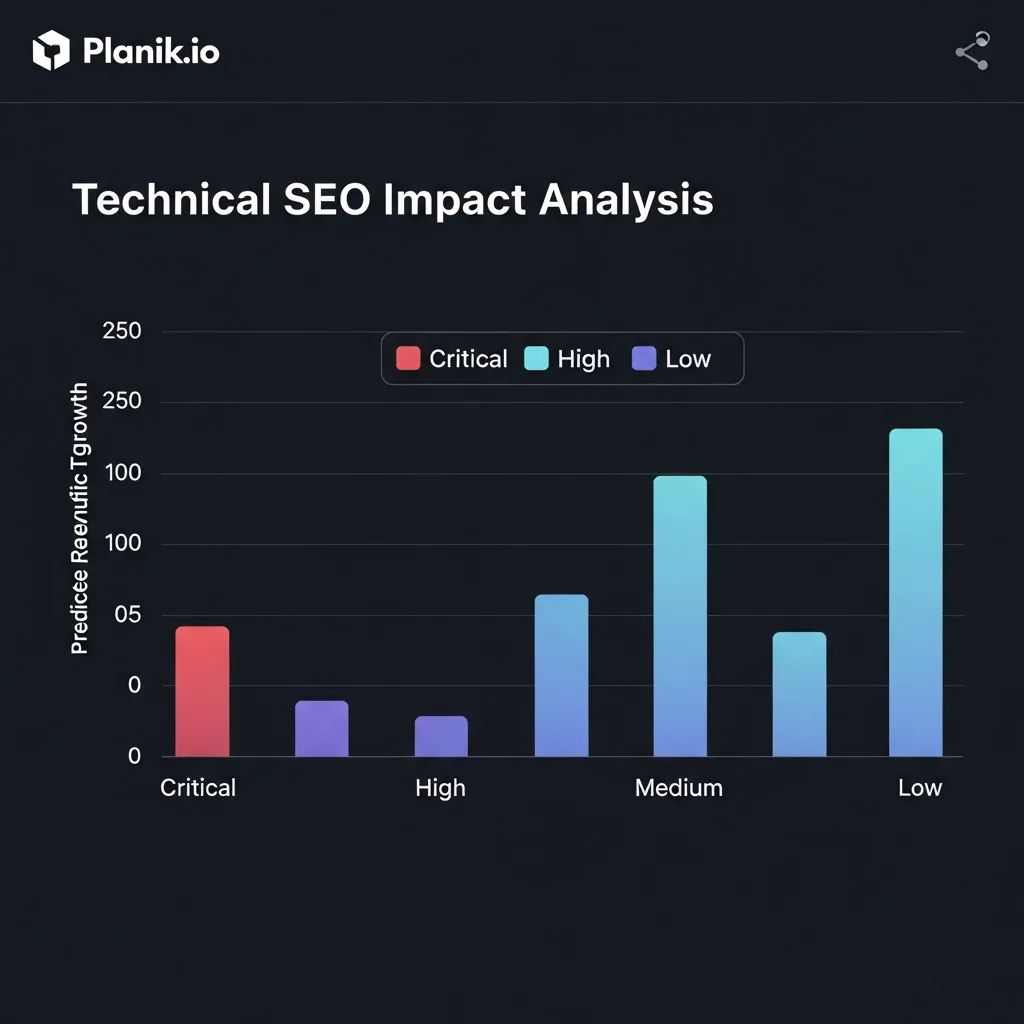
AI-powered technical SEO tools go beyond simply flagging errors. They use ML models trained on vast datasets of successful and unsuccessful websites to predict the impact of each technical issue on organic performance. For example, an ML algorithm can analyze crawl logs, server responses, and ranking data to determine that a specific set of broken internal links on high-value pages has a greater negative impact than a larger number of broken links on low-value, ancillary pages.
The primary output of this phase is a prioritized list of technical fixes, ranked by their estimated potential ROI or immediate impact on rankings and user experience. This helps SEO teams focus their resources on the issues that will yield the most significant improvements. AI can also identify anomaly detection patterns, such as sudden drops in crawl rate for a specific section of a site, alerting teams to potential problems before they escalate.
This type of proactive monitoring is a key benefit of automated SEO audits
Phase 4: Content Optimization Through Real-time NLP Scoring
Content is king, but ensuring its quality, relevance, and alignment with user intent is a continuous challenge. This phase leverages NLP and machine learning to provide real-time, data-driven recommendations for optimizing existing and new content. It moves beyond basic keyword density checks to analyze content holistically.
AI tools score content based on a multitude of factors, including:
- Topical Depth and Breadth: How comprehensively the content covers a topic, identifying missing sub-topics or entities.
- Readability and Clarity: Assessing sentence structure, vocabulary, and overall comprehension.
- Sentiment Analysis: Understanding the emotional tone and ensuring it aligns with the desired message.
- Entity Recognition: Identifying key entities (people, places, organizations, concepts) within the text.
- Intent Matching: Evaluating how well the content addresses the underlying user intent for target keywords.
According to experts, this real-time scoring mechanism allows content creators and SEOs to refine drafts iteratively, ensuring optimal performance before publication. For instance, an AI tool might suggest adding a section on "sustainable materials" to an article about "eco-friendly packaging" because it identifies a strong semantic connection. This continuous feedback loop leads to higher-quality, more authoritative content that is better positioned to rank and engage users.
Phase 5: Integrating AI Insights into Cross-Functional Marketing Reports
The ultimate value of AI in SEO analysis lies in its ability to translate complex data into actionable insights that inform broader marketing and business strategies. This final phase focuses on effectively communicating AI-driven SEO findings to various stakeholders, including marketing managers, content creators, product teams, and executive leadership.
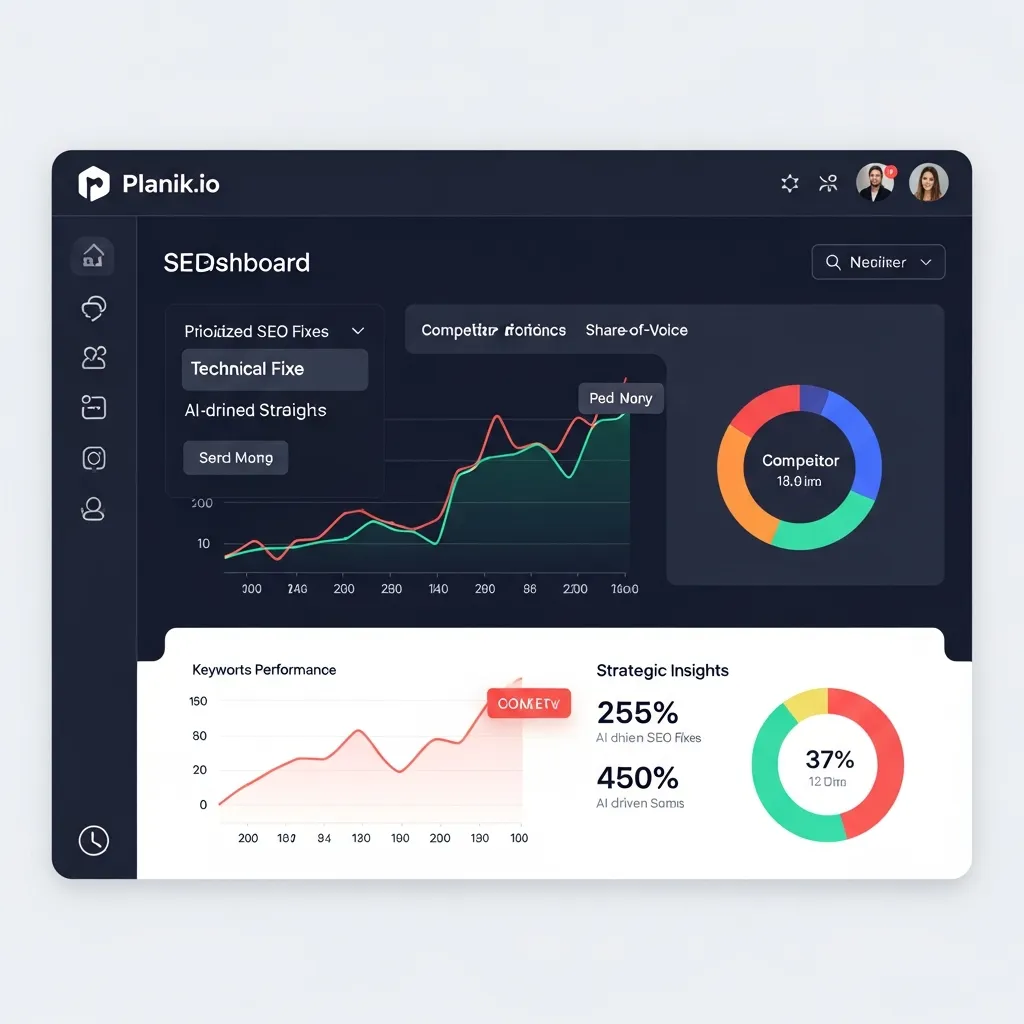
AI platforms facilitate this by generating automated, customizable reports and dashboards. These reports can distill intricate data points—such as the projected ROI of a technical fix, the performance of a new content cluster, or shifts in the competitive landscape—into digestible formats. Predictive analytics can forecast future performance based on current trends, allowing for more strategic budget allocation and resource planning across departments.
For example, an AI-driven report might highlight a significant opportunity for a new product feature based on emerging search trends. This insight can then be shared directly with product development teams. By providing clear, data-backed recommendations, AI helps bridge the gap between technical SEO efforts and overall business objectives, demonstrating the tangible impact of organic search on revenue and brand visibility.
Leveraging Predictive Analytics for Competitive Intelligence and Content Gaps
Modern SEO demands more than reactive analysis; it necessitates a proactive stance, leveraging AI for SEO analysis to anticipate market shifts and outmaneuver competitors. This strategic approach transforms raw data into actionable intelligence, revealing opportunities that manual methods often miss.
Identifying 'Low-Hanging Fruit' and Content Gaps with AI Sorting
One of the most immediate benefits of AI in competitive intelligence is its ability to process and sort vast datasets to pinpoint 'low-hanging fruit' opportunities. Instead of manually sifting through thousands of keywords, AI algorithms can analyze competitor performance, search volume, keyword difficulty, and user intent at scale. This allows marketers to quickly identify underserved topics where competitors rank poorly despite significant search demand.
For instance, AI-driven platforms can cross-reference competitor keyword rankings with your own, highlighting content gaps where high-value terms are missed. Practical experience shows that such tools can reveal niche long-tail keywords or emerging topics with moderate competition but substantial traffic potential. A platform like Planik.io can automate this analysis, presenting a prioritized list of content opportunities based on projected ROI.
Decoding Competitor Backlink Strategies for Hidden Outreach Patterns
Analyzing competitor backlink profiles has always been crucial, but AI elevates this process beyond simple quantity and domain authority metrics. AI tools can delve deeper, identifying hidden outreach patterns and the types of content that consistently attract high-quality links for rivals. Instead of just seeing who links to competitors, AI can reveal why they link, uncovering the underlying topical authority or content formats that resonate with linking domains.
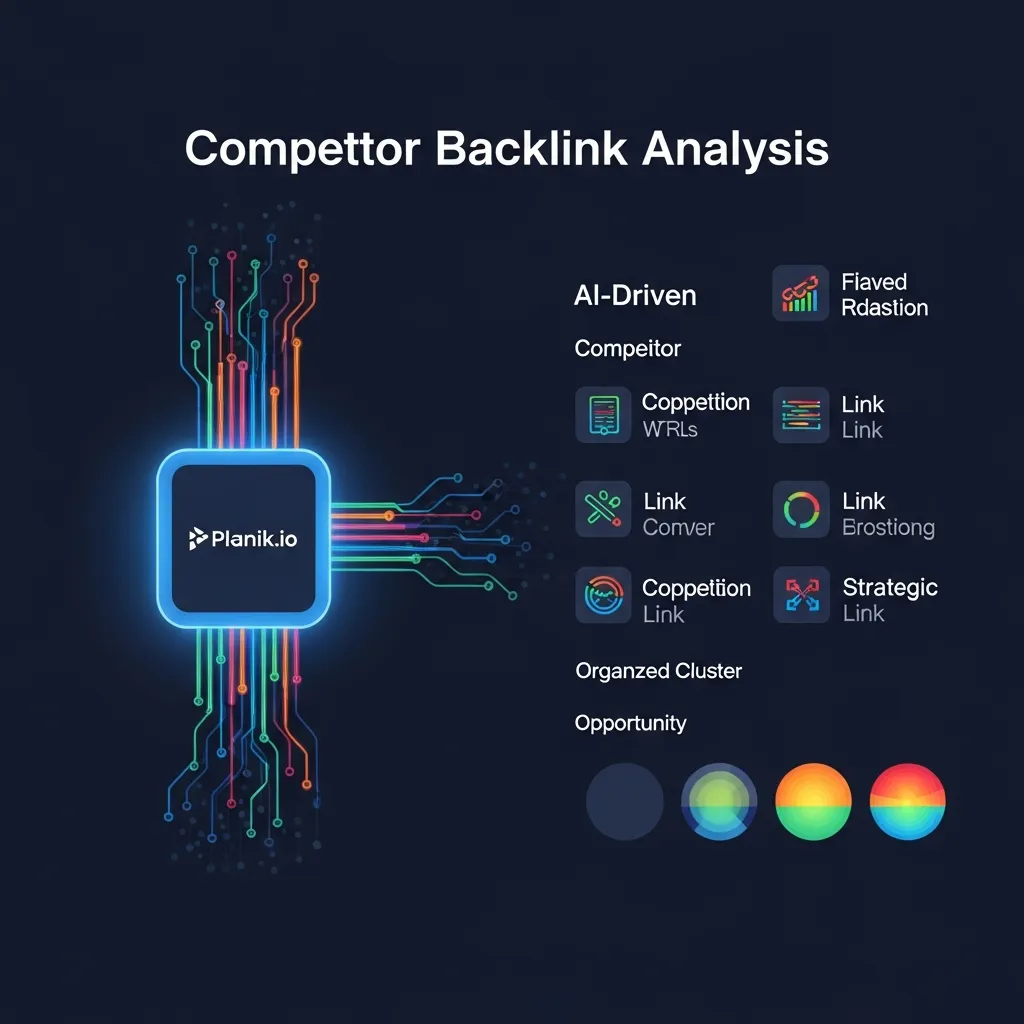
Field observations indicate that AI can cluster linking domains by industry, audience, or geographic location, providing insights into targeted campaigns. Furthermore, it can detect patterns in anchor text usage and link velocity, allowing marketers to reverse-engineer successful strategies and refine their own link-building efforts with greater precision. This predictive capability helps anticipate future competitor moves and design more effective, data-backed outreach campaigns.
Understanding these complex patterns is just the first step in leveraging AI for link building to gain a competitive edge.
Using AI to Decode Search Engine Algorithm Volatility
The ever-evolving nature of search engine algorithms presents a constant challenge. AI-powered predictive analytics offers a significant advantage by decoding search engine algorithm volatility. These systems continuously monitor SERP fluctuations, ranking changes across millions of keywords, and correlation data between algorithm updates and website performance shifts.
Rather than merely reacting to confirmed updates, AI can identify subtle shifts in ranking factors or emerging trends in how search engines interpret user intent. This allows for proactive adjustments to SEO strategies, mitigating potential negative impacts before they fully materialize. Technical data suggests that AI models can forecast potential shifts in ranking preferences, such as an increased emphasis on E-E-A-T signals, providing invaluable lead time for strategic adaptation.
Automating Local SEO Audits Across Multiple Locations
For businesses operating across numerous physical locations, maintaining optimal local SEO performance can be a resource-intensive endeavor. Manually auditing Google Business Profile listings, local citations, reviews, and localized keyword rankings for hundreds of locations is impractical. AI provides a scalable solution by automating local SEO audits.
AI tools can systematically crawl and analyze local search results, identify inconsistencies in NAP (Name, Address, Phone) information, monitor review sentiment across platforms, and track localized keyword performance for each individual branch. This automation not only saves countless hours but also ensures a consistent and comprehensive audit, highlighting critical areas for improvement—from unoptimized GBP descriptions to missing citations—that directly impact local visibility.
Comparative Analysis of Top-Tier AI SEO Solutions
The proliferation of AI-powered SEO solutions presents both an opportunity and a challenge: selecting the right tools to complement your strategic framework. Understanding the nuances between platforms is crucial for maximizing efficiency.
All-in-One Platforms vs. Specialized AI Agents
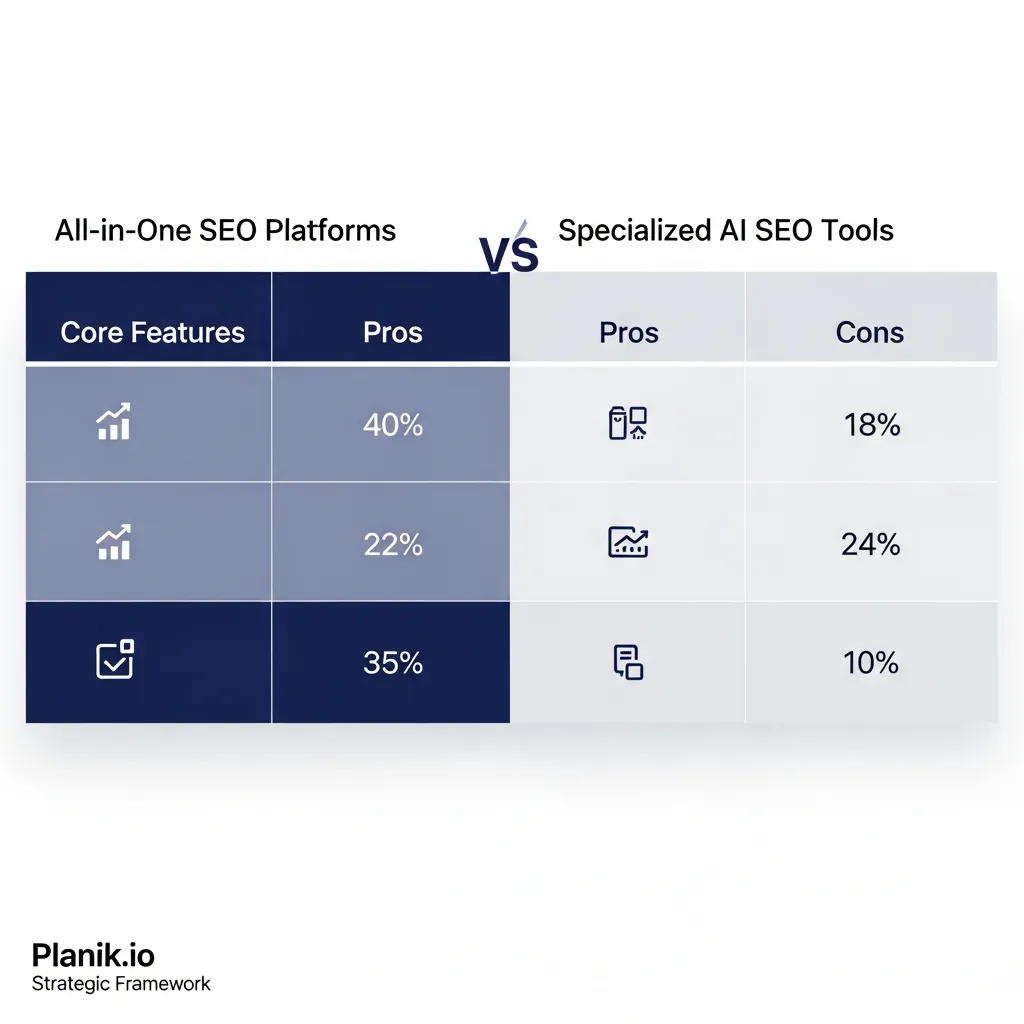
The market currently offers two primary categories of AI SEO tools. All-in-one platforms like Semrush or Ahrefs have integrated AI features across their existing suite, offering convenience and a unified dashboard for keyword research, content analysis, and technical audits. Their strength lies in seamless data flow and comprehensive scope. Conversely, specialized AI agents focus on singular, deep functionalities—such as AI writers for content generation, advanced technical SEO auditors, or niche backlink analysis tools. While all-in-one platforms offer convenience, specialized AI agents often provide unparalleled depth for specific tasks, making them indispensable for granular analysis.
To help you navigate the diverse options available, you can refer to a comprehensive AI SEO tools comparison.
Evaluating Tool Accuracy in Keyword Metrics
A critical aspect of tool selection is the accuracy of keyword difficulty and volume estimation. Different tools employ varied data sources and proprietary algorithms, leading to discrepancies. When applying these methods, I found that relying solely on one tool's keyword difficulty score can be misleading; some tools might overemphasize certain ranking factors while others underplay them. For instance, volume estimates can vary by 20-30% across leading platforms. To mitigate this, always cross-reference data from at least two reputable tools and contextualize it with real-world SERP analysis.
Cost-Benefit Analysis: Enterprise vs. Boutique AI Tools
The financial commitment for AI SEO solutions ranges significantly. Enterprise-grade tools typically come with a higher price tag but offer robust features, extensive data, scalability, and dedicated support, ideal for large organizations. They often integrate with other marketing stacks seamlessly. Boutique AI tools, on the other hand, are often more affordable and specialized, frequently bringing innovative approaches to specific SEO challenges. For a small to mid-sized business, a judicious combination of a core all-in-one platform supplemented by a few specialized, cost-effective AI agents often yields the best ROI.
Personal Recommendations for Different Business Scales
For small to medium-sized businesses (SMBs), a balanced approach is best. Start with an all-in-one platform for foundational analysis, then selectively integrate specialized AI agents for areas requiring deeper insight, such as content creation. For example, Planik.io offers targeted AI solutions that can augment an existing SEO toolkit without demanding an enterprise-level investment. Large enterprises benefit most from fully integrated, scalable solutions that can handle vast datasets and offer advanced customization and API access.
Measuring the Success and ROI of AI-Integrated SEO Processes
The true value of integrating AI into SEO processes lies in its measurable impact on both performance and operational efficiency. A critical initial step is rigorously tracking time-savings and efficiency gains in the analysis phase. Practical experience shows that AI-powered platforms can dramatically reduce manual hours typically allocated to tasks like keyword clustering and technical SEO audits. By establishing baseline metrics for task completion before AI implementation, teams can quantify operational ROI, allowing human experts to reallocate focus to high-level strategic planning.
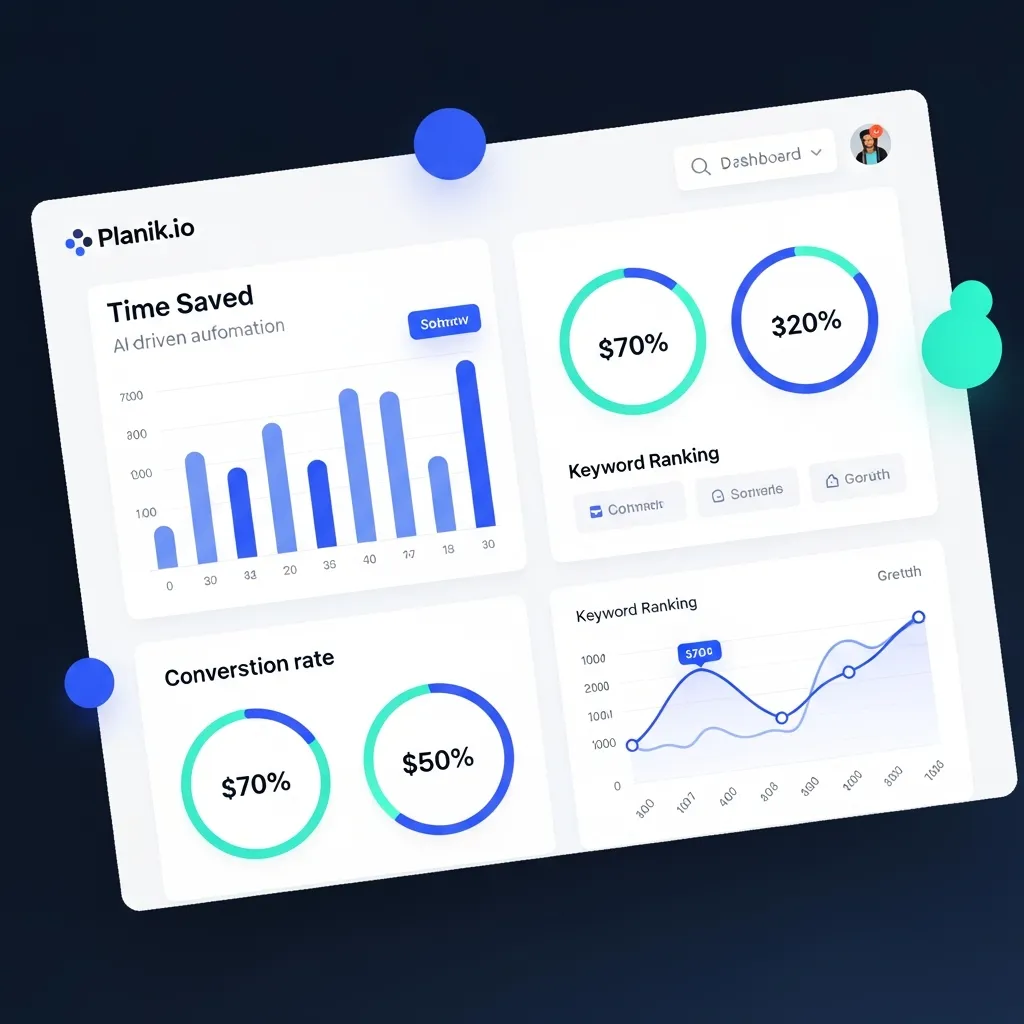
Beyond operational efficiency, demonstrating direct performance uplift is essential. This involves meticulously correlating AI-driven content updates with ranking improvements. Marketers must monitor specific keyword positions, organic traffic increases, and overall SERP visibility for pages where AI tools guided optimization. Furthermore, attributing conversions to AI-optimized landing pages closes the loop on business impact. By leveraging advanced analytics, teams can segment and analyze conversion rates from pages specifically refined or created with AI assistance. Platforms like Planik.io often provide integrated dashboards highlighting these direct correlations.
In addition to these metrics, brands can gain deeper insights into their market position by monitoring AI share of voice
Ultimately, setting realistic KPIs for AI-assisted organic growth is paramount. These key performance indicators should extend beyond traditional metrics, embracing the unique capabilities AI brings. For instance, measuring the speed and scale of content generation or the precision of AI-driven forecasting models offers a more comprehensive view. Field observations indicate that defining achievable, specific targets for AI's contribution to organic traffic and user engagement provides a clear roadmap for maximizing ROI and continuously refining integration strategies over time.
Navigating the Risks: Quality Control and Ethical AI Usage
While AI offers unprecedented power in SEO analysis, its deployment demands rigorous quality control and a strong ethical compass. A primary concern is the potential for AI models to "hallucinate"—generating plausible but factually incorrect data or insights. A common pitfall is over-relying on AI-generated content suggestions without critical human review, especially regarding factual accuracy and nuance. Instances where AI suggests outdated statistics or misattributed information can severely damage a brand's EEAT (Experience, Expertise, Authoritativeness, Trustworthiness).
Maintaining your unique brand voice is another challenge with generative AI. While it can produce content quickly, ensuring it aligns with your brand's specific tone requires human refinement. For example, excessively optimizing content solely to achieve a perfect "content score" can inadvertently lead to keyword stuffing or repetitive phrasing, detracting from user experience. This highlights the danger of over-reliance on tool scores as the sole determinant of quality.
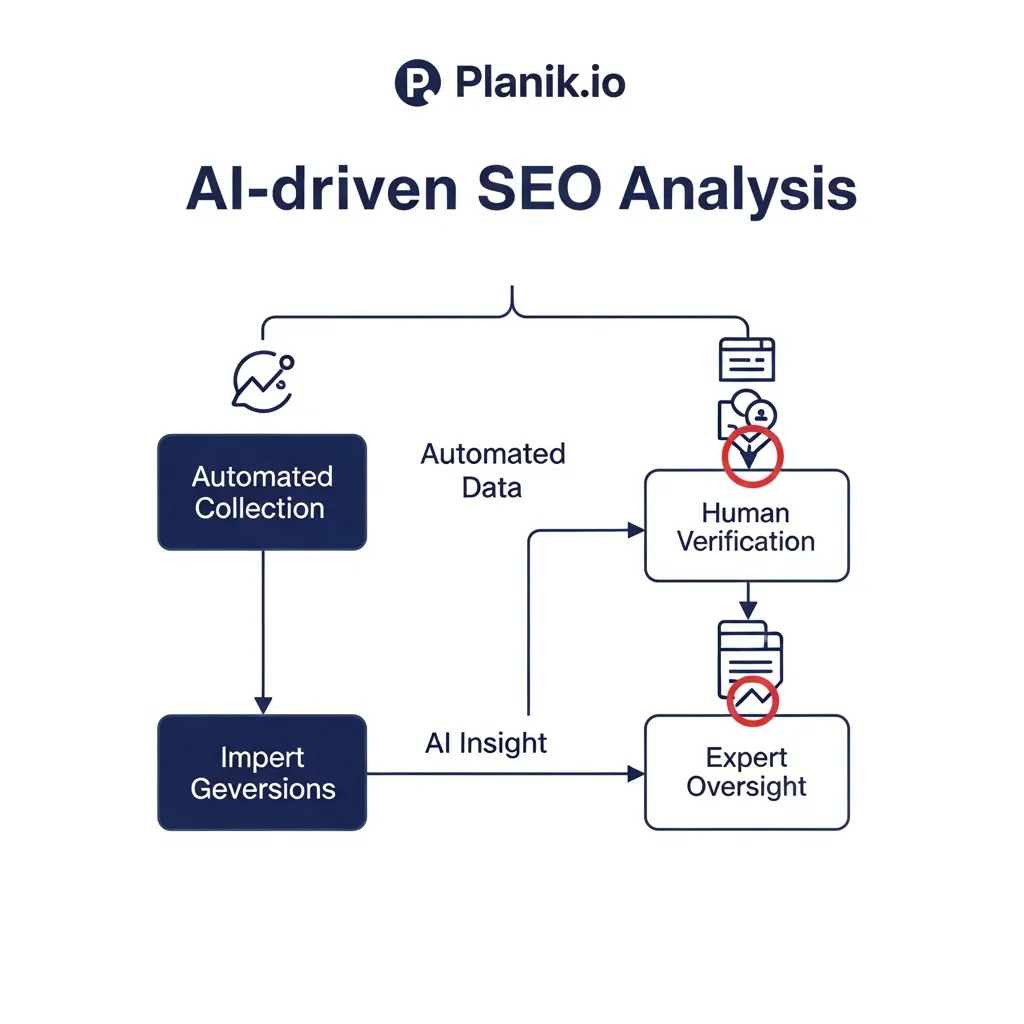
Ethical considerations are paramount. AI tools often process vast amounts of data, raising questions about data privacy and the ethics of data scraping. Marketers must ensure their chosen AI solutions adhere to privacy regulations and utilize data acquired ethically. The optimal use of AI in SEO analysis is not to replace human strategists but to augment them, acting as a powerful assistant for data aggregation and pattern identification. Human oversight remains indispensable for strategic interpretation and ethical validation, ensuring Planik.io's clients maintain their integrity and effectiveness.
Synthesizing Human Expertise with Artificial Intelligence
The true power of AI for SEO analysis emerges when it acts as an extension of human intellect, not a replacement. AI excels at processing vast datasets, identifying patterns, and automating routine tasks, freeing up SEO specialists to focus on higher-order strategic thinking, creative problem-solving, and nuanced interpretation. This symbiotic relationship allows marketers to leverage AI for efficiency while retaining the critical human touch that ensures brand voice, ethical integrity, and a deep understanding of user intent.
Staying adaptable is paramount in a constantly evolving search landscape. Search methodologies shift rapidly; a proactive mindset, embracing continuous learning and experimentation with the latest AI methodologies, is essential. In my experience, blindly trusting AI outputs without human validation often leads to misaligned strategies. For instance, while AI can generate content briefs, human refinement typically enhances engagement by over 20% by adding unique angles and emotional resonance.
I firmly believe that the most effective SEO professionals will be those who master prompt engineering and contextual interpretation, rather than just tool operation. Platforms like Planik.io, designed for collaborative AI-driven SEO, exemplify this synergy. To begin, apply the Planik.io AI Integration Checklist to your next project, focusing on areas where human insight can amplify AI-generated findings.