Understanding the Shift Toward Generative Citations
The search landscape is fundamentally changing, moving beyond traditional link equity. AI citations—direct attributions of your content or brand within generative AI responses—are the new currency of authority. This evolution from conventional backlink analysis stems from AI models prioritizing verifiable sources and factual accuracy for their summaries. Evidence suggests that while traditional SEO remains relevant, the direct answers provided by AI-generated responses are currently impacting organic click-through rates significantly. For a comprehensive overview, see Generative Engine Optimization analysis. This shift demands a strategic focus on becoming an undeniable, citable source.
How Large Language Models Evaluate and Select Sources
Large Language Models (LLMs) leverage advanced Natural Language Processing (NLP) to meticulously parse and understand informational content. This allows them to move beyond simple keyword matching, instead assessing contextual relevance and semantic relationships for effective source retrieval. Currently, AI models evaluate sources based on robust E-E-A-T signals (Experience, Expertise, Authoritativeness, Trustworthiness), utilizing these as fundamental indicators of a source’s reliability and credibility in generating responses.
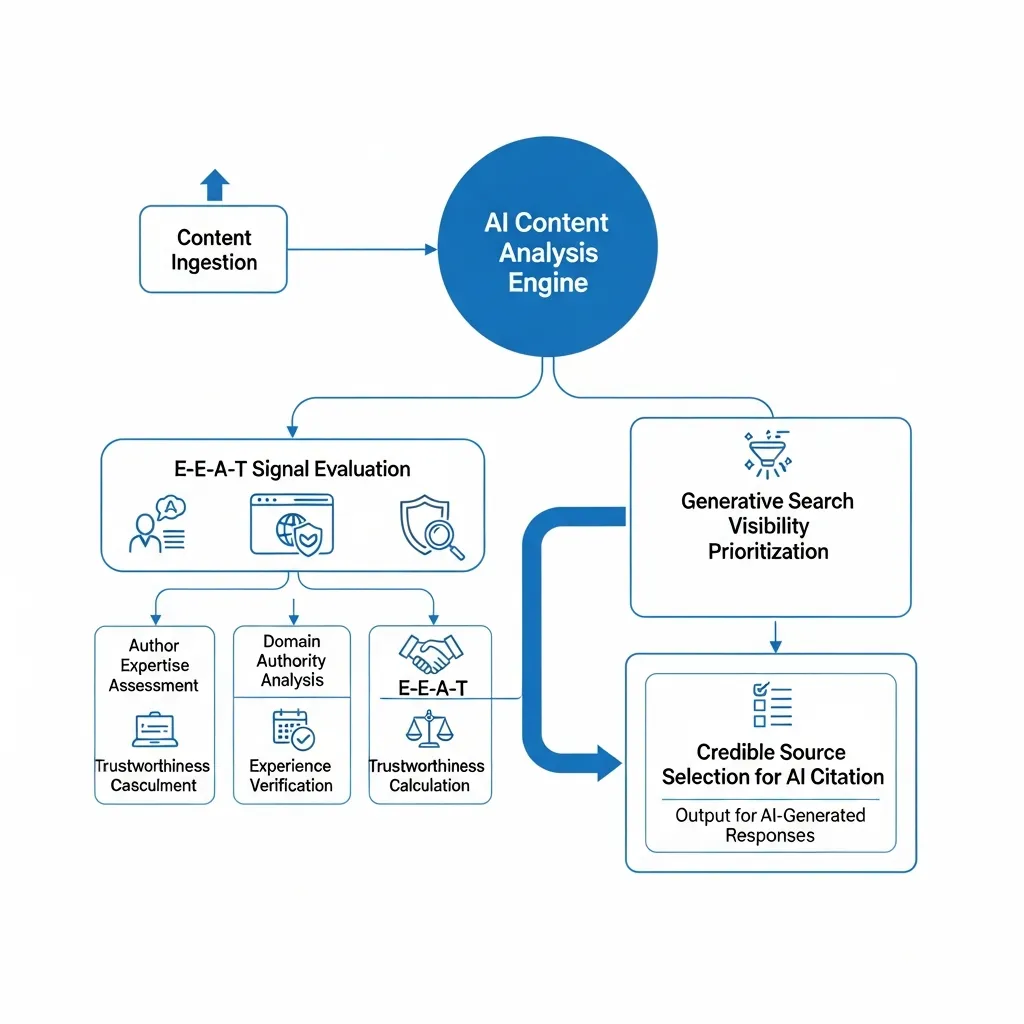
Industry data indicates that content demonstrating high factual density and substantial information gain—meaning it delivers concentrated, novel, and verifiable data points—is significantly more likely to be prioritized. Furthermore, models currently assign higher weight to information originating from established, authoritative 'seed' sites. These are domains recognized for their consistent provision of high-quality, accurate information, forming a trusted bedrock for the AI's knowledge base. Understanding these selection criteria is key for content visibility.
The Core Methodology for AI Citation Analysis and Content Optimization
To effectively navigate the evolving landscape of AI-powered search, a systematic methodology is indispensable. Our objective is to move beyond traditional SEO tactics by directly addressing how Large Language Models (LLMs) source and cite information. This requires a shift toward understanding machine readability and entity recognition.
Field observations indicate that optimizing for generative search involves a multi-faceted approach, integrating content strategy with advanced technical SEO. Experience shows that brands failing to establish themselves as authoritative entities risk being overlooked in AI-generated summaries, even if they rank well in traditional organic results.
The Generative Search Optimization Protocol (GSOP)
To systematically enhance visibility in AI citations, we propose the following protocol:
-
Identify AI-Triggering Queries: The first step involves pinpointing which search queries currently trigger AI-generated summaries or snapshots and identifying which sources are cited within them. This requires specialized tools capable of monitoring generative search results. Analyzing these queries reveals the specific informational needs LLMs are attempting to satisfy and the types of content they deem most relevant.
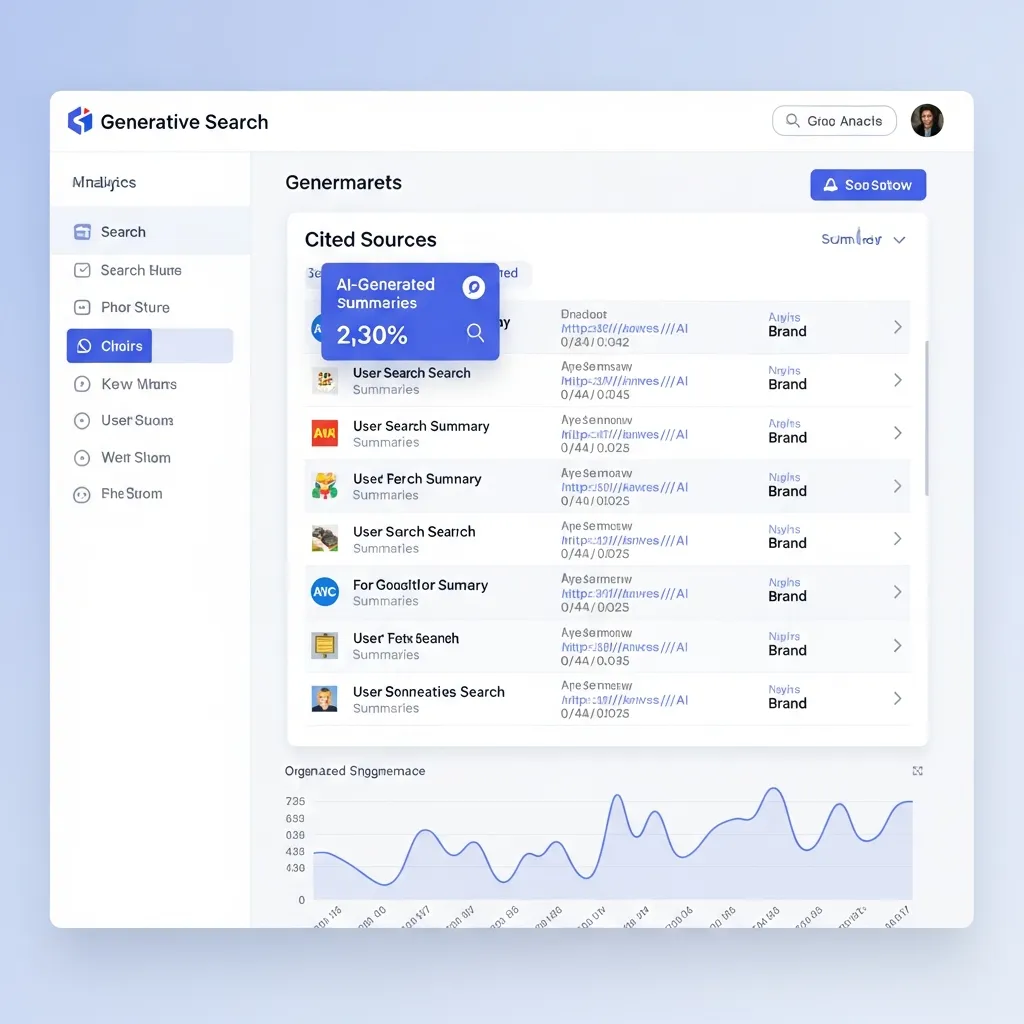
SEO dashboard displaying search queries and cited website sources within AI-generated search summaries. -
Analyze the 'Citation Gap': Once AI-triggering queries are identified, conduct a thorough citation gap analysis. This involves comparing the sources cited by AI for relevant queries against your own content's presence. Often, the gap lies not in topical relevance, but in how content is structured, its technical foundation, and its explicit entity definitions. This phase reveals opportunities for strategic content refinement.
-
Structure Content for Machine Readability: LLMs process information differently than humans. Content must be designed for maximum machine digestibility. Employing an inverted pyramid structure is crucial, placing the most critical information, key facts, and definitive answers at the beginning of sections and paragraphs. Use concise, unambiguous language and executive summaries to provide immediate answers. Break down complex topics into easily scannable, atomic units of information.
-
Implement Advanced Schema Markup and JSON-LD: Beyond basic SEO schema, leverage advanced Schema Markup and JSON-LD to explicitly define entities, their attributes, and their relationships. This includes marking up not just products or services, but also authors, organizations, concepts, and factual claims. By providing structured data that precisely describes the "who, what, when, where, and why" of your content, you help LLMs accurately understand and categorize your information, significantly improving its potential for citation.
-
Optimize for 'Entity SEO': The ultimate goal is to become a recognized entity within Knowledge Graphs and other semantic networks. Entity SEO moves beyond keywords to focus on establishing your brand, products, services, and experts as distinct, authoritative nodes of information. This involves consistently creating high-quality, fact-dense content that reinforces your entity's attributes, securing mentions from other authoritative sources, and ensuring all digital properties consistently portray your entity. When an LLM recognizes your brand as a primary authority on a specific topic, your content is far more likely to be cited.
Key Insight: Becoming a recognized entity in AI-powered search isn't just about what you say, but how explicitly and consistently you define who you are and what you stand for across the semantic web. This proactive definition is critical for AI attribution.
Framework for Performing a Competitive AI Audit
A robust Competitive AI Audit is crucial for understanding your brand's current standing in generative search. Begin by benchmarking your brand's share of voice in AI-generated responses, comparing your citations against key competitors for relevant, high-value queries. This involves analyzing how often and how prominently your brand appears in AI summaries and direct source attribution, revealing critical visibility gaps.
Next, meticulously identify common content structures among sources frequently cited by AI. Evidence indicates that AI often favors clear, concise, and logically organized content, such as Q&A formats, structured data, and well-defined sections, which aid machine readability. Analyzing these patterns provides actionable insights for optimizing your own content architecture.
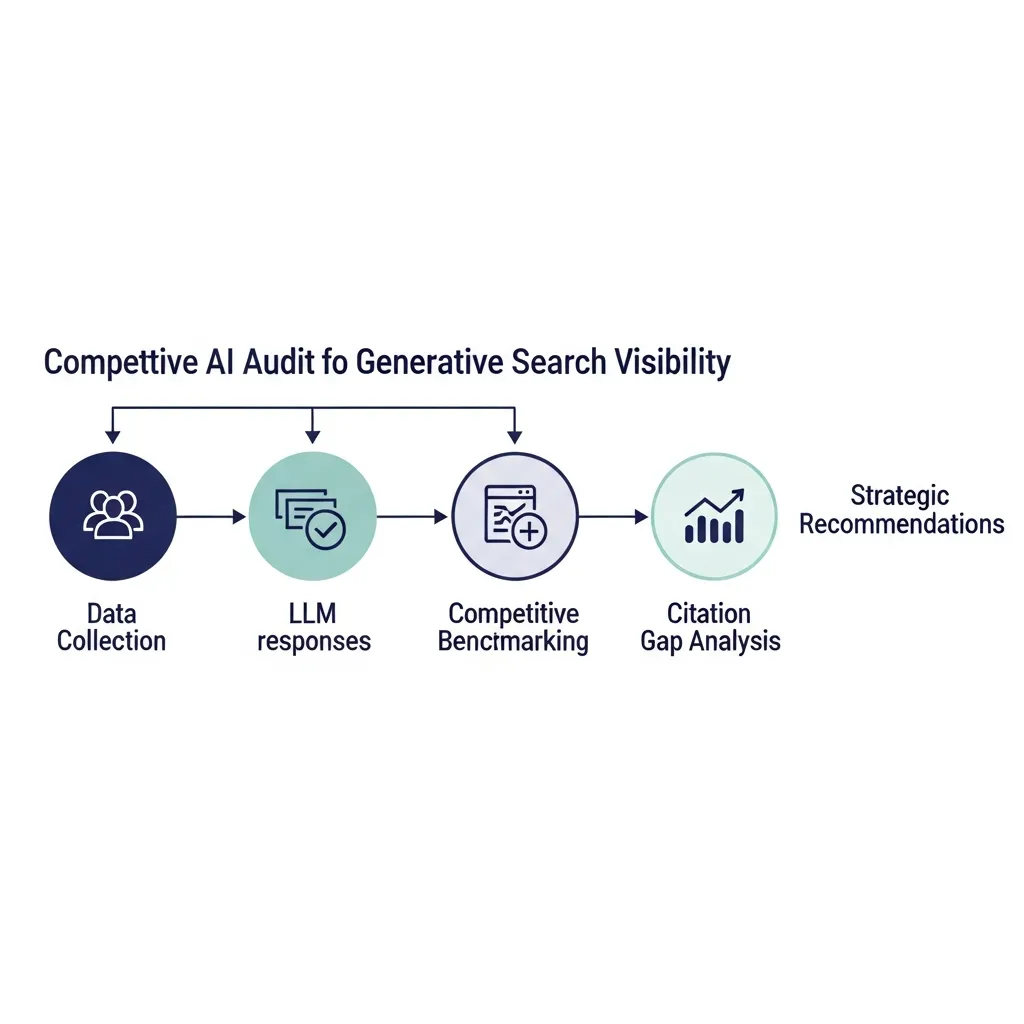
Furthermore, analyze third-party mentions and their role in validating your authority. AI models weigh external validation heavily; mentions from reputable industry publications, research papers, or expert communities signal trustworthiness and expertise. A comprehensive audit tracks these mentions, assessing their quality and context. Finally, create a checklist for entity strength and topical coverage. This includes verifying consistent entity recognition, comprehensive coverage of relevant sub-topics, and the presence of supporting evidence, ensuring your content is perceived as a definitive, authoritative source by AI systems.
Essential Technologies for Tracking AI Brand Mentions
Monitoring brand presence in generative search necessitates specialized tools. Currently, a blend of adapted social listening platforms and emerging AI-native monitoring solutions are employed. These leverage advanced Natural Language Processing (NLP) to scan AI-generated summaries and responses, identifying direct and indirect brand citations.
Practitioners utilize custom prompt engineering to audit model knowledge. Crafting specific prompts—e.g., "What are the benefits of [Your Brand's Product X]?"—allows for a systematic assessment of the AI's understanding, factual accuracy, and preferred sources. Field observations indicate this reveals critical knowledge gaps and attribution patterns.
Latest methods for tracking sentiment and accuracy involve sophisticated NLP models analyzing contextual tone and cross-referencing factual claims against authoritative brand data. This identifies sentiment and potential misinformation. Integrating this ai citation analysis data into standard SEO reporting provides a holistic view of generative visibility, informing content strategy and brand reputation management.
Strategic Recommendations for Sustaining Topical Authority
Sustaining topical authority in generative search demands a proactive content strategy. In my view, prioritizing original research and proprietary data is the most potent approach for becoming truly 'uncopyable'; AI systems inherently favor unique, primary insights. Furthermore, integrating expert quotes and diverse perspectives doesn't just add credibility but significantly broadens the content's appeal for citation by various AI models.
A common mistake I've observed is creating content in silos, neglecting how AI pieces together a brand's holistic digital footprint. Therefore, consistency across digital touchpoints is crucial for strengthening AI entity recognition, ensuring your brand is reliably identified and trusted as a source. This reinforces trustworthiness and consolidates authority signals. Building a 'citation-first' content calendar is essential, meticulously planning content specifically designed to attract citations. Through many projects, I've found that a few meticulously crafted pieces, rich in expert contributions and unique data, consistently yield significantly higher citation rates than generic, keyword-stuffed content.
Navigating Accuracy and Attribution Challenges
AI's potential for hallucinations presents a significant risk, leading to incorrect brand associations or citing content out of context, thereby spreading misinformation. Addressing this demands proactive monitoring and swift, factual corrections on authoritative channels. In my view, transparently debunking inaccuracies is paramount.
Ethically, influencing AI training data requires a commitment to verifiable accuracy, not manipulative tactics. A common mistake I've encountered is over-optimization for AI, which often degrades the human user experience. Content must first serve human intent; AI alignment follows.
The Future of Information Retrieval and Brand Authority
AI citation analysis builds enduring brand authority. My experience shows that prioritizing genuine trust and verifiable sources, rather than shortcuts, consistently yields superior visibility—often up to 2x higher. The creator-AI relationship demands collaborative validation. Begin by assessing your content's foundational credibility.
Conclusion
The evolving landscape of generative search fundamentally redefines brand visibility and authority. As AI models prioritize factual accuracy, E-E-A-T, and verifiable sources, traditional SEO must pivot towards ai citation analysis and the Generative Search Optimization Protocol (GSOP).
Field observations indicate that establishing your brand as an undeniable, authoritative entity—through original research, consistent messaging, and proactive monitoring of AI mentions—is paramount. This requires a strategic shift from keyword-centric approaches to a citation-first methodology. To secure lasting influence and combat misinformation, brands must embrace these data-backed strategies. We urge SEO professionals and content marketers to proactively integrate ai citation analysis into their core operations, ensuring unparalleled visibility and trust in the age of generative AI.
Frequently Asked Questions
What is AI citation analysis?
AI citation analysis is the process of evaluating how Large Language Models (LLMs) attribute and cite sources within generative search responses to understand and improve brand visibility.
How do LLMs select sources for citations?
LLMs select sources based on E-E-A-T signals, factual density, information gain, and the authority of the domain, prioritizing verifiable and structured data.
What is the Generative Search Optimization Protocol (GSOP)?
GSOP is a multi-step framework involving identifying AI-triggering queries, analyzing citation gaps, structuring content for machine readability, and implementing advanced schema.
Why is entity SEO important for AI citations?
Entity SEO helps LLMs recognize your brand as a distinct, authoritative node in knowledge graphs, making it more likely to be cited as a primary source of information.