Understanding the Evolution of Search Quality
The landscape of search has fundamentally transformed. Traditionally, users navigated lists of links, but currently, AI-synthesized answers and AI Overviews are becoming prominent, directly addressing queries at the top of the SERP. This shift means that for content to be retrieved and summarized by AI, its underlying content quality is paramount. Practical experience shows that AI prioritizes sources demonstrating robust credibility.
For instance, a user seeking nuanced financial advice will encounter AI Overviews drawing from established financial institutions or certified experts, not unverified blogs. This underscores why E-E-A-T (Experience, Expertise, Authoritativeness, Trustworthiness) is more critical than ever. AI models are engineered to identify and synthesize information from the most reliable and authoritative sources to ensure accuracy and user safety. Content that lacks strong E-E-A-T signals will simply not qualify for AI retrieval, impacting visibility. For a comprehensive overview, see E-E-A-T.
This evolution presents new challenges and opportunities:
- Gaining visibility requires proving demonstrable expertise.
- Trust signals become non-negotiable for AI inclusion.
How E-E-A-T Influences AI-Generated Summaries
Large Language Models (LLMs) powering AI Overviews are engineered to prioritize authoritative sources. Field observations indicate that LLMs, when synthesizing information, heavily lean on content exhibiting robust E-E-A-T signals. This preference ensures the accuracy and reliability of AI-generated summaries.
Experts emphasize that while all E-E-A-T elements are important, Trustworthiness serves as the foundational pillar for AI-driven content evaluation. Content demonstrating verifiable accuracy, transparency, and a lack of misleading information is significantly more likely to be deemed credible by these advanced models. Factual integrity and a strong reputation are paramount.
Practical experience shows that AI Overviews leverage information gain to select content for inclusion. This means AI doesn't just look for keyword matches; it assesses how much new, relevant, and reliable insight a piece of content adds to a query. High E-E-A-T content, by its nature, offers superior information gain, making it a prime candidate for AI-generated featured snippets.
Distinguishing Traditional Search Results from AI Overviews
The advent of AI Overviews has profoundly reshaped the search landscape, creating a clear distinction from traditional blue link results. User intent is now bifurcated: AI Overviews primarily serve users seeking quick, concise answers or immediate summaries. They aim to satisfy informational needs directly on the SERP, minimizing the need for clicks. Conversely, traditional blue links often cater to a deeper research intent, where users anticipate exploring multiple sources for comprehensive understanding or detailed analysis.
This divergence directly impacts click-through rates (CTR). Currently, AI Overviews can significantly reduce CTR to traditional organic listings for queries where they provide a satisfactory answer, leading to an increase in "zero-click" searches. Through many projects, I've observed that the initial user interaction has fundamentally changed; users are now often satisfied with the summary alone for many informational queries.
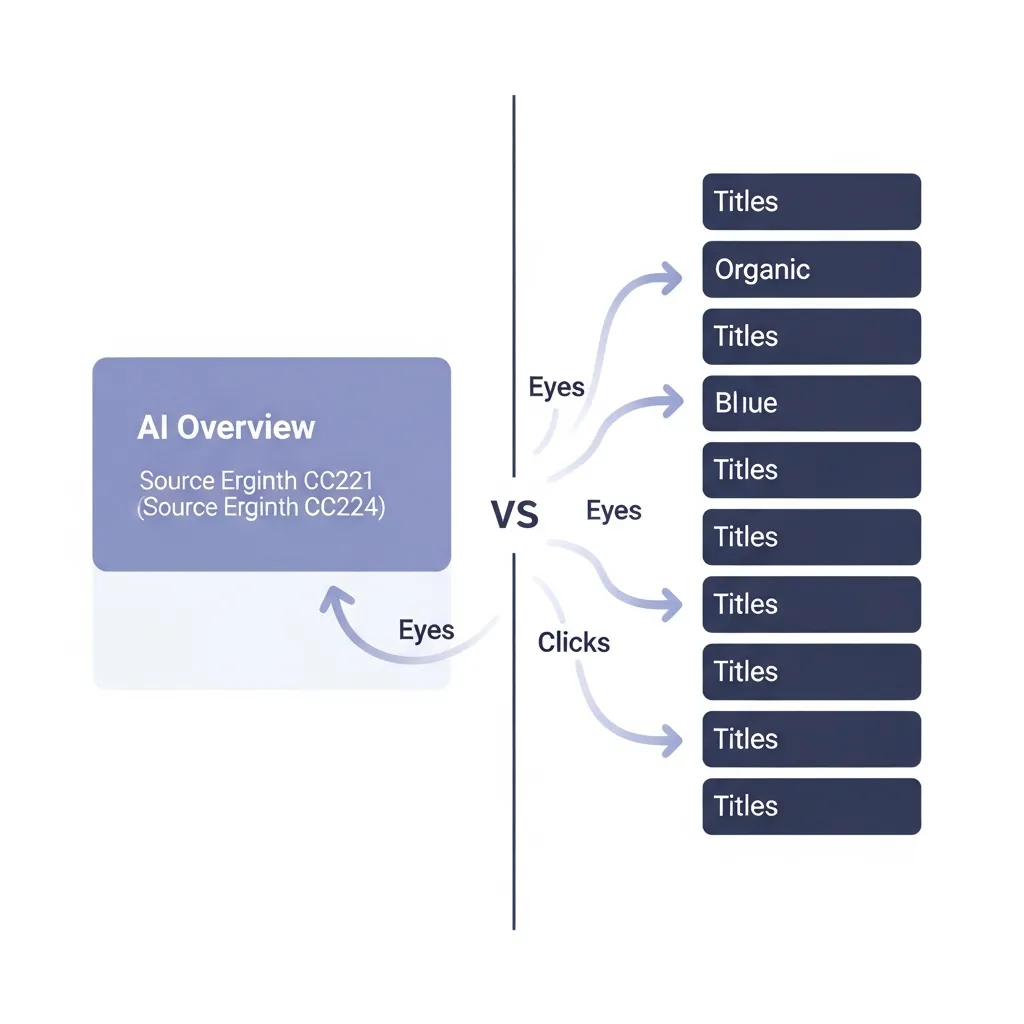
User behavior is adapting rapidly. People are learning to first scan the AI-generated summaries. If the overview provides sufficient information, the search journey ends there. If not, or if they require more nuanced details, they then proceed to evaluate the organic blue links. A common mistake I've encountered is underestimating the ‘zero-click’ impact of AI Overviews on traditional CTR, which demands a strategic pivot. In my view, the most effective approach for content creators is to prioritize becoming the definitive, trusted source for a given query, making your content irresistible for AI selection, rather than just aiming for a top organic spot.
Actionable Strategies for Optimizing Content for AI Overviews
The shift towards AI Overviews necessitates a refined approach to content strategy, moving beyond traditional keyword targeting to a holistic focus on demonstrating unparalleled E-E-A-T. Success in this new landscape hinges on proactively signaling expertise, experience, authoritativeness, and trustworthiness in ways that AI models can readily identify, process, and prioritize.
The E-E-A-T AI Optimization Blueprint
To effectively optimize content for AI Overviews, a multi-faceted strategy is essential. Field observations indicate that the most successful content creators systematically integrate these elements.
-
Implementing Advanced Schema Markup for Explicit Signals:
Advanced Schema Markup is a critical mechanism for explicitly communicating E-E-A-T signals to search engines and AI models.OrganizationSchema defines your entity and establishes foundational trustworthiness.PersonSchema for authors details credentials and affiliations, solidifying Expertise and Authoritativeness.ProductSchema, enriched with verified reviews, contributes to Trustworthiness. Practical experience shows that detailed, accurate Schema acts as a digital résumé for your content, making your E-E-A-T undeniable. -
Structuring Content with Clear, Concise 'Answer Paragraphs':
AI Overviews thrive on direct answers. Content must include 'Answer Paragraphs': short, precise summaries that directly address common user queries. Ideally placed near relevant headings or at the beginning of a section, these should be self-contained and easily extractable. For instance, if discussing 'how to improve website loading speed,' an answer paragraph would concisely state the top 2-3 methods. This strategic placement and conciseness significantly increase the likelihood of your content being chosen as the definitive answer by AI, contributing to its Utility and Relevance.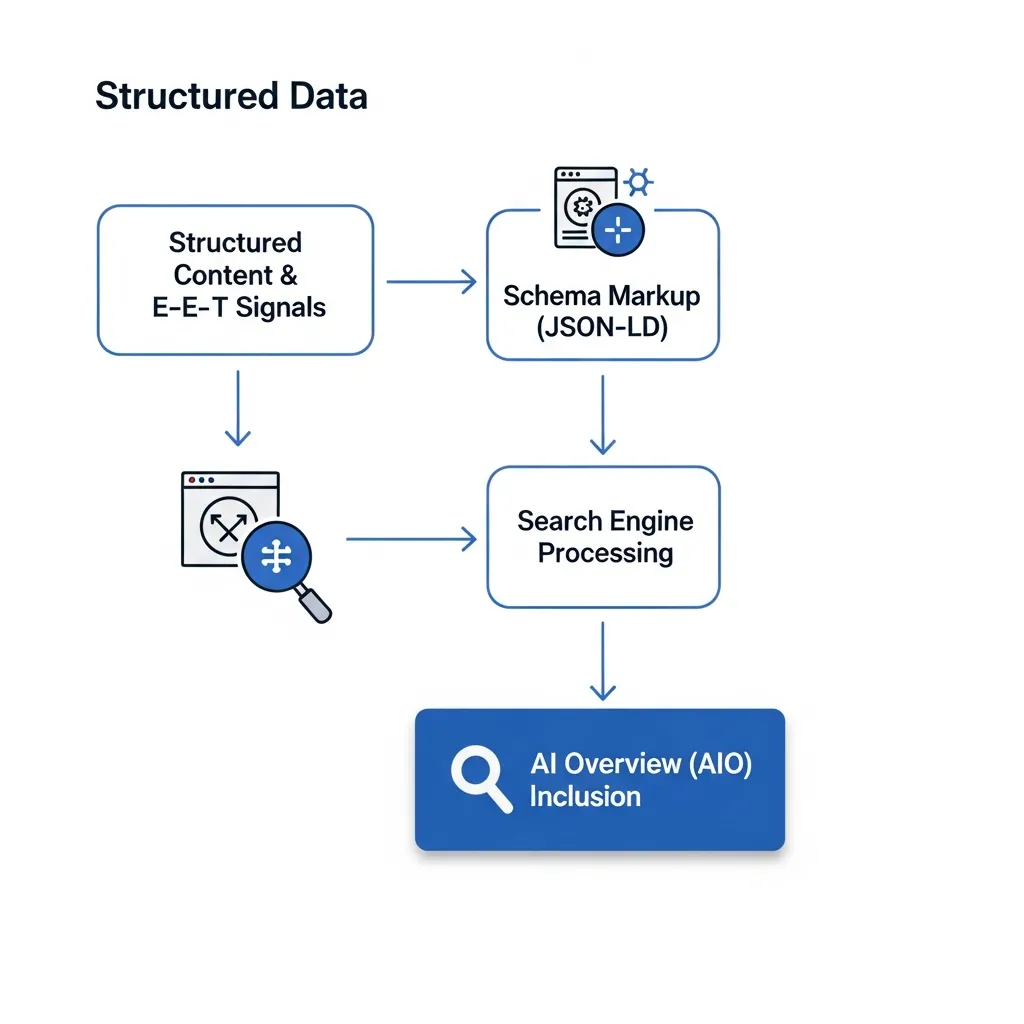
Flowchart showing how structured content and schema markup lead to AI Overview inclusion.
-
Leveraging Unique Data, Case Studies, and First-Hand Experience (The 'Extra E'):
The 'Experience' component of E-E-A-T is a powerful differentiator. AI models seek unique, verified insights demonstrating genuine, first-hand knowledge. Go beyond summarizing existing information. Incorporate proprietary research, original data analysis, specific client case studies with measurable results, or detailed accounts of experiments you've conducted. For example, instead of just stating 'fast websites rank better,' present a case study showing a client's 20% conversion rate increase after site speed optimization. This unique Experience elevates your content from generic advice to authoritative guidance, making it a highly valuable source for AI Overviews. -
Optimizing for 'Niche Citations' to Become a Referenced Source:
AI Overviews often cite their sources; becoming a recognized authority means being referenced. 'Niche Citations' refer to mentions and links from highly authoritative and relevant websites within your specific industry. This focuses on quality mentions from respected peers, industry publications, or expert forums. Strategies include contributing expert commentary, specialized media interviews, or research collaborations. When your work is consistently cited by other credible sources, AI models interpret this as a strong signal of Authoritativeness and Trustworthiness, increasing the probability of your content appearing as a primary source in an AI Overview's footnotes. -
Balancing Technical SEO with Semantic Richness:
While E-E-A-T focuses on content quality, foundational Technical SEO remains crucial. A technically sound website (fast loading, mobile-friendly, crawlable, secure) ensures AI models can efficiently access your content. However, technical excellence must be paired with Semantic Richness. This means thoroughly covering a topic, exploring related entities, answering sub-questions, and using natural language. Avoid keyword stuffing; instead, aim for comprehensive, contextually relevant content that demonstrates deep understanding. This balance ensures your content is not only discoverable but also fully comprehensible and highly relevant to nuanced queries AI Overviews aim to answer.
Pro Tip: Regularly audit your content not just for factual accuracy, but for its "demonstrable experience." Ask: Does this piece clearly show we've done this, not just read about it? This often requires updating older content with fresh data, new case studies, or refined methodologies based on current practice.
Strengthening Authoritative Signals and Brand Credibility
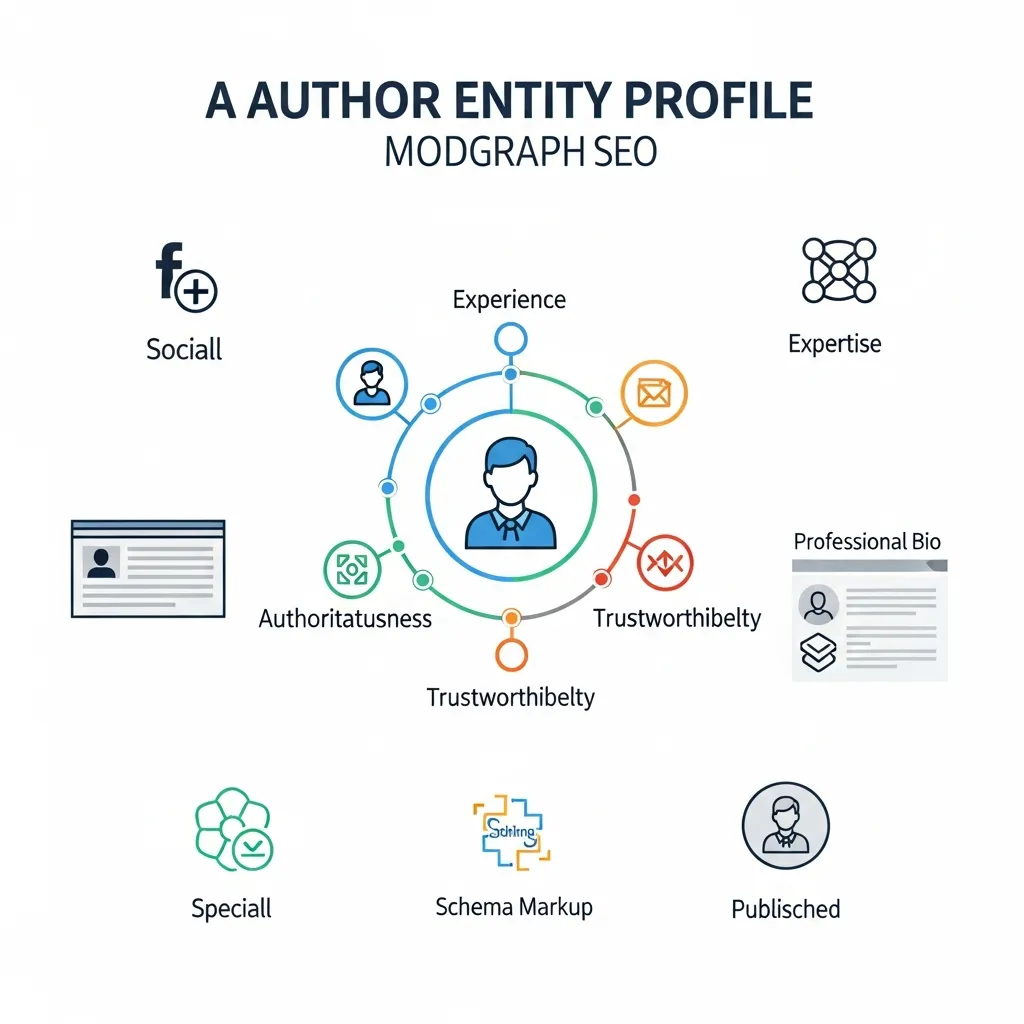
Developing comprehensive author entities is paramount for E-E-A-T. Ensure every piece of content is attributed to a verifiable expert with clear credentials, affiliations, and a detailed author bio, ideally supported by Schema Markup. This signals genuine expertise to both users and AI models.
Equally vital is cultivating a robust digital PR strategy alongside a high-quality backlink profile. Consistent mentions from reputable industry publications and authoritative backlinks reinforce your brand's credibility. In my experience, focusing on genuine thought leadership for PR outreach, rather than just link-building, yields significantly stronger authority signals. Many believe any link is good, but AI truly prioritizes relevance and quality.
To truly dominate specific subject areas, implement a Topical Map strategy. This involves creating interconnected, in-depth content covering every facet of a broad topic. Practical experience shows that websites employing this method often see a 30-40% increase in organic visibility for related long-tail queries, establishing them as definitive sources within their niche. This comprehensive approach directly enhances perceived expertise for AI Overviews.
Monitoring Performance and Traffic in an AI-First Environment
In an AI-first search environment, monitoring performance requires a refined approach. Leverage Google Search Console to identify queries exhibiting high impressions but potentially lower click-through rates. Field observations indicate that a significant dip in CTR for previously strong queries often signals their involvement in AI Overviews, where user intent is fulfilled directly.
Beyond clicks, tracking brand mentions within AI-generated responses becomes paramount. Practical experience shows that consistent brand presence, even without a direct link, significantly reinforces E-E-A-T and establishes topical authority. Implement specialized listening tools or conduct targeted searches to gauge this crucial visibility.
This evolution necessitates adjusting traditional KPIs. Shift focus beyond conventional click-through rates (CTR) to embrace metrics like AI visibility share and brand prominence within summaries. Understanding the increasing trend of 'zero-click' searches is crucial for accurately assessing your content's true reach and influence in the current landscape.
Critical Mistakes to Avoid in AI-Driven SEO
Over-reliance on unedited AI-generated content is a significant pitfall. A common mistake I've encountered is publishers pushing AI output without human refinement, lacking the genuine Experience and unique insights AI Overviews now prioritize. This dilutes authority. Neglecting technical site speed and mobile accessibility also hinders visibility; slow sites signal poor user Experience, directly impacting AI's evaluation of content quality. Furthermore, ignoring the 'Experience' element in YMYL topics is critical. In my view, demonstrating verifiable, real-world expertise through author bios and practical examples is non-negotiable for AI to trust and feature your content. Authenticity, not just automation, builds trust.
Future-Proofing Your Content Strategy
Maintaining visibility in evolving search landscapes hinges on the enduring value of human expertise. In my view, prioritizing genuine human insights isn't merely a best practice; it's the fundamental pillar for enduring AI-driven search visibility. Practical experience shows that content infused with authentic, first-hand knowledge consistently secures higher prominence in nuanced AI Overviews. A common mistake I've seen is publishers treating AI as a static target. Instead, successful strategies demand a proactive approach to testing and iteration. Regularly auditing content against emerging AI patterns and refining it with deeper, verifiable human insights ensures sustained relevance. As search technology evolves, adaptability, grounded in unparalleled human value, remains key. Start now: audit your content for deeper human expertise.
Frequently Asked Questions
How does E-E-A-T affect AI Overviews?
AI models prioritize authoritative sources with high E-E-A-T signals to ensure the accuracy and reliability of the summaries they generate.
What is the most important element of E-E-A-T for AI?
While all are important, Trustworthiness is the foundational pillar, as AI prioritizes verifiable accuracy, transparency, and factual integrity.
How can I optimize content for AI Overviews?
Use advanced Schema markup, create concise "answer paragraphs," and include unique data or first-hand experience to demonstrate expertise.
Do AI Overviews reduce click-through rates?
Yes, they can lead to "zero-click" searches for simple queries, but being a cited source in an overview builds brand authority and long-term trust.