Redefining the Audit: From Keywords to Entities in the Era of AI Overviews
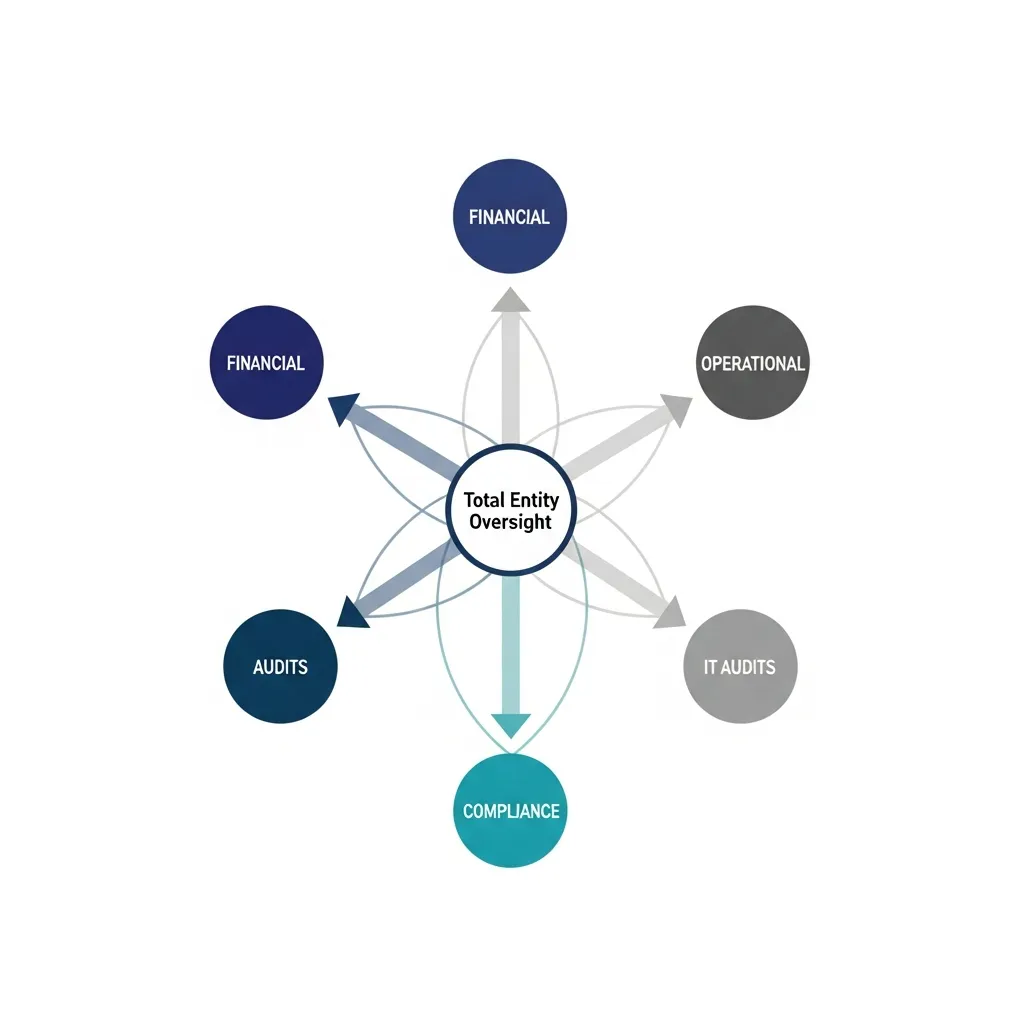
Modern SEO has shifted from matching text strings to understanding entities—defined as unique, distinguishable concepts within an information retrieval system. Unlike keywords, entities provide context through their relationships with other nodes in a knowledge graph.
From Search to Synthesis
AI Overviews (SGE) prioritize these interconnected relationships over traditional keyword density. This marks a fundamental transition from standard SERPs to Answer Engine Optimization (AEO), where search engines synthesize direct responses rather than merely listing links.
“The shift toward entities represents a move from ‘strings to things,’ focusing on semantic meaning.”
Establishing Machine Legibility
The primary objective of an entity audit SEO checklist is to ensure brand legibility for LLMs and search bots. This involves:
- Establishing clear topical authority.
- Defining explicit relationships between brand concepts.
- Enhancing technical data structure for machine readability.
By verifying that brand attributes are consistently defined, organizations secure visibility. Utilizing an entity audit SEO checklist ensures long-term discovery in modern AI-driven environments.
Technical Foundation: Optimizing Site Architecture for Machine Legibility
Establishing a robust technical foundation is the first step in ensuring that search engines and Large Language Models (LLMs) can accurately identify and categorize a brand. Without machine-legible architecture, even the most authoritative content may fail to appear in AI-generated overviews.
Advanced Schema.org Implementation
Structured data serves as the primary language for entity communication. A comprehensive entity audit SEO checklist must prioritize Organization and Person schemas to establish the brand’s core identity and its key stakeholders. Furthermore, Product and FAQ markup provide the specific attributes and direct answers that AI models utilize to populate rich results. The SameAs property is particularly vital; it bridges the gap between a domain and external authoritative sources like Wikidata, LinkedIn, or official social profiles, effectively “pointing” the machine toward verified data points that reinforce topical authority.

Managing AI Crawler Access and Legibility
Modern site architecture now necessitates specific instructions for AI-specific agents. While robots.txt remains the standard for managing traditional search bots, the emergence of llm.txt provides a streamlined way to guide AI scrapers. This file acts as a high-level directory, offering markdown-formatted summaries of site content. By utilizing these files, webmasters can ensure that AI agents prioritize high-value entity data while ignoring non-essential or redundant directories, thereby optimizing the “context window” of the models crawling the site.
Performance Infrastructure for AI-First Indexing
Technical performance metrics, specifically Core Web Vitals, are no longer just user experience signals; they are prerequisites for efficient machine indexing. Metrics such as Largest Contentful Paint (LCP) and Cumulative Layout Shift (CLS) impact how reliably a bot can parse a page. Because modern AI overviews rely heavily on mobile-first indexing, mobile responsiveness is a critical component of the technical audit. A site that fails to render correctly on mobile devices often suffers from data fragmentation, where AI agents cannot fully extract the relationships between different content blocks.
Ensuring Accurate Entity Extraction
JavaScript-heavy frameworks often create barriers for entity extraction. If critical brand information is trapped behind client-side rendering, AI crawlers may fail to associate key attributes with the primary entity.
“For machines to build a reliable knowledge graph, the site’s data must be accessible without complex execution hurdles. Rendering delays are the primary cause of entity misattribution in modern search.”
To maintain a high-performing entity audit SEO checklist, developers should focus on:
- Implementing server-side rendering (SSR) or static site generation for all pages containing core entity data.
- Ensuring that the rendered DOM contains all structured data and semantic HTML tags.
- Minimizing execution time for scripts that load primary content to prevent crawler timeouts.
- Verifying that internal linking structures are fully crawlable to allow AI to map the site’s topical hierarchy.
The Knowledge Graph Audit: Establishing Brand Authority and Identity
The primary objective of a Knowledge Graph audit is to ensure search engines possess a definitive, unambiguous understanding of a brand. This begins with the Google Knowledge Panel. Claiming and verifying this panel allows an organization to suggest edits and influence the brand narrative presented in search results. It serves as the visual confirmation that an entity is recognized by the system.
Establishing Entity Nodes via Authoritative Sources
Modern AI models and search engines rely heavily on structured data repositories like Wikidata and Wikipedia to define entity nodes. These platforms act as the “truth layer” for the Knowledge Graph. A comprehensive entity audit SEO checklist must evaluate whether a brand has a presence on these platforms.
- Wikidata: Ensure the item includes relevant “P-properties” such as “official website,” “industry,” or “parent organization.”
- Wikipedia: While harder to obtain, a Wikipedia entry provides significant authority and serves as a primary source for AI training sets.
Ensuring Ecosystem Consistency
Consistency across the digital ecosystem is non-negotiable for establishing brand identity. NAP (Name, Address, Phone) data must remain identical across all business directories, social platforms, and press mentions. Discrepancies create “entity noise,” which weakens the engine’s confidence in the brand’s identity and can lead to fragmented Knowledge Graph entries.
To resolve ambiguity, the ‘SameAs’ attribute in Schema markup serves as a critical bridge. By explicitly linking a primary domain to social profiles and authoritative mentions, organizations unify disparate digital footprints into a single, cohesive entity node. Implementing an entity audit SEO checklist ensures these links are valid and comprehensive across the entire web presence.
“The Knowledge Graph represents the shift from strings to things. Without a verified identity, a brand remains invisible to the latest AI-driven discovery engines.”
This audit ensures that all external signals point toward a singular, authoritative source of truth, facilitating easier ingestion by LLMs and search crawlers alike. By mapping these connections, brands move from being a collection of keywords to a recognized authority within their specific niche.
Content Strategy for AI: Building Topical Authority and Answer-First Structures
The shift toward AI-driven search requires a fundamental change in how content is organized and delivered. While technical optimization provides the necessary infrastructure, the content strategy must prioritize topical authority and machine-friendly formatting. To remain visible in synthesized overviews, brands must move beyond isolated keywords and focus on comprehensive subject ownership. A robust entity audit SEO checklist should prioritize how information is categorized to ensure it aligns with how Large Language Models (LLMs) connect concepts.
Developing Topical Maps and Content Clusters
Establishing authority begins with a topical map that visualizes the relationship between a core entity and its surrounding sub-topics. Instead of targeting individual search phrases, creators should build content clusters that address every facet of a specific domain. This approach signals to LLMs that the domain is a primary source of truth for that entity.
- Map out primary, secondary, and tertiary entities to create a semantic web.
- Produce interlinked articles that cover the “who, what, where, and why” of a subject.
- Ensure internal linking reinforces the hierarchical relationship between pillar pages and supporting content.
By saturating a niche with interconnected, high-quality information, a site demonstrates the depth required for AI to recognize it as a dominant authority.
Implementing ‘Answer-First’ Structures
LLMs are designed to satisfy user intent as efficiently as possible. To facilitate this, content should utilize Answer Blocks—concise, direct responses placed within the first paragraph of a section. This “inverted pyramid” style of digital writing ensures that AI crawlers can instantly identify the core takeaway of a page.
“An effective Answer Block provides a 40–60 word summary that directly addresses a specific query before expanding into nuanced detail.”
This directness caters to the snippet-based nature of modern AI interfaces, where the most succinct and accurate answer is often the one selected for the primary overview position.
Optimizing for LLM Parsing with Structural Hierarchy
Machine legibility depends heavily on clear document architecture. Utilizing a rigorous H2 and H3 hierarchy allows AI to map the logic of an article seamlessly. When performing an entity audit SEO checklist, practitioners should verify that lists and tables are used to synthesize complex information.
- Use bulleted lists for processes, features, or non-sequential items.
- Employ numbered lists for chronological steps or rankings.
- Ensure all headings are descriptive and contain relevant entities.
This structure reduces the computational effort required for an LLM to summarize the page, increasing the likelihood of being featured in an AI overview.
Creating Citation-Worthy Data and Original Research
AI overviews frequently cite sources that provide unique, empirical data. To earn these mentions, brands must shift from content curation to knowledge creation.
- Publish original research, proprietary case studies, and internal surveys.
- Develop unique data points that cannot be found on competitor sites.
- Use clear, declarative statements when presenting new findings.
By providing high-value, original insights, a brand becomes a necessary reference point for AI models seeking to validate their synthesized responses. This strategy ensures that the brand remains a recognized authority within the evolving search ecosystem.
Off-Page Entity Signals: Monitoring Brand Mentions and User-Generated Content
AI Overviews increasingly prioritize Reddit and specialized forums to surface “human-vetted” insights. These platforms provide the social proof that validates an entity’s real-world authority. As part of a modern entity audit SEO checklist, practitioners must monitor these discussions, as LLMs use community consensus to verify claims made on a brand’s primary domain.
The Role of Community Discussions and Forums
Search engines now weigh forum threads and community-driven platforms heavily when synthesizing answers. These “human signals” help AI distinguish between corporate marketing copy and authentic user experiences.
- Monitor niche subreddits and industry forums for brand sentiment and identity.
- Identify recurring themes in user discussions to understand how the public categorizes the entity.
- Engage transparently to ensure accurate information is circulated within these specialized datasets.
Citation Audits and External Validation
A robust audit identifies gaps in third-party mentions across the broader web. This process involves:
- Auditing industry directories and press releases for data consistency and sentiment analysis.
- Ensuring unlinked mentions clearly reference the brand entity to aid in machine-driven entity reconciliation.
- Closing “entity gaps” in areas where competitors are frequently cited but the brand remains absent.
Strategies for High-Quality UGC
High-quality User-Generated Content (UGC) provides the rich, qualitative data points LLMs crave for context. Brands should focus on:
- Encouraging detailed, long-form reviews that describe specific use cases and product attributes.
- Participating in community Q&A platforms to establish a presence in conversational datasets.
Monitoring Sentiment in Conversational Search
Finally, brands must track their “reputation” within LLM snapshots and conversational search interfaces.
“AI models do not just summarize facts; they synthesize sentiment from the digital ecosystem to determine an entity’s reliability.”
Regularly querying conversational engines allows brands to see how they are categorized. If an AI perceives a brand negatively, the entity audit SEO checklist must be updated to address the source of that misinformation as part of a broader digital strategy.
Local SEO and Entity Consistency: Optimizing for Proximity and AI Accuracy
For localized search results, modern AI models synthesize data from structured map platforms and unstructured web mentions to determine geographic relevance. A robust entity audit SEO checklist must prioritize the Google Business Profile (GBP) as the primary anchor for local identity. By ensuring that categories, service attributes, and operational hours are precisely defined, brands assist AI engines in mapping physical locations to specific, intent-driven consumer needs.
Strengthening Proximity through Citations
Local citations serve as critical third-party validation for an entity’s physical existence. In conversational AI queries—such as “best specialized services near me”—large language models rely on the density and consistency of NAP (Name, Address, Phone) data across authoritative directories.
“Consistency across disparate local data sources reduces entity ambiguity, allowing AI models to recommend physical locations with significantly higher confidence levels.”
Geo-Specific Data and AI Overviews
To bridge the gap between physical sites and digital authority, brands must manage geo-specific entity data to ensure visibility in localized AI Overviews. This involves:
- Implementing LocalBusiness Schema with precise latitude and longitude coordinates to anchor the entity in physical space.
- Maintaining unified data across social profiles and localized landing pages to reinforce proximity signals.
- Optimizing for hyper-local content that connects the brand entity to regional landmarks and community identifiers.
This synchronization ensures that when an AI Overview generates a localized response, the brand’s digital footprint confirms its physical proximity and expertise. Integrating these localized signals into an entity audit SEO checklist ensures that a brand’s physical presence is correctly interpreted as a reliable, authoritative source within the broader search ecosystem.
Measuring Impact: New KPIs for AI-Driven Search Visibility
Traditional metrics like organic position are evolving into Brand Share of Voice (SoV) within AI Overviews. A modern entity audit SEO checklist includes tracking how often an entity is featured in synthesized snapshots. This requires monitoring “mention density” for high-intent conversational queries across various search verticals.
Tracking traffic from Answer Engines like Perplexity and ChatGPT is equally critical. While these platforms prioritize direct responses, they provide valuable referral traffic when cited as a source. Analyzing these “discovery” sessions reveals how effectively the brand serves as a primary knowledge base for modern language models.
AI Brand Gap Analysis
Performing an AI brand gap analysis allows teams to compare their entity coverage against top-ranking competitors. This identifies specific topical nodes where the brand lacks authority. Key metrics include:
- Citation Frequency: How often the brand is used to validate a specific claim.
- Relational Mapping: The strength of the connection between the brand and its core industry entities.
Structured Data and Citation Correlation
Measuring the correlation between structured data and citation frequency is essential. Comprehensive Schema.org markup provides the “ground truth” that AI models use to verify facts and establish trust.
“The ultimate KPI for AI visibility is the reduction of entity ambiguity, ensuring the brand remains the undisputed source of truth for its niche.”
Finally, utilizing a comprehensive entity audit SEO checklist ensures that technical optimizations directly translate into higher citation rates within generative search results. By monitoring these new KPIs, brands can quantify their influence in an AI-first ecosystem.
AI Audit Tools and Ethical Considerations for Sustainable Growth
Leveraging Advanced AI Audit Tools
To execute a comprehensive entity audit SEO checklist, practitioners utilize specialized tools for entity tracking and schema validation. These platforms analyze how large language models (LLMs) interpret brand relationships and ensure structured data is technically flawless. By monitoring these signals, organizations can identify gaps in their knowledge graph presence and rectify inconsistencies that confuse AI crawlers.
Ethics and Content Integrity
Sustainable growth depends on AI transparency and strict data privacy standards. Brands must maintain high levels of content integrity to avoid the reputational risks associated with AI “hallucinations” or biased outputs.
“The future of search belongs to brands that balance machine legibility with ethical human-centricity and factual accuracy.”
Future-Proofing and Human-Centric E-E-A-T
Future-proofing the audit process requires optimizing for emerging interfaces, including:
- Voice search patterns and conversational intent.
- Multimodal AI interactions involving images and video.
- Human-centric E-E-A-T to combat AI-generated content fatigue.
By emphasizing unique, first-hand experience and expert insights, brands differentiate themselves from generic, synthesized outputs. This approach ensures an entity audit SEO checklist remains effective as search technology evolves toward more sophisticated, interactive, and personalized user experiences. Prioritizing human value over volume is the most effective way to secure a place in AI Overviews.
Frequently Asked Questions about Entity Audits
Common Audit Queries
Traditional audits focus on keywords and backlinks, whereas an entity audit SEO checklist prioritizes identity resolution and strategic semantic relationships. This approach ensures search engines recognize a brand as a distinct, authoritative concept rather than just a collection of pages.
- How long for AI results? Schema updates often take weeks to months to reflect in AI Overviews as models re-process data.
- Can small brands compete? Yes. Niche authority and structured data allow smaller entities to outperform generic competitors.
- Audit frequency? Perform audits quarterly to maintain authority and resolve conflicting signals.
“Entity clarity is the essential foundation for modern AI-driven visibility.”