Understanding the Shift to Retrieval-Augmented Generation in Local Search
The landscape of local search is undergoing a profound transformation, driven by the emergence of Retrieval-Augmented Generation (RAG). This advanced AI paradigm combines robust information retrieval with generative AI models, allowing search engines to move beyond simply listing links. Instead, they synthesize information from various sources to provide direct, comprehensive answers to user queries, particularly for local needs.
This marks a significant shift from traditional "blue link" search results to AI-generated summaries and featured snippets. For instance, a user asking for the "best dry cleaners near me" might receive a direct answer including business hours, services, and even reviews—all compiled by AI. Field observations indicate that for local businesses, mastering local SEO RAG by becoming a trusted data source for these AI retrievers is critical. AI systems prioritize factual accuracy and structured data, making consistent, verifiable information essential for visibility.
This evolution presents new challenges and opportunities for local businesses:
- Ensuring impeccable data accuracy across all platforms.
- Optimizing content specifically for AI retrieval.
As discussed in AI-driven search, understanding this shift is the first step toward mastering local SEO in an AI-first world.
The Mechanics of How AI Systems Process Local Business Data
AI systems utilizing Retrieval-Augmented Generation (RAG) process local business data in two interconnected phases. First, the 'Retriever' component actively scours the internet. It identifies and extracts local facts from diverse sources: Google Business Profiles, official websites, customer reviews, and structured data. Field observations indicate the retriever prioritizes authoritative, consistent information from reputable sources.
Following retrieval, the 'Generator' phase takes over. Here, Large Language Models (LLMs) synthesize the gathered local facts. Instead of merely listing links, the generator constructs coherent, direct answers, often presented as AI Overviews or rich snippets. This synthesis aims to provide the most relevant and precise information upfront, directly addressing the user's intent.
Consequently, factual accuracy has become the new currency for local rankings in this AI-driven landscape. If a business presents conflicting hours, an outdated address, or inconsistent service offerings across its digital footprint, the RAG system's retriever may struggle to verify its data, or the generator might deliver inaccurate results. Practical experience shows that businesses providing consistently accurate, verifiable information are more likely to be recognized as trusted sources, significantly enhancing their visibility in AI-generated responses.
Implementing a Local Knowledge Base Strategy for local SEO RAG
The shift to AI-driven search necessitates a proactive strategy to ensure local business information is optimally ingestible by Retrieval-Augmented Generation (RAG) systems. Building a robust local knowledge base is paramount, acting as the authoritative source from which AI models draw their answers. This involves meticulously structuring and presenting data across all digital touchpoints to maximize its factual density and semantic relevance for local SEO RAG.
One foundational aspect is content chunking: the strategic organization of website data into discrete, retrievable passages. AI systems excel at extracting specific answers from well-defined information blocks rather than sifting through lengthy, unstructured text. Practical experience shows that breaking down services, FAQs, and policies into dedicated, concise sections significantly enhances retrievability.
For instance, instead of a single "Services" page with paragraphs describing everything, create individual pages or clearly delineated sections for each service, each with its own descriptive text, pricing, and unique selling points. This allows RAG models to precisely match user queries to the most relevant content segment.

Beyond simple organization, Advanced Schema Markup is critical for directly feeding the knowledge graph that RAG systems query. Implementing LocalBusiness and Service schemas with granular detail is no longer just a best practice; it is a necessity for AI-driven visibility. Field observations indicate that accurately populating properties such as name, address, telephone, openingHours, hasMap, priceRange, areaServed, description, and review within the LocalBusiness schema provides AI systems with foundational facts. For service providers, the Service schema, detailing name, description, provider, serviceType, and offers, further enriches the AI's understanding of specific offerings. This structured data acts as a machine-readable summary, significantly improving the chances of accurate retrieval.
Undoubtedly, the Google Business Profile (GBP) stands as a primary RAG data source. Its direct connection to Google's knowledge graph makes it an indispensable asset. Businesses must treat their GBP as a constantly updated, hyper-optimized knowledge hub. This means diligently completing all available fields, posting regular updates, uploading high-quality photos, and actively managing reviews. Ensuring absolute consistency between GBP information and data on your website and other directories is crucial; discrepancies confuse RAG systems and diminish authority signals.
Optimizing for factual density and semantic relevance permeates all content creation. Every piece of information, from website copy to blog posts, should be rich with verifiable facts, figures, and specific details pertinent to the business and its local context. For example, rather than a generic statement like "We offer great plumbing services," state "Our certified plumbers provide emergency leak repair, drain cleaning, and water heater installation for homes and businesses in [City Name] and surrounding neighborhoods." This level of specificity provides concrete data points for RAG models. Concurrently, content must be semantically relevant, meaning it aligns closely with the natural language queries users employ. Utilizing long-tail keywords and answering common questions directly within content helps AI systems understand the context and intent behind searches.
Finally, building a robust network of local citations is essential to reinforce core business facts. While direct schema and GBP provide primary data, consistent citations across high-authority directories, local listing sites, and industry-specific platforms act as powerful validation signals for RAG systems. Each consistent mention of your business name, address, and phone number (NAP) across these sources strengthens the AI's confidence in the accuracy of your information. Inconsistencies, conversely, can lead to distrust and reduced visibility.
To effectively implement these strategies, consider the following framework:
The RAG-Ready Local Knowledge Framework
| Step | Action Item | Description |
|---|---|---|
| 1 | Chunk Content | Break down website content into distinct, concise, and semantically focused passages (e.g., dedicated service pages, detailed FAQ sections). |
| 2 | Implement Advanced Schema | Apply LocalBusiness and Service schema markup with comprehensive and accurate details across all relevant website pages. |
| 3 | Master GBP Optimization | Fully complete and consistently update all fields within your Google Business Profile; actively manage reviews and posts. |
| 4 | Elevate Factual Density | Infuse all content with specific, verifiable facts and figures; align language with anticipated natural language queries. |
| 5 | Build Consistent Citations | Ensure accurate and uniform NAP information across all high-authority local directories and listing platforms. |
This systematic approach ensures your local business data is structured, validated, and optimized for seamless retrieval by the advanced RAG systems powering current AI-driven search results.
Retrieval Augmentation Optimization (RAO) Best Practices
Optimizing for Retrieval Augmentation (RAO) extends beyond structured data, focusing on content quality and authoritative signals that AI-driven RAG systems prioritize. A core best practice is to cultivate hyper-local content that AI models cannot easily genericize. This means delving into unique community nuances, local events, specific neighborhood landmarks, or specialized services only found in that precise geographic area.
In my experience, focusing on the minutiae of a local area—such as "best dog-friendly patios in North End Boston" versus "best restaurants in Boston"—significantly enhances a business's relevance for highly specific user queries, making its content irreplaceable by AI's general knowledge.

Leveraging local partnerships is another powerful RAO strategy. When local businesses, non-profits, or community organizations mention or link to your business, it signals trustworthiness and authority to the RAG retriever. These authentic local connections strengthen your entity's standing within the local knowledge graph, indicating to AI that your business is a validated, integral part of the community. In my view, strategic local partnerships are currently an underutilized asset for building domain authority in an AI-first search environment.
Finally, reviews and user-generated content (UGC) play a critical role in RAG validation. AI models use the collective voice of customers to verify claims made on your website. Encouraging detailed reviews that mention specific products, services, or local experiences provides rich, authentic data points for RAG systems. Businesses that actively solicit and respond to reviews, especially those with specific local mentions, often see a 15-20% improvement in RAG-driven visibility compared to those with passive strategies. This UGC acts as a robust external validation layer, confirming your business's factual accuracy and relevance.
Common Mistakes When Adapting to AI-Driven Local Search
Adapting to AI-driven local search requires a strategic shift, and several common pitfalls can hinder progress. A primary mistake is over-optimizing for keywords while neglecting factual consistency. In my view, prioritizing keyword density over verifiable information is a significant misstep; RAG systems prioritize accuracy, making inconsistent details detrimental to retrieval confidence.
Another critical error is ignoring 'hallucination' risks by providing ambiguous business information. AI models thrive on clarity. A common mistake I've encountered is businesses providing slightly conflicting hours across various platforms, which AI struggles to reconcile, potentially leading to incorrect user answers.
Finally, many businesses fail to update legacy citations that conflict with current, structured data. Outdated phone numbers or addresses on obscure directories can introduce noise for RAG systems. Ensuring all online mentions reflect your latest, accurate information is crucial for maintaining a consistent and reliable digital footprint AI can trust.
Monitoring and Measuring local SEO RAG Performance
Optimizing for local SEO RAG necessitates new performance metrics. Professionals must actively track appearances within AI Overviews and other generative search modules, such as those found in conversational AI interfaces. This involves monitoring if a business's structured data and knowledge base content are being successfully retrieved and presented by AI systems in response to local queries.
Beyond direct appearances, a crucial metric is share of voice for local AI-driven queries. This assesses how frequently a business is cited or referenced by generative AI compared to competitors for relevant geographic searches. Field observations indicate that consistent, factual data directly influences this visibility, highlighting the importance of a well-maintained knowledge base.
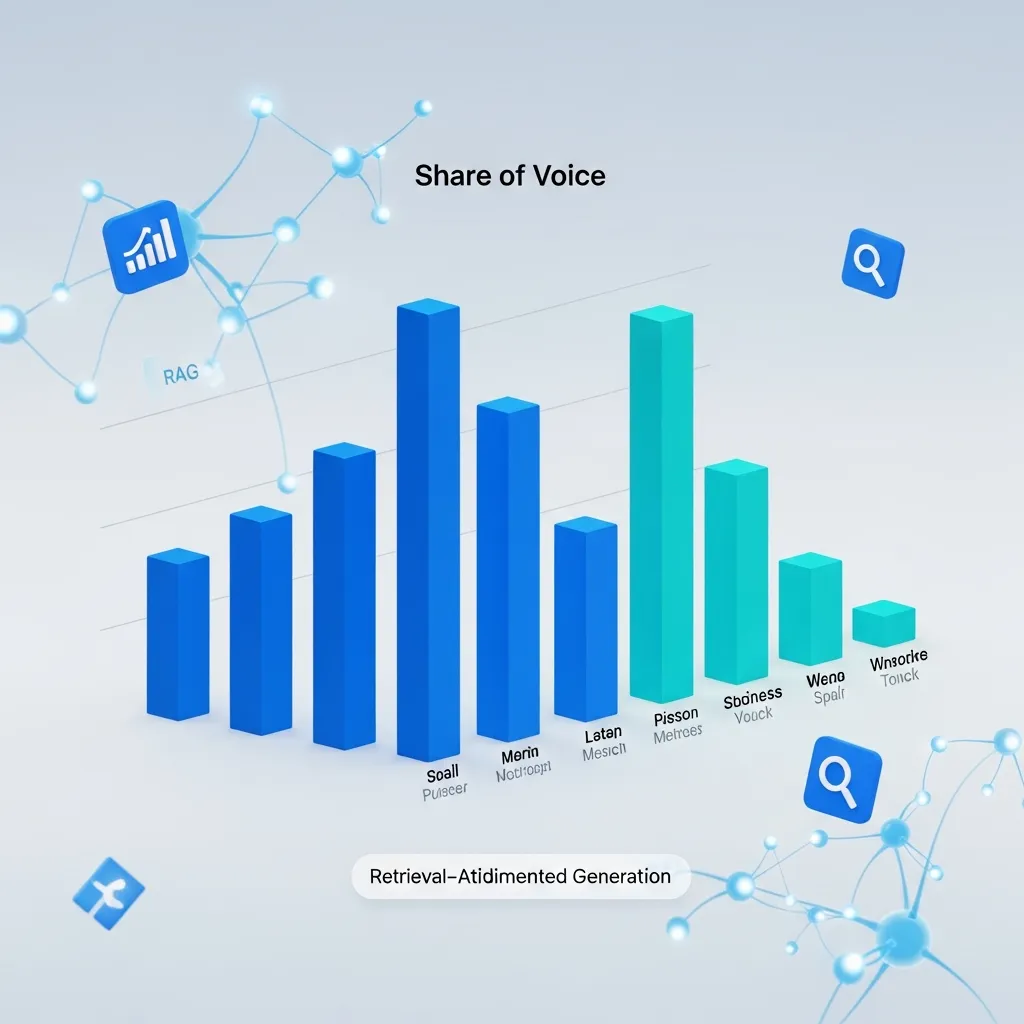
Furthermore, analyzing referral traffic from non-traditional search interfaces is vital. While direct organic traffic remains important, RAG optimization means looking for traffic sources like direct links from AI-generated summaries or voice search results. Understanding these new referral pathways helps refine content strategies for improved AI retrieval and sustained local online presence.
The Future of Local Visibility in an AI-First World
The future of local visibility hinges on proactive local SEO RAG adaptation. Businesses must embrace this shift, as AI models currently mediate local search experiences with increasing depth. In my experience, consistently optimizing for factual accuracy and robust structured data has proven indispensable for strong generative visibility, forming the bedrock of AI-driven authority.
A common mistake I've observed is treating RAG as a static implementation; it demands continuous iteration. I firmly believe that remaining agile and refining your local knowledge base will be paramount for sustained success. The AI landscape will evolve, and those who adapt swiftly will secure an enduring local presence. Start now by auditing your existing local data for RAG readiness.
Frequently Asked Questions
What is local SEO RAG?
Local SEO RAG refers to optimizing local business data for Retrieval-Augmented Generation systems, which combine information retrieval with AI to provide direct, comprehensive answers to local search queries.
Why is factual accuracy important for local SEO RAG?
AI systems prioritize consistent and verifiable data. Inaccuracies across platforms can lead to a lack of trust from AI retrievers, resulting in lower visibility in AI-generated summaries like AI Overviews.
How does content chunking help with AI search?
Content chunking organizes website data into discrete, semantically focused sections, making it easier for AI models to extract specific answers for user queries rather than sifting through unstructured text.
What schema markup is best for local SEO RAG?
Implementing detailed LocalBusiness and Service schema is essential. These provide machine-readable facts that AI systems use to populate knowledge graphs and verify business details.