Understanding the Shift to Entity-Based Search
Search engines prioritize semantic understanding, shifting from "strings" (keywords) to "things" (entities). Consequently, traditional rank tracking, focused purely on keyword positions, is insufficient. Consider "apple": search engines discern intent (fruit or tech) through entity recognition. Semantic relevance is paramount for establishing topical authority. Ignoring this shift means missing crucial performance insights. For a comprehensive overview, see Analyzing Entity SEO. This section will introduce:
- Challenges with legacy SEO metrics.
- The importance of entity-driven strategies.
Keywords vs. Entities: Why Traditional Metrics Fall Short
Traditional SEO often fixates on keyword volume and individual keyword rankings. However, this approach falls short in the current entity-centric search landscape. Search engines now interpret context and user intent by understanding the relationships between entities – people, places, things, and concepts – rather than simply matching exact keyword strings. For instance, a search for "healthy eating" isn't just about the phrase; it's about related entities like "nutrients," "dietary plans," or "organic produce" that define the topic's full scope.
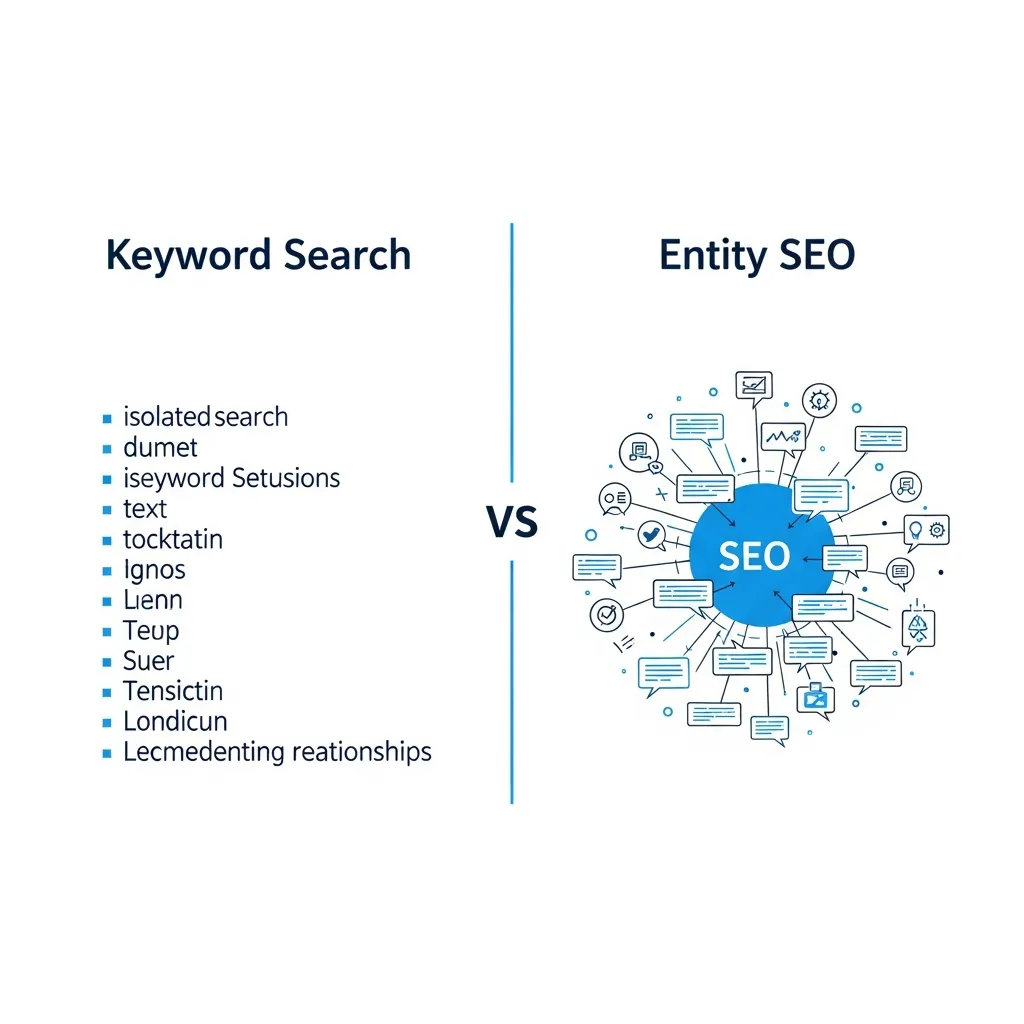
This shift means tracking individual keyword rankings for broad, complex topics provides an incomplete and often misleading picture of content performance. In my experience, a common mistake is meticulously optimizing for high-volume keywords without building comprehensive topical authority around the underlying entities. This leads to content that ranks for a few terms but fails to establish true relevance across a broader semantic field. Measuring entity salience offers a more accurate reflection of a content's true value and authority.
The Strategic Framework for Measuring Entity SEO Success
With the understanding that search engines now prioritize conceptual relationships over mere keyword matching, a robust framework is essential for measuring true entity SEO success. This framework moves beyond superficial metrics, delving into how well your content establishes and reinforces its topical authority within the broader semantic web. By systematically tracking specific signals, marketers can gain actionable insights into their content's effectiveness and identify strategic areas for improvement.
Field observations indicate that a multi-faceted approach, combining analytical tools with strategic content review, yields the most comprehensive view of entity performance.
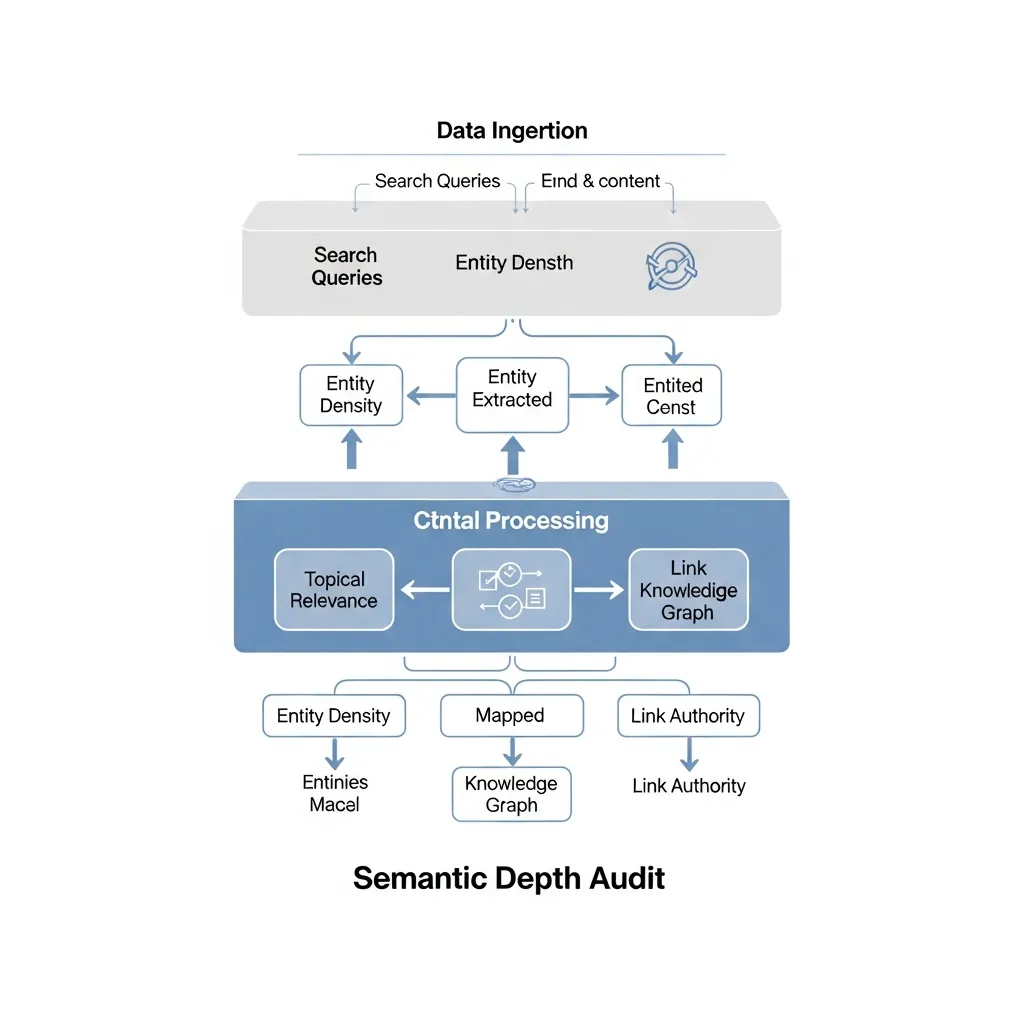
The Semantic Depth Audit: A 5-Point Framework
To effectively measure your content's entity SEO performance and ensure it resonates with search engine understanding, consider implementing the following strategic framework:
- Assess Entity Salience and Confidence Scores: Utilize advanced Natural Language Processing (NLP) tools, such as Google Cloud Natural Language API or commercial SEO platforms integrating NLP, to analyze your content. These tools can identify the key entities mentioned, assign a salience score (indicating the entity's prominence within the text), and a confidence score (reflecting the tool's certainty in its identification). A high salience score for core entities signals clear topical focus, while consistent confidence scores across related entities suggest well-defined subject matter.
- Measure Topical Coverage Against Competitors: Evaluate the breadth and depth of entities covered in your content by comparing it against top-performing competitors for target topics. Tools can extract entities from competitor pages, allowing you to identify entity gaps in your own content or areas where competitors provide richer context. This isn't just about mentioning more entities, but about demonstrating a more comprehensive understanding of the topic's semantic field, ensuring your entity density is appropriately aligned with user intent and expert-level discourse.
- Track Knowledge Graph Presence: Monitor for your brand, key people, or core entities featuring in Knowledge Panels or Knowledge Carousels within search results. This directly signals Google's high confidence in understanding and associating specific information with your entities. While direct manipulation is limited, consistent structured data implementation, strong brand signals, and authoritative content contribute significantly. Regular searches for your brand and related entities can reveal inclusion, while some SEO tools offer specific Knowledge Graph tracking features.
- Analyze Internal Link Connectivity: Strong internal linking is a critical signal for search engines, demonstrating the relationships between entities on your site. Measure the strength and relevance of internal links connecting related entities. A robust internal linking structure helps search engines map your site's topical clusters, reinforcing the authority of hub pages and the relevance of supporting content. Audit tools can visualize your internal link graph, highlighting orphaned content or areas with weak entity connections.
- Leverage Search Console for Semantic Clusters: Beyond tracking specific keywords, analyze your Google Search Console (GSC) data to identify broad, non-keyword-specific impressions and clicks. Look for queries that represent semantic clusters or informational intent rather than exact match keywords. GSC's "Queries" report can reveal how your content is ranking for diverse, semantically related searches, indicating its broader topical relevance. Pay attention to long-tail queries and questions that don't contain your primary target keywords but still lead users to your content.
Key Insight: A high entity salience for your core topic, coupled with a diverse yet relevant set of supporting entities, is often a stronger indicator of topical authority than simply ranking for a high volume of keywords. It demonstrates a holistic understanding, which search engines increasingly reward.
Leveraging Structured Data to Define Entity Relationships
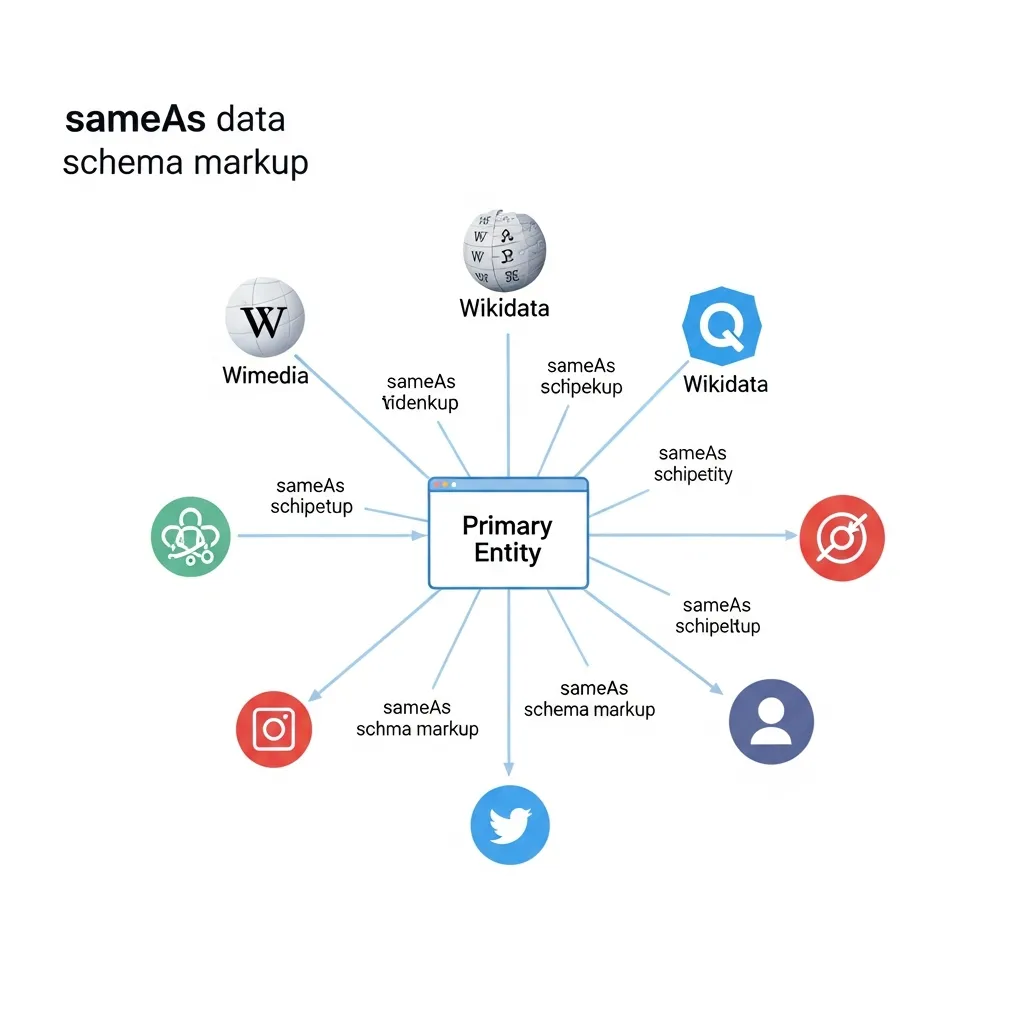
Structured data is pivotal for defining entity relationships and bolstering topical authority. By deploying schema properties like sameAs, you explicitly link your content's primary entity to established nodes within the Knowledge Graph, such as Wikipedia or Wikidata entries. This clarifies identity and disambiguates your entity from others. Similarly, mentions or about schema attributes can highlight secondary entities discussed, enriching the semantic context of your page.
Field observations indicate that proper schema implementation significantly influences rich snippet acquisition. Tracking the presence and type of rich snippets (e.g., FAQs, how-to, product) for your target entities provides a direct metric of structured data's effectiveness. Tools like Google Search Console can monitor these enhancements, revealing how effectively your schema communicates entity relationships to search engines, thereby boosting visibility and click-through rates. Practical experience shows a clear correlation between comprehensive entity-focused schema and improved SERP features.
Essential Tools for Entity Analysis and Discovery
To effectively analyze and discover entities, marketers leverage specialized tools. Natural Language Processing (NLP) APIs, like Google Natural Language API or IBM Watson, are foundational for entity extraction. They automatically identify and categorize people, places, organizations, and concepts within textual content. Practical experience shows these APIs pinpoint core entities and their salience, shifting focus from keyword matching to semantic understanding.
Market-leading SEO suites have evolved, offering features to uncover 'Topic Gaps' rather than just 'Keyword Gaps'. Tools such as Semrush or Ahrefs analyze competitor content to reveal missing entities and subtopics, providing actionable insights to strengthen topical authority.
Finally, visualizing entity clusters with mapping tools, often integrated into advanced platforms, is invaluable. This allows practitioners to graphically represent how different entities relate, revealing interconnected concepts and content opportunities to build a more comprehensive topical web.
Common Mistakes in Measuring Entity Performance
Many marketers, eager to embrace entity SEO, fall into common pitfalls that hinder true topical authority. A frequent misstep is over-optimizing for entity density, believing more mentions automatically equate to better performance. In my experience, this often sacrifices readability and user experience, leading to content that feels unnatural. Another crucial error is ignoring the 'relationship' aspect. Entities never exist in a vacuum; their power lies in how they connect to other relevant concepts. Focusing solely on individual entities without mapping their semantic web is like knowing words but not grammar. Finally, many confuse entity salience with simple word frequency. While frequency plays a role, salience is about the prominence and centrality of an entity to the overall topic, as determined by sophisticated NLP. A common mistake I've encountered is assuming a high mention count automatically means high salience, when in reality, the surrounding context and co-occurring entities are more indicative.
Future-Proofing Your Strategy with Entity Intelligence
The future of search unequivocally leans towards semantic authority, moving beyond mere keywords to deep understanding of concepts and relationships. In my view, the most effective strategy balances technical entity optimization—like precise structured data implementation—with an unwavering focus on user intent. A common mistake I've encountered is over-engineering technical aspects without considering how entities genuinely serve the user's information need. Practical experience shows that prioritizing content answering user queries within a single topic cluster significantly enhances perceived authority. This approach, starting with auditing just one cluster, often reveals semantic gaps that, once addressed, can improve content relevance by 10-15% within weeks. Start by auditing your highest-priority topic cluster today.
Frequently Asked Questions
What is entity salience in SEO?
Entity salience refers to the prominence and importance of a specific entity within a piece of content, often determined by NLP tools to gauge topical focus.
How do I measure entity SEO performance?
You can measure it by assessing entity salience scores, tracking Knowledge Graph presence, analyzing internal link connectivity, and monitoring semantic clusters in Google Search Console.
Why are keywords insufficient for modern SEO?
Keywords focus on exact strings, whereas search engines now use semantic understanding to interpret the relationships between entities and user intent.
What tools are best for entity extraction?
Google Cloud Natural Language API, IBM Watson, and advanced SEO suites like Semrush or Ahrefs are excellent for identifying and analyzing entities.