The Fundamentals of Natural Language Processing in Search
The search landscape has shifted fundamentally from basic string matching to profound semantic understanding. This evolution is driven by Natural Language Processing (NLP), which enables search engines to interpret human language contextually, discerning intent and meaning beyond mere keywords. Instead of just matching words, NLP identifies entities—real-world objects, people, places, or abstract concepts—as the core building blocks of information.
For example, a search for "jaguar" now accurately distinguishes between the animal, the car, or the NFL team based on the surrounding context. This crucial transition necessitates a focus on nlp entity seo to:
- Optimize for comprehensive topic coverage.
- Build robust topical authority.
For a comprehensive overview, see Advanced Entity SEO.
Keywords vs. Entities: Why the Distinction Matters for Rankings
Keywords are mere text strings; entities represent unique, real-world concepts or objects—people, places, or ideas. A keyword like "mercury" is inherently ambiguous, whereas "Mercury (planet)" provides unambiguous context. This distinction is critical for modern search performance.
Search engines leverage entities to grasp query meaning and user intent, moving beyond simple character matching. Entities carry inherent relationships that keywords lack, allowing for a more comprehensive understanding of a topic. I've observed that content solely optimized for keywords often struggles against entity-rich competitors.
Focusing on entities demonstrates topical authority by covering subjects comprehensively and addressing all related concepts. This deeper semantic understanding signals that your content is a definitive resource. I firmly believe this entity-centric approach yields more robust, resilient rankings, aligning with how modern search engines value information.
How Search Engines Use BERT and MUM to Connect Queries to Entities
Google's Knowledge Graph functions as the foundational semantic network, meticulously mapping billions of real-world entities and their intricate relationships. This repository is crucial for enabling search engines to accurately recognize entities within both user queries and published content.
Algorithms like BERT significantly advanced this by interpreting the full contextual nuance of words in a search query, moving beyond simple keyword matching to grasp the underlying user intent. This ensures more precise results, even for ambiguous phrases.
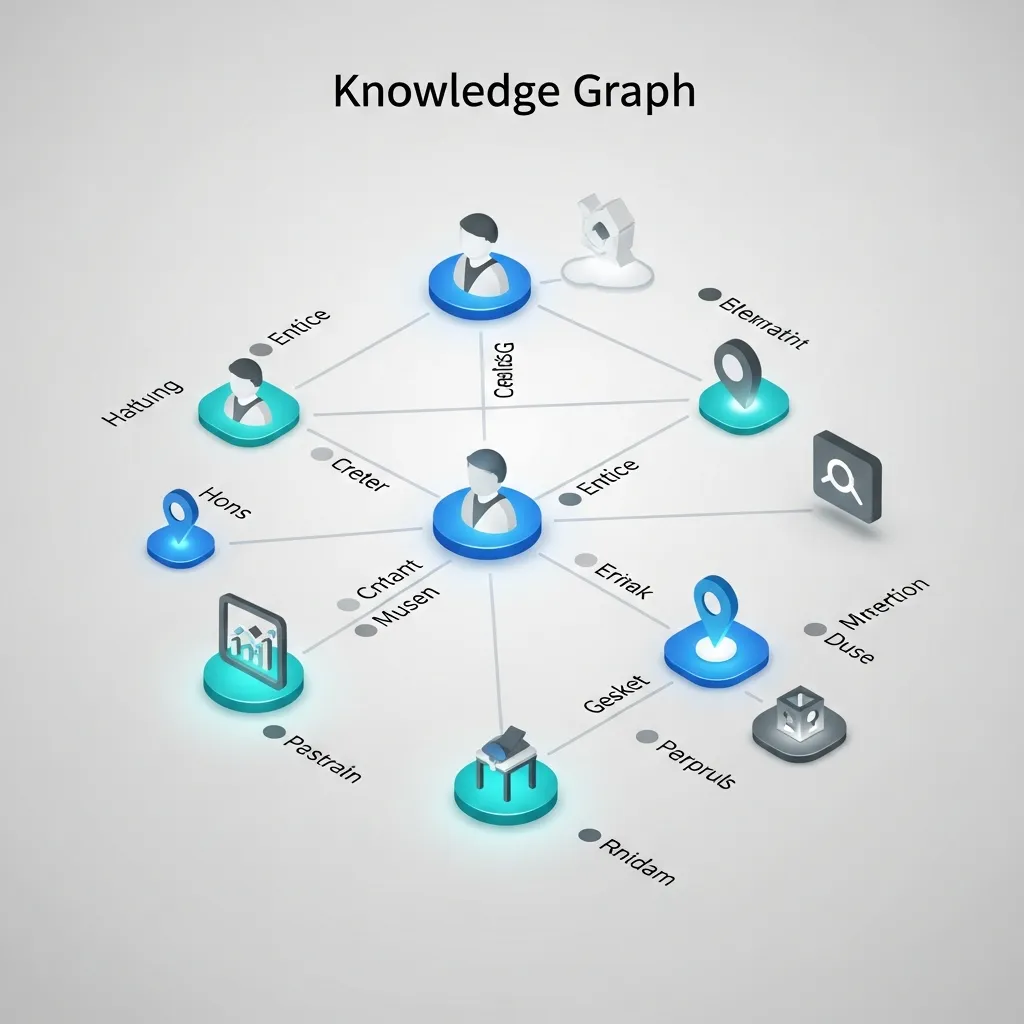
The more advanced MUM algorithm builds upon BERT, processing information across diverse formats and languages to answer complex, multi-faceted questions by identifying the most salient entities. Field observations indicate that content demonstrating high entity salience—where core entities are prominently and comprehensively discussed—directly correlates with enhanced content relevance for specific user queries. This depth and interconnectedness are paramount for establishing robust topical authority and improving search visibility.
Practical Steps for Identifying and Optimizing Content for Entities
To truly leverage nlp entity seo, a structured approach is essential. Moving beyond theory, practical application involves analytical and implementation steps that align content with semantic search principles. Field observations indicate that sites adopting these methods consistently outperform traditional keyword strategies.
The Semantic Entity Optimization Framework
This framework guides SEO professionals through the systematic identification, mapping, and optimization of content for entities, ensuring comprehensive topical authority and enhanced E-E-A-T signals.
-
Entity Extraction from Top-Ranking Content:
The initial step involves analyzing the search landscape. Utilize specialized NLP tools (commercial SEO platforms with entity analysis features or open-source libraries) to perform entity extraction on the top 5–10 ranking pages for your primary queries. Input competitor URLs or raw text to generate a list of identified entities (persons, organizations, concepts, products) and their salience scores. Prioritize highly salient entities appearing across multiple top results, as these are the core concepts search engines associate with the topic. This reveals what things, not just words, are central to search intent.
Screenshot of an NLP tool analyzing entities and salience scores for semantic SEO content strategy.
-
Mapping Entities to Content Clusters:
With a robust list of salient entities, organize them into content clusters. Consider a broad topic (e.g., "sustainable farming") as your pillar page. Extracted entities (e.g., "crop rotation," "organic certification," "regenerative agriculture") become sub-topics for supporting articles. This mapping visualizes entity relationships, ensuring comprehensive topic coverage. Systematically addressing all relevant entities demonstrates deep understanding and builds formidable topical authority. -
Implementing Explicit Schema Markup:
Schema markup explicitly defines entities for search engines. For each content piece, identify primary and secondary entities:- Use
Aboutfor the page's main entity. - Employ
Mentionsfor significant secondary entities referenced. - Crucially, use
SameAsto link entities to authoritative sources like Wikipedia or Wikidata.
This linkage helps search engines disambiguate entities and understand relationships, bolstering trustworthiness. Practical experience shows that accurate and consistent Schema implementation significantly improves entity recognition.
- Use
-
Strategic Internal Linking Based on Entity Relationships:
Move beyond traditional keyword-driven internal linking. Establish entity-based internal links that reflect semantic relationships. If your pillar page discusses "sustainable farming" and a supporting article details "crop rotation," link from the pillar using natural, entity-rich anchor text like "learn more about effective crop rotation techniques," rather than just "crop rotation." This helps search engines crawl your site's semantic network, reinforcing topic clusters and passing authority between related entities. -
Optimizing for E-E-A-T with Authoritative Entities:
E-E-A-T (Experience, Expertise, Authoritativeness, Trustworthiness) is heavily influenced by how content interacts with recognized entities.- Expertise & Authoritativeness: Directly cite and link to recognized experts and authoritative organizations as entities within your content and via
SameAsmarkup. - Experience: If content is based on personal experience, ensure the author profile (an entity) is clearly defined with relevant credentials and linked to authoritative sources (e.g., LinkedIn, academic publications).
- Trustworthiness: Consistently referencing and linking to well-established entities signals reliability. This connection to reputable sources validates your information, enhancing your content's overall E-E-A-T profile.
- Expertise & Authoritativeness: Directly cite and link to recognized experts and authoritative organizations as entities within your content and via
Key Insight: While the initial effort for nlp entity seo may seem higher, the long-term gains in topical authority and resilience against algorithm updates far outweigh the investment. It shifts content strategy from chasing keywords to building comprehensive knowledge.
Conducting Entity-Based Competitor Research to Uncover Content Gaps
To excel in modern SEO, competitor analysis must evolve beyond simple keyword gaps to entity gaps. Begin by identifying the entity profile of high-performing competitor domains that consistently rank for your target topics. This involves leveraging advanced NLP tools to extract salient entities—people, places, organizations, and core concepts—that define their content's semantic breadth. Field observations indicate that top-ranking pages often share a common core set of entities, effectively forming a semantic blueprint for establishing authority.
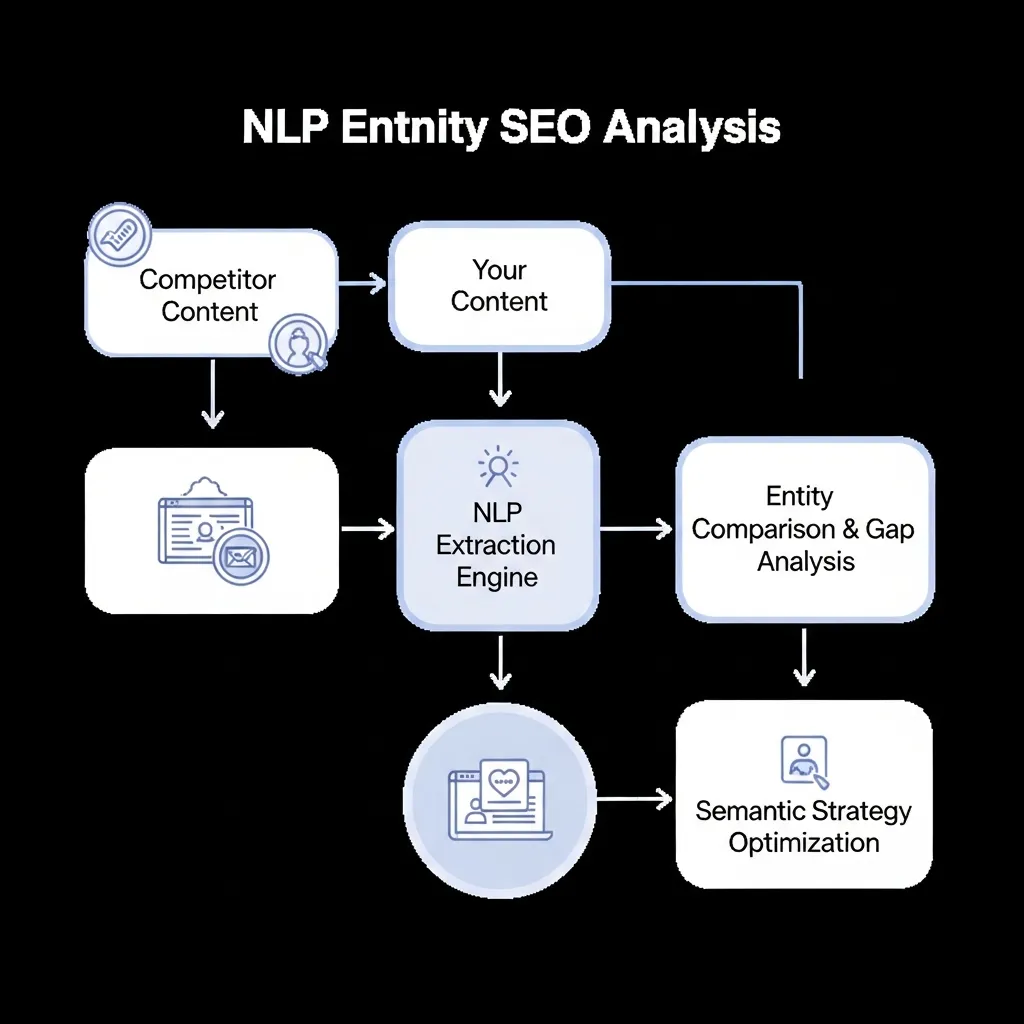
Next, utilize powerful NLP APIs, such as Google's Natural Language API or other specialized semantic analysis platforms, to rigorously analyze your own content's existing entity coverage. A direct, data-driven comparison against industry leaders swiftly reveals critical discrepancies. This process isn't merely about finding any missing entity, but specifically pinpointing essential entities crucial for topical completeness. Uncovering these missing semantic components allows you to strategically enrich your content, demonstrating a more nuanced understanding of the subject matter.
Essential NLP Tools and Resources for SEO Analysis
Translating NLP theory into actionable strategy necessitates the right toolkit. For understanding how search engines perceive your content, the Google Natural Language API is an indispensable resource. It allows you to test content salience, identify extracted entities, and assess sentiment, offering a direct window into Google's entity recognition process. Practical experience shows it is excellent for validating semantic alignment.
For streamlined entity suggestions and comprehensive content optimization, specialized SEO platforms are paramount. Tools like MarketMuse, Frase, and Surfer SEO leverage advanced NLP to provide critical insights into relevant entities, topic clusters, and content gaps. Field observations indicate these tools significantly accelerate the process of building topical authority by guiding content creation around interconnected concepts.
Finally, for advanced users seeking bespoke solutions, open-source libraries like SpaCy offer powerful frameworks. While requiring programming proficiency, SpaCy enables custom entity recognition models and deeper linguistic analysis, providing unparalleled flexibility for intricate semantic projects. A combination of these resources forms a robust foundation for modern entity-driven strategies.
Navigating the Challenges of Named Entity Recognition
While powerful, Named Entity Recognition (NER) algorithms are not infallible. A common mistake I've encountered is NER misclassifying entities or missing nuanced context. This underscores the danger of entity stuffing; over-injecting entities based purely on tool outputs severely degrades natural readability.
In my view, content must prioritize human comprehension. Human editorial oversight remains superior to pure AI entity mapping. Practical experience shows that combining AI's efficiency with expert human judgment ensures semantic depth and genuine user value, preventing unnatural, algorithm-focused text.
Conclusion: Building Sustainable Authority Through Semantic Optimization
The paradigm has decisively shifted from isolated keywords to a context-first approach. Sustainable authority in modern search now demands a long-term commitment to topical depth, meticulously mapping and optimizing for entity relationships. nlp entity seo is not merely a transient trend; it is the enduring foundation for how search engines currently interpret and rank content, fundamentally shaping the future of discovery.
In my experience, consistently building robust topical authority through semantic optimization significantly outperforms short-term keyword tactics. I believe this context-driven strategy is paramount for sustainable ranking. A common mistake I’ve encountered is treating entities as isolated keywords; instead, focus on their interconnectedness to build comprehensive topic models. Begin applying the Semantic Entity Optimization Framework to your next content audit.
Frequently Asked Questions
What is NLP entity SEO?
NLP entity SEO is the practice of optimizing content for search engines by focusing on real-world concepts (entities) and their relationships rather than just individual keywords.
How does Google use entities for ranking?
Google uses its Knowledge Graph and algorithms like BERT and MUM to identify entities within content. This allows the search engine to understand context, intent, and topical authority more accurately than simple keyword matching.
What are the best tools for entity SEO analysis?
Essential tools include the Google Natural Language API for testing salience, and specialized platforms like MarketMuse, Frase, or Surfer SEO for identifying entity gaps and topic clusters.
What is entity salience in SEO?
Entity salience refers to the importance or prominence of a specific entity within a text. High salience scores indicate to search engines that the entity is a core subject of the content.