The Evolution of Automated Creation
The current landscape of automated content creation represents a significant leap from rudimentary tools to powerful professional assets. AI is now adept at generating nuanced, contextually rich material, empowering content teams to scale efficiently.
Consider a modern marketing department utilizing AI for first-draft blog posts, allowing human experts to refine the text and add strategic depth. This article guides intermediate users through practical, real-world AI content examples and effective implementation strategies. For a comprehensive overview of maintaining quality, see E-E-A-T for AI content.
In the following sections, we will explore:
- Optimizing AI outputs for quality
- Integrating AI into existing workflows
Diverse Applications in Written Communication
AI's prowess in written communication extends across an impressive spectrum, from concise snippets to comprehensive technical manuals. For short-form content, AI currently excels at generating engaging social media captions and compelling ad copy. These outputs, even in initial drafts, significantly reduce the time spent on brainstorming and A/B testing variations for marketing campaigns, enhancing overall efficiency.

Moving to long-form content, AI proves invaluable for structuring blog posts, outlining articles, and drafting intricate whitepapers. Leveraging AI for these foundational elements frees human experts to focus on refining nuanced arguments and adding unique insights rather than performing tedious structural work.
Practical experience shows that AI can quickly assemble a logical flow for complex topics, accelerating content pipelines. Furthermore, in technical writing, AI aids in generating clear documentation, such as user manuals or API guides, and can even produce basic code snippets. This capability streamlines development cycles and ensures consistency in technical explanations. The breadth of these applications underscores AI's transformative potential in diverse professional writing contexts.
Beyond Text: Visual and Multimedia Generation
Moving beyond text, AI is currently revolutionizing visual and multimedia generation. For branding, synthetic media tools create unique, high-quality AI-generated images, allowing for rapid customization and reducing reliance on traditional photography. This significantly streamlines visual asset creation for diverse campaigns.
In video production, AI facilitates everything from script-to-video conversions to sophisticated avatar-led presentations, transforming static content into dynamic visual experiences with remarkable efficiency. This shift democratizes professional-grade video creation. Furthermore, audio content is enhanced through advanced text-to-speech capabilities, enabling the swift production of podcasts and high-quality voiceovers. This ensures consistent auditory branding and broadens content accessibility globally.
Comprehensive AI Content Examples Across Key Industries
In the current landscape, AI's capacity for generating sophisticated content extends far beyond basic text, offering specialized applications across a multitude of sectors. These AI content examples demonstrate how organizations can not only accelerate production but also enhance relevance and impact significantly.
E-commerce: Dynamic Descriptions and Personalized Outreach
For e-commerce, AI excels at creating dynamic product descriptions. Instead of generic text, AI can ingest raw product data—specifications, materials, and benefits—to generate multiple variations tailored for different marketing channels or target demographics. This ensures that a single product can have descriptions optimized for SEO, social media, or specific customer segments.
AI also revolutionizes personalized email sequences. By analyzing customer browsing history, purchase patterns, and engagement data, AI crafts highly relevant product recommendations, abandoned cart reminders, and promotional offers, increasing conversion rates and customer loyalty.
SaaS Marketing: Feature-Led Content and Comparisons
SaaS marketing benefits immensely from AI-generated content like feature-led blog posts and comparison landing pages. AI can process technical documentation and product updates, transforming them into engaging blog content that highlights specific features, use cases, and benefits.
For comparison pages, AI can analyze competitor data, feature sets, and pricing structures to generate comprehensive, objective comparisons. These pages position a SaaS product advantageously, providing potential customers with detailed, unbiased information to aid their decision-making process.
Customer Support: Knowledge Bases and Automated Responses
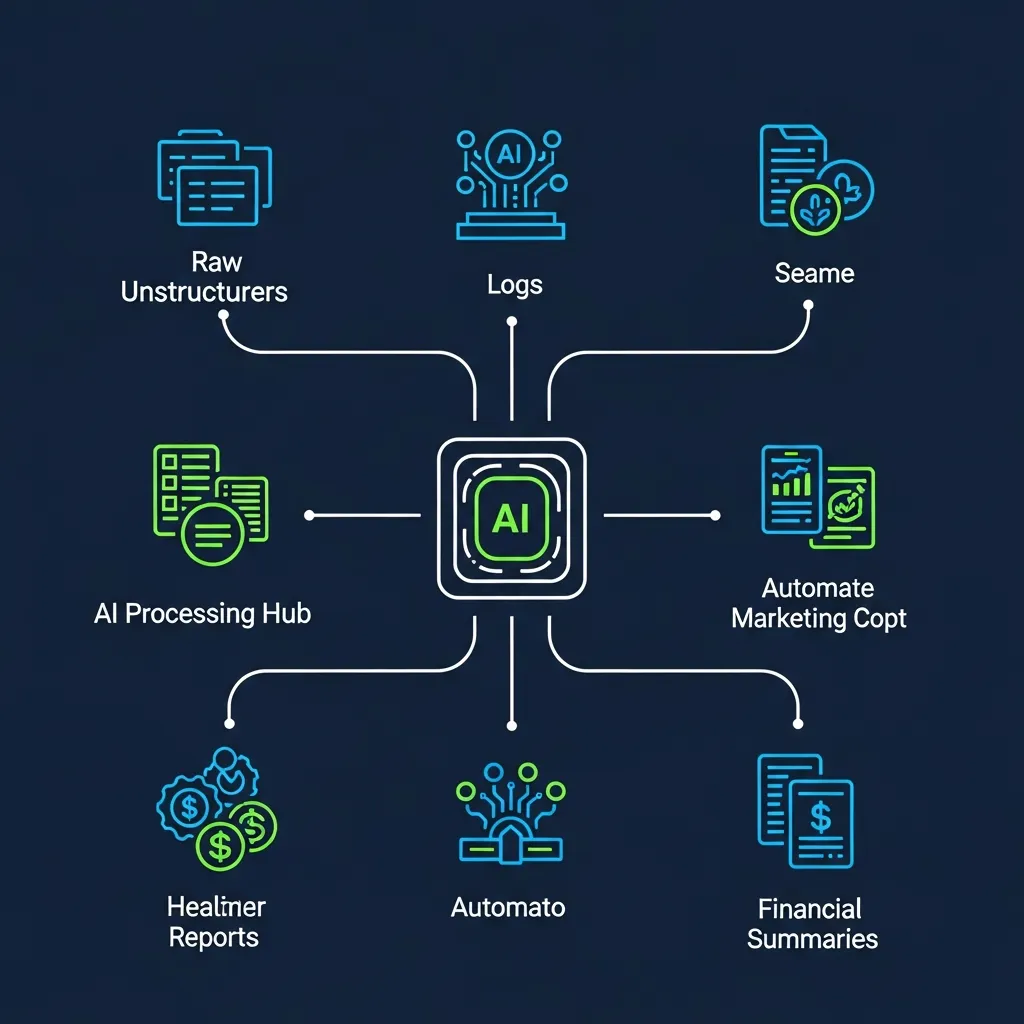
In customer support, AI is instrumental in building and maintaining knowledge base articles and automated response templates. AI can process vast amounts of customer queries and support tickets to identify common issues and proactively generate clear, concise articles that address them.
Furthermore, AI-powered systems can draft initial responses to routine inquiries, ensuring consistent messaging and freeing human agents to focus on more complex, empathetic interactions. Technical data suggests this significantly reduces resolution times and improves customer satisfaction.
Education: Empowering Learning and Assessment
The education sector is utilizing AI to develop lesson plans, quizzes, and summary notes for students. AI can synthesize information from textbooks, lectures, and research papers to create structured lesson outlines, generate diverse question types for quizzes, and condense complex topics into digestible summary notes. This personalized content generation supports differentiated learning, catering to various learning styles and paces, while providing educators with valuable tools to enhance pedagogical efficiency.
Real Estate: Data-Driven Property Listings
In real estate, AI transforms raw property data points—location, amenities, square footage, and historical sales—into compelling property listings. Instead of manual writing, AI can generate descriptive narratives that highlight unique selling propositions, local neighborhood insights, and lifestyle benefits. This not only accelerates the listing process but also ensures consistency in quality and tone across a large portfolio, making properties more attractive to potential buyers.
Implementing these AI content examples effectively requires a structured approach. The following framework provides a guide:
The AI Content Deployment Blueprint
| Step No. | Action Point | Description |
|---|---|---|
| 1 | Define Content Goals & Metrics | Clearly articulate what each piece of AI-generated content should achieve (e.g., SEO ranking, conversion, customer satisfaction) and how success will be measured. |
| 2 | Curate & Structure Input Data | Gather high-quality, relevant data (product specs, customer feedback, educational materials) and format it optimally for AI ingestion. |
| 3 | Craft Precise Prompts & Parameters | Develop detailed prompts that guide the AI on tone, style, target audience, keywords, and desired output format. |
| 4 | Iterate & Refine Outputs | Review AI-generated drafts for accuracy, coherence, brand voice, and factual correctness. Human oversight is crucial for final polish. |
| 5 | Integrate & Monitor Performance | Seamlessly publish content into relevant platforms. Continuously track its performance against defined metrics and use insights for further AI model training. |
This blueprint emphasizes that while AI can create initial drafts with remarkable efficiency, human expertise remains indispensable for strategic planning, quality assurance, and continuous optimization.
Evaluating Quality: AI-Generated vs. Human-Crafted Content
Human-crafted content uniquely conveys nuance and emotional intelligence, connecting deeply through an authentic voice and perspective. It excels in navigating complex topics with empathy, fostering genuine audience relationships. Conversely, AI-generated content stands out for its unmatched speed and data-processing capabilities. It can rapidly produce high volumes of factual information, analyze extensive datasets, and ensure consistent accuracy across large-scale projects, often reducing initial content generation time by over 50%.
In my experience, while AI efficiently structures information and gathers facts, it often misses the subtle persuasive touch or the ability to truly anticipate unspoken reader concerns that a seasoned human writer possesses. The most effective approach involves a hybrid strategy. Leverage AI for foundational drafts and data synthesis, then refine with human expertise to infuse unique insights and emotional depth. This blend optimizes both efficiency and impact, ensuring content aligns perfectly with project goals.
Expert Strategies for Enhancing AI-Generated Material
Enhancing AI-generated material requires a strategic approach, starting with the Human-in-the-Loop (HITL) methodology. This ensures factual accuracy by integrating expert review to validate AI-produced claims—a critical step for maintaining credibility and preventing misinformation.
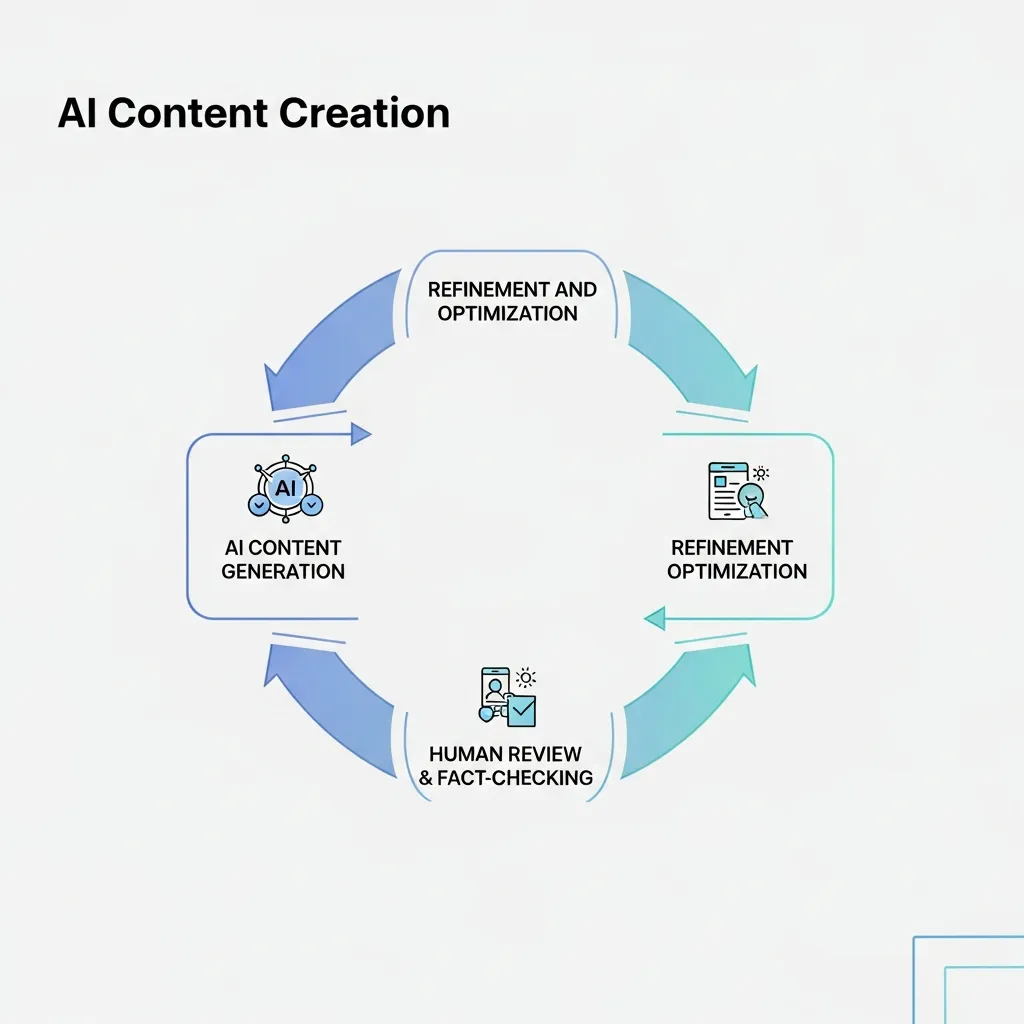
To inject a distinct brand voice, provide AI models with comprehensive style guides and examples of existing, on-brand content. In my experience, this iterative feedback loop dramatically improves the AI's ability to mirror the desired tone and messaging.
Crucially, mastering prompt engineering principles yields superior initial results. Clear, specific prompts detailing audience, format, and desired outcomes can reduce post-generation adjustments significantly, often by 30-40%.
Critical Mistakes When Using Automated Content Tools
Blindly relying on automated content tools presents significant risks. A common mistake is overlooking AI hallucinations, where tools confidently generate misinformation, directly undermining trust and authority. This demands rigorous fact-checking and human oversight.
Furthermore, content often suffers from repetitive patterns and generic 'AI-isms', lacking the unique voice crucial for genuine reader engagement. In my view, content devoid of this human touch fails to resonate or build lasting authority. Critically, ignoring legal and ethical considerations, particularly around copyright infringement from unverified sources, can lead to severe repercussions and reputational damage. Always verify originality.
Embracing the Future of Content Strategy
Embrace AI as a powerful collaborative partner, not just a tool. In my experience, this synergy dramatically enhances content velocity and quality. I believe the future of content strategy lies in leveraging AI to personalize and scale human creativity. Start experimenting with the practical AI content examples provided to unlock your full potential.
Frequently Asked Questions
What are some practical AI content examples?
Practical examples include dynamic product descriptions for e-commerce, feature-led blog posts for SaaS, automated property listings in real estate, and AI-generated social media captions.
How do you ensure quality in AI-generated content?
Quality is maintained through a Human-in-the-Loop (HITL) approach, where human experts review AI drafts for factual accuracy, brand voice, and emotional nuance.
Can AI create more than just text content?
Yes, AI can generate visual assets like images and branding, produce video through script-to-video tools, and create audio content like podcasts using text-to-speech.
What are the main risks of using AI for content?
Key risks include AI hallucinations (misinformation), repetitive patterns that lack a unique brand voice, and potential legal or ethical issues regarding copyright.